
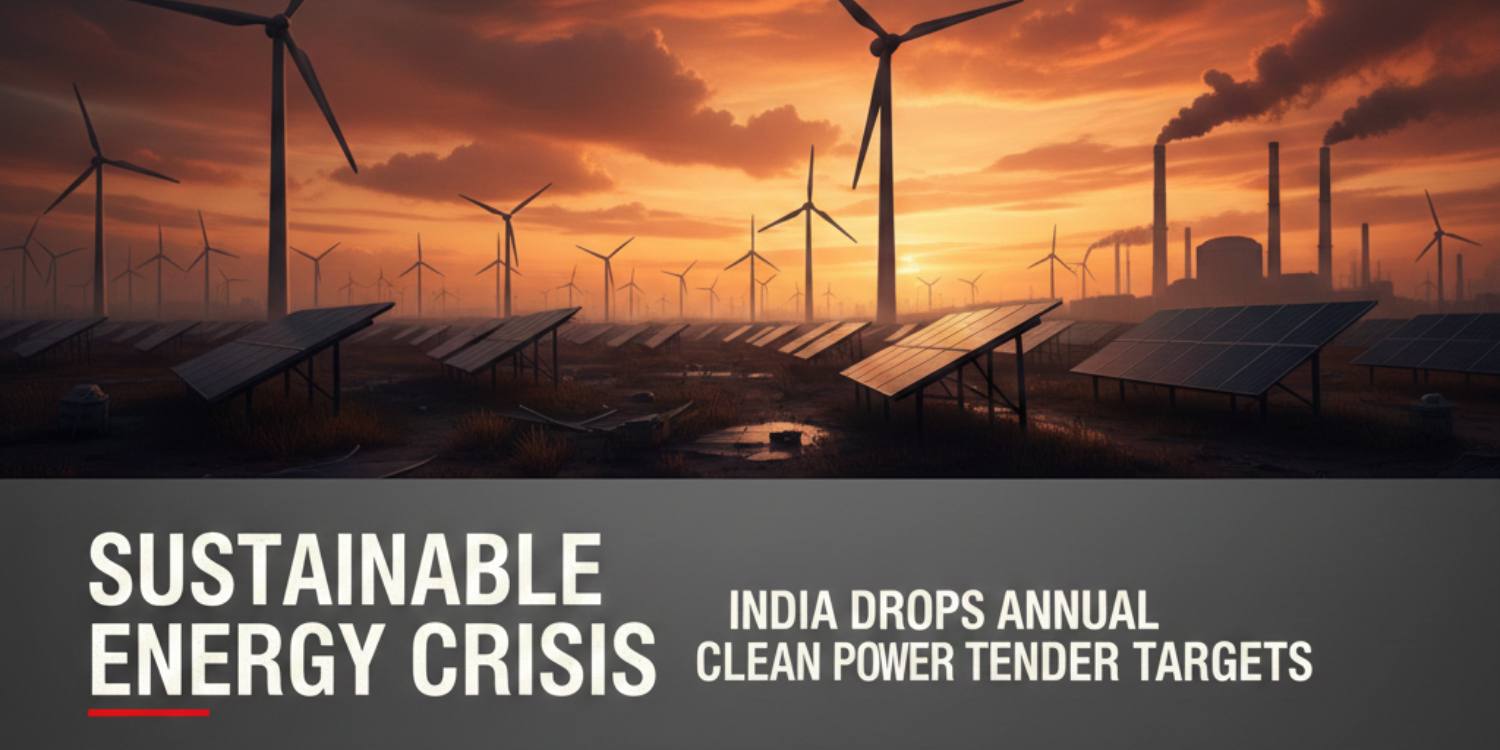
India’s ambitious clean energy transition is facing an unexpected challenge: a growing pile of renewable power projects waiting to be consumed but lacking buyers, even as electricity costs continue to rise across the country. The government has decided to stop setting fixed annual clean energy tender targets after only about 15 GW of capacity was auctioned in 2025 against a planned 50 GW, leaving nearly 43 GW of approved renewable projects without signed buyers.
These unsold projects, primarily solar and wind installations tendered by central agencies , reflect a deeper bottleneck in India’s energy system. Developers and officials say state-owned power utilities have delayed signing power purchase agreements (PPAs) for large renewable allocations, often because they anticipate falling tariffs and worry about grid delivery reliability due to transmission bottlenecks and storage limitations.
Transmission infrastructure has struggled to keep pace with rapid capacity additions, particularly in renewable-rich states like Rajasthan and Gujarat, leading to curtailment and uncertainty over timely power delivery. In response, the Ministry of New and Renewable Energy plans to issue future tenders only based on confirmed demand signals from states, rather than annual targets.
Analysts also point to delays in internal state approvals and regulatory clearances for PPAs, plus the reluctance of financially stressed DISCOMs to commit to long-term contracts without assured transmission pathways.
Compounding the challenge, some states’ policies, such as free electricity programs can disincentivise distributed clean energy adoption, including rooftop solar, undermining sustainability goals even further.
Despite this setback, India continues to pursue its goal of 500 GW of non-fossil fuel capacity by 2030. The government and industry remain optimistic that evolving procurement approaches and strengthening grid readiness will gradually unlock the backlog of renewable capacity and help stabilise electricity costs for consumers.