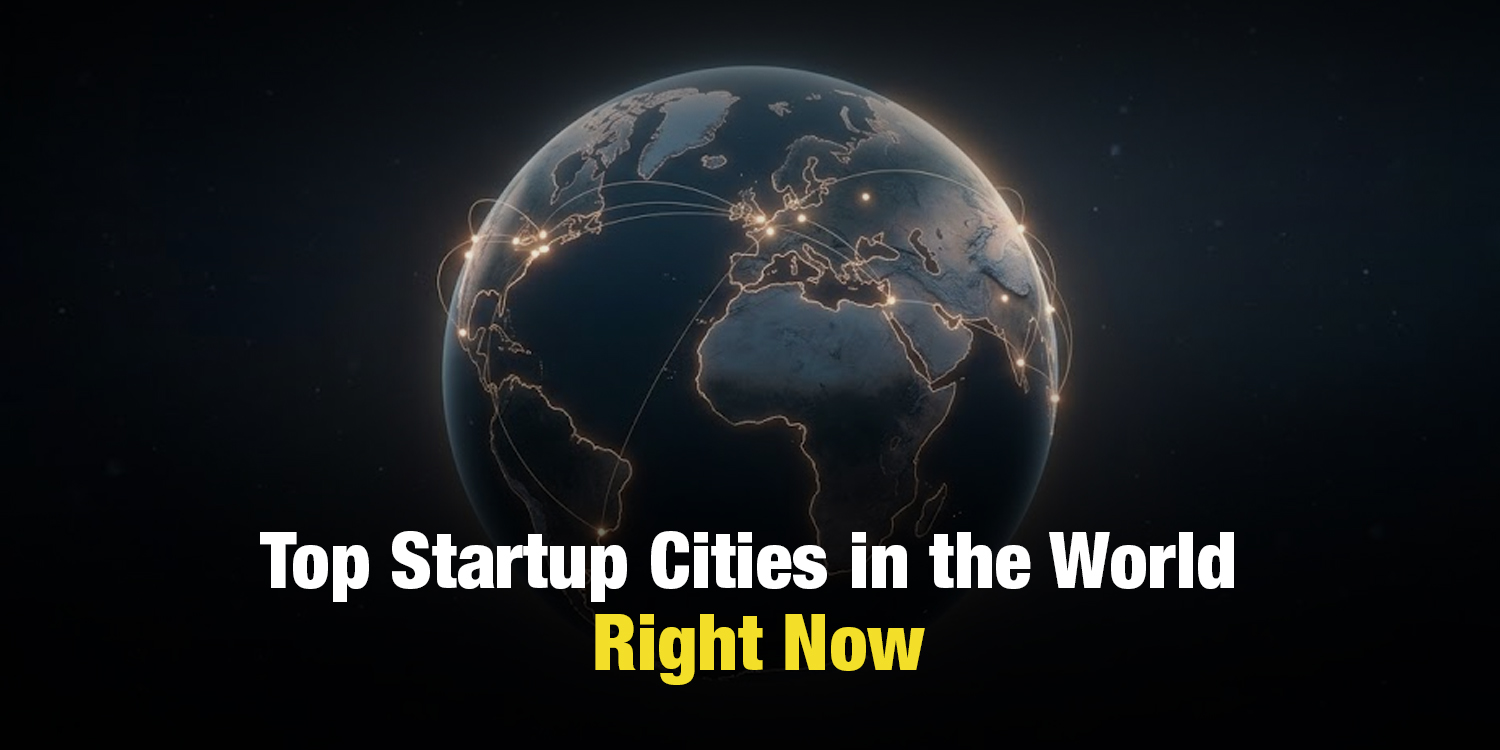
Ideas have always changed the course of history, but in the modern startup economy, where an idea is born often determines how far it can go. Geography plays a decisive role in the success of startups because innovation rarely thrives in isolation. Access to venture capital, supportive government policies, global talent, infrastructure, and mentorship networks can transform a simple concept into a billion-dollar enterprise. In today’s interconnected world, certain cities have emerged as powerful startup ecosystems, places where entrepreneurs, investors, and institutions converge to turn ideas into scalable businesses. These global innovation hubs not only nurture startups but also shape the future of industries.
This is precisely why startup cities matter. A handful of cities consistently dominate the global innovation economy. Below are ten of the most influential startup cities in the world right now, where entrepreneurs are most likely to find the resources necessary to scale their ventures.
1. San Francisco Bay Area, USA
- Startup ecosystem size: ~15,000–18,000
- Dominant sectors: Artificial intelligence, SaaS, fintech, biotech, deep tech
- Government & ecosystem support:
While the U.S. federal government provides R&D incentives and innovation grants, the Bay Area benefits primarily from its venture capital concentration and university research ecosystem including Stanford and UC Berkeley. - For Indian founders:
Entrepreneurs typically establish a Delaware C-Corporation, secure a U.S. visa such as the O-1 or L-1, and often raise capital through Silicon Valley venture capital firms.
2. New York City, USA
- Startup ecosystem size: ~9,000–10,000
- Dominant sectors: Fintech, media tech, e-commerce, climate tech
- Government initiatives:
New York State actively promotes startups through tax incentives, incubators, and programs like NYCEDC innovation grants. - For Indian founders:
Many expand through subsidiary incorporation in the U.S., hiring local leadership, and leveraging fintech investor networks.
3. London, United Kingdom
- Startup ecosystem size: ~8,500
- Dominant sectors: Fintech, AI, healthtech, cybersecurity
- Government initiatives:
The UK government supports startups through programs like Innovate UK grants, the Seed Enterprise Investment Scheme (SEIS), and R&D tax credits. - For Indian founders:
Starting a UK company requires Companies House registration, a UK bank account, and often a Global Talent Visa or Innovator Founder Visa.
4. Singapore
- Startup ecosystem size: ~4,500+
- Dominant sectors: Fintech, logistics tech, blockchain, deep tech
- Government initiatives:
Singapore’s government offers strong startup support through Enterprise Singapore grants, Startup SG equity programs, and tax incentives. - For Indian founders:
Entrepreneurs can incorporate through ACRA registration, apply for an EntrePass visa, and access Southeast Asian markets through Singapore’s strong trade network.
5. Paris, France
- Startup ecosystem size: ~4,000+ startups
- Dominant sectors: Artificial intelligence, climate tech, fintech, luxury tech, deep tech
- Government initiatives:
France has aggressively invested in startup innovation through La French Tech and has also launched Station F in Paris, the world’s largest startup campus, housing hundreds of early-stage companies. - For Indian founders:
Indian entrepreneurs can establish a SAS (Simplified Joint Stock Company) in France and apply for the French Tech Visa, which fast-tracks residency for startup founders, investors, and skilled tech employees.
6. Berlin, Germany
- Startup ecosystem size: ~3,500+
- Dominant sectors: SaaS, fintech, mobility tech, climate tech
- Government initiatives:
Germany supports startups through High-Tech Gründerfonds, federal innovation grants, and strong EU funding frameworks. - For Indian founders:
Entrepreneurs must register a GmbH company, comply with EU regulations, and may obtain entrepreneur visas through German immigration programs.
7. Bangalore, India
- Startup ecosystem size: ~15,000+
- Dominant sectors: SaaS, fintech, edtech, AI
- Government initiatives:
India’s Startup India initiative, tax exemptions, and DPIIT recognition have made Bangalore the country’s leading startup hub. - For Indian founders:
Local entrepreneurs benefit from government incubators, venture capital networks, and India’s rapidly growing digital economy.
8. Shenzhen, China
- Startup ecosystem size: ~5,000+
- Dominant sectors: Hardware tech, electronics, robotics, manufacturing innovation
- Government initiatives:
China provides industrial subsidies, technology grants, and infrastructure for manufacturing-focused startups. - For Indian founders:
Entry requires joint ventures, compliance with Chinese corporate law, and local partnerships due to regulatory complexity.
9. Toronto, Canada
- Startup ecosystem size: ~2,500+
- Dominant sectors: Artificial intelligence, healthtech, fintech
- Government initiatives:
Canada supports innovation through IRAP grants, startup visas, and generous R&D tax incentives. - For Indian founders:
The Startup Visa Program allows international founders to establish businesses with backing from approved investors.
10. Stockholm, Sweden
- Startup ecosystem size: ~2,000+
- Dominant sectors: Gaming, fintech, sustainability tech, mobility
- Government initiatives:
Sweden provides innovation grants, startup incubators, and strong digital infrastructure, helping it produce several unicorn startups. - For Indian founders:
Entrepreneurs must register through the Swedish Companies Registration Office and apply for residence permits for entrepreneurs.
The geography of innovation continues to evolve, but these cities share a common formula: access to capital, strong policy frameworks, talent density, and global market connectivity.