
It takes a composed and measured temperament to work with human vulnerability. At its core, healthcare is defined by the capacity to engage with individuals in moments of hesitation, discomfort, and difficult decision-making. The essence of humane practice lies in empathy and authenticity, qualities that shape not just outcomes, but experiences.
In surgical disciplines, this responsibility becomes even more pronounced. Pain does not begin on the operating table or the recovery phase; it often begins much earlier, at the point where a patient is confronted with the prospect of a life-altering procedure. The ability to recognise this psychological threshold, to understand hesitation, and to guide patients through it with clarity and assurance, remains a defining attribute of a responsible surgeon.
“At its core, surgery is not just about technique, it is about responsibility.” is a philosophy Dr. Akshay Hari stands strong on and to promote this alongside his surgical excellence, we feature him amongst “India’s Most Influential Healthcare Visionaries – 2026”
Beyond Inspiration
Dr. Hari’s journey into medicine did not emerge from a singular defining moment but rather a singular thought, “How can the human mind shape everything we are?” formed the basis of a life long quest for a greater understanding of the intricate nature of this very ideology itself.
As a child, he was drawn to understanding cognition and behavior, an interest that would later evolve into a commitment to medical science. Central to this formative phase was the influence of his mother, who encouraged him toward a meaningful profession while instilling discipline and sincerity.
However, the trajectory of his journey changed profoundly when she was diagnosed with Fronto-Temporal Dementia at a relatively young age. What followed was not just a medical experience, but a deeply personal one.
Watching a loved one gradually lose cognitive function, identity, personality, and independence despite the best treatment available to offer, is something that leaves a lasting imprint. He turned that experience into his determination. He stated, “That phase didn’t just influence my career, it defined it. Medicine stopped being a choice for me. It became a responsibility.” Neurosurgery, in particular, became a field through which he sought not only to understand, but also to confront the complexities he had witnessed first-hand.
Parallel to this experience, his volunteer work at a school with children with special needs during his early years contributed to a broader understanding of care.
Defining a Philosophy
During medical school, Dr. Hari’s inclination toward neurosciences became increasingly defined. Subjects such as neuroanatomy and clinical neurology aligned with his preference of work. His academic exposure was further enriched through training at the University of Groningen in Netherlands, Massachusetts General Hospital and Harvard Medical School, Boston, USA, where he engaged with advanced concepts in neurology and neurosurgery. But what truly aligned with his philosophy was the evolution of minimally invasive spine surgery (MISS), which led him to center his work on such techniques that aim to reduce tissue disruption, improve recovery, and enhance patient outcomes.
The transition into neurosurgical residency marked a period of intense professional and personal transformation. Long hours. High stakes. Zero margin for error. This phase demanded both technical competence and psychological resilience. Mentorship played a critical role during this time.
Under the guidance of experienced surgeons, he developed an appreciation for the broader responsibilities of surgical practice, particularly the importance of ethical clarity alongside procedural skill. Subsequent international exposure, included advanced training in minimally invasive and complex spine surgery in University of California, San Francisco, USA as well as The Royal Melbourne Hospital, Australia, where he completed his formal fellowships. Participation in cadaveric workshops and academic forums further refined his approach.
The thought, “Surgery is no longer about doing more, it’s about doing better” wasn’t just a technological shift, it was a philosophical one. Today, Dr. Akshay Hari is recognized for his focus on delivering safe, effective, and patient-centric spine care, with a strong emphasis on minimally invasive techniques. Currently, he focuses on his private work at Neospinex, Chitra’s Lifeline Clinic in Yelahanka and as a senior consultant at Aster Hospitals.
The Evolving Surgical Landscape
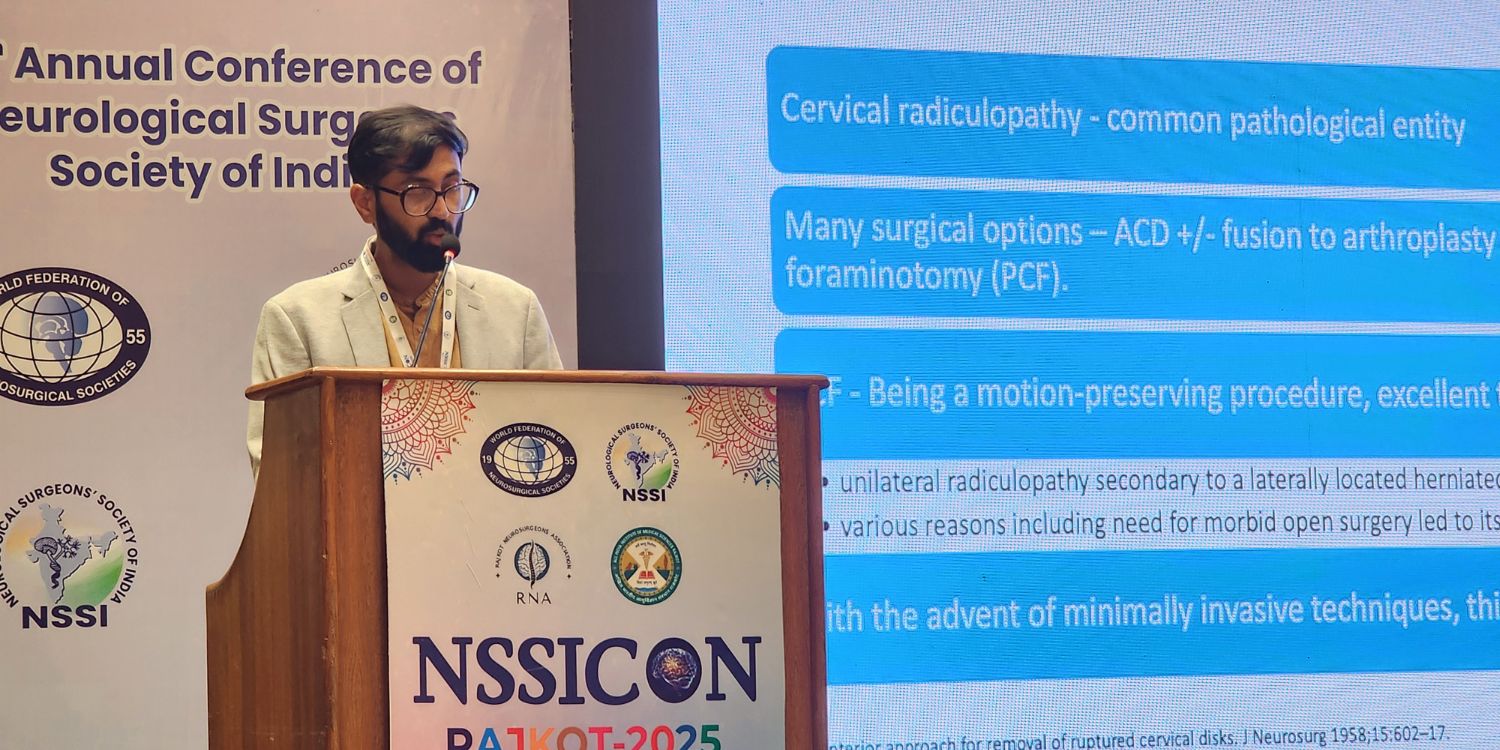
Modern medicine is no longer confined to the operating room, and neither is Dr. Akshay Hari. From cadaveric workshops and international conference presentations to awareness programs and academic contributions, he has steadily positioned himself as a thought leader in spine surgery. His work reflects a broader vision: Not just treating patients, but shaping how spine care is practiced and perceived.
Looking ahead, Dr. Hari identifies several areas poised to influence the future of spine surgery. Advances in AI, robotic-assisted procedures, and navigation systems are already enhancing surgical precision and planning. Minimally invasive techniques are expected to become increasingly standard across a wider range of conditions.
However, he maintains that technology will remain an adjunct rather than a replacement for clinical judgment. The integration of innovation with foundational principles of patient care will define the next phase of surgical practice.