
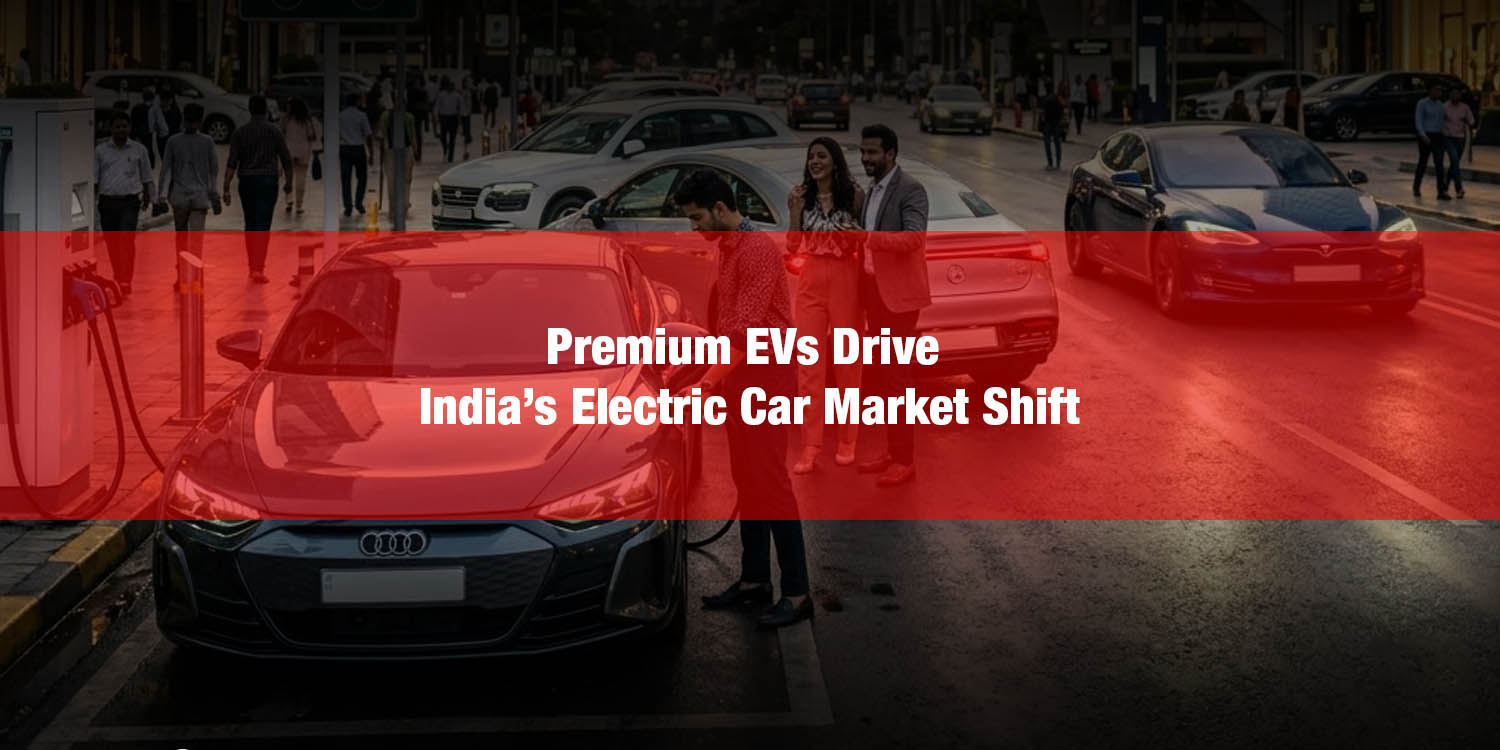
India’s electric vehicle (EV) market is increasingly moving toward the premium segment, with automakers focusing on higher-priced models even as mass adoption remains gradual.
Recent data indicates a sharp rise in demand for mid-range and luxury electric cars. Vehicles priced between ₹20–30 lakh now account for over a quarter of total EV sales, up significantly from just a few years ago, while the share of cars above ₹30 lakh has also expanded. This trend highlights a clear shift in consumer preference toward feature-rich, high-performance electric vehicles.
Industry experts attribute this premiumisation to a combination of improved product offerings and evolving buyer expectations. Higher-end EVs typically offer better driving range, advanced technology, and enhanced safety features, factors that appeal to urban, affluent consumers who are less sensitive to upfront costs.
Automakers have responded by accelerating launches in the premium category, aligning supply with this growing demand. The strategy reflects a broader industry recalibration, where companies prioritise margins and brand positioning over volume-driven growth in the short term.
However, this upward shift also underscores a key challenge: mass adoption of EVs in India remains limited. Affordability continues to be a major barrier, particularly in a price-sensitive market where entry-level vehicles dominate overall car sales. While premium EVs are gaining traction, the lower-cost segment has not seen comparable growth.
This divergence suggests a two-speed EV market. On one hand, premium electric cars are gaining momentum among early adopters and high-income buyers. On the other, widespread adoption will depend on addressing cost barriers, expanding charging infrastructure, and improving accessibility for the broader population.
As India pushes toward its long-term electrification goals, the current trend signals that the transition is being led from the top end of the market. Whether this momentum can eventually translate into mass adoption remains a critical question for policymakers and industry stakeholders alike.