
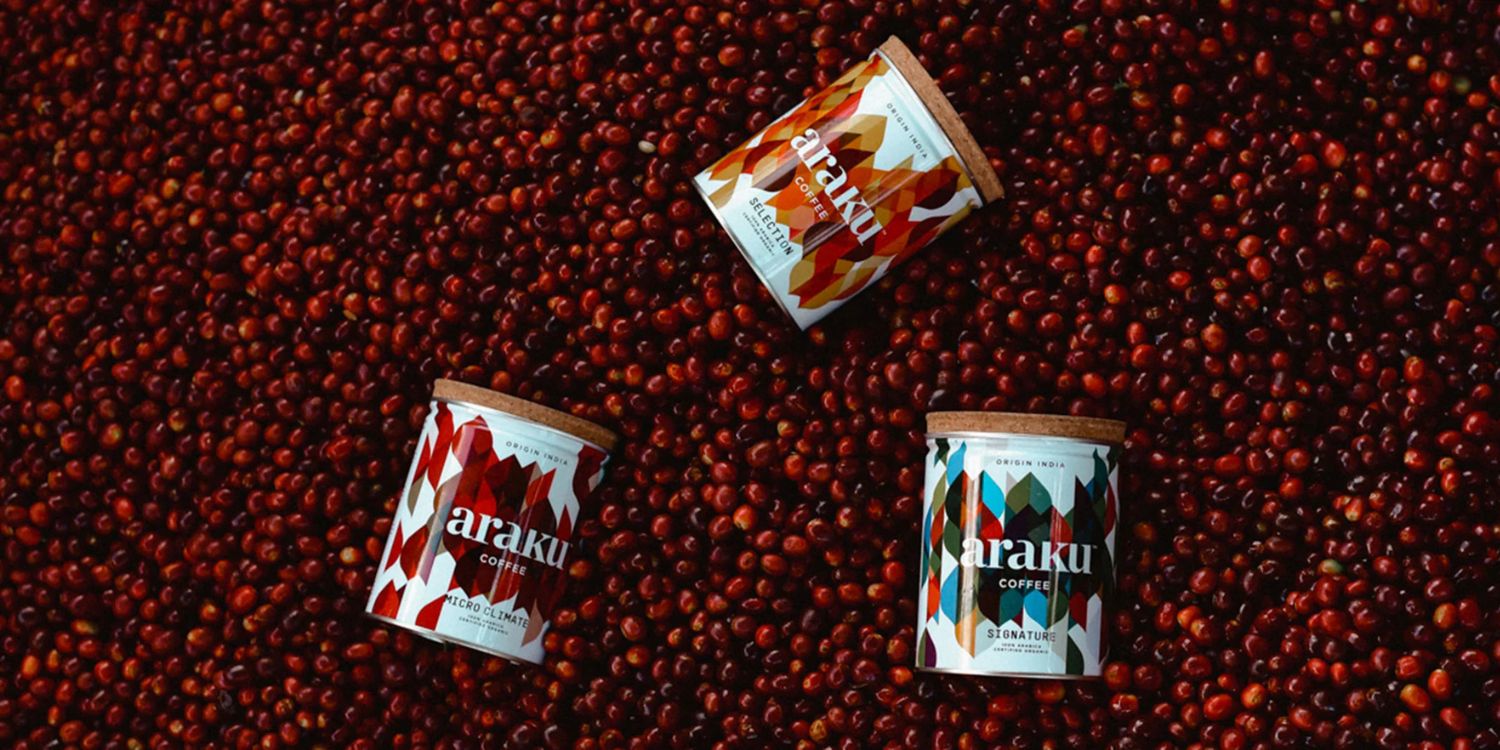
When a tradition is made out of food or beverages, it becomes an identity, a part of their land and culture and coffee in the Araku Valley was part of a larger socio-economic intervention, one that aimed to transform both land and livelihoods. What exists today as “Araku Coffee” is the outcome of that layered evolution, where agriculture, sustainability, and market positioning intersect.
The Araku Origin Story
The foundation of Araku Coffee can be traced to the early 2000s, when initiatives led by organizations like the Naandi Foundation and supported by the Coffee Board of India began working with tribal communities in the Araku Valley region of Andhra Pradesh. The goal was not simply to cultivate coffee, but to introduce a sustainable, income-generating crop that could thrive in the region’s conditions.
Over time, this evolved into a large-scale cooperative model involving thousands of indigenous farmers. The introduction of regenerative agricultural practices, including organic farming, shade-grown techniques, and soil restoration, turned Araku into one of India’s most distinctive coffee-growing regions. The brand itself was later formalised to bring this product into both domestic and international specialty markets, bridging rural production with urban and global consumption.
The Seed-to-Cup Advantage
What sets Araku apart is not a single feature but an ecosystem. Unlike conventional coffee brands that source beans through fragmented supply chains, Araku operates on a “seed-to-cup” philosophy. The farmers are not peripheral suppliers; they are central stakeholders in the value chain.
The cultivation is entirely organic, but more importantly, it is regenerative. This means the focus is not just on avoiding chemicals, but on actively improving soil health, increasing biodiversity, and ensuring long-term agricultural viability. Coffee here is grown alongside other crops, maintaining ecological balance rather than monoculture efficiency.
There is also a noticeable restraint in branding. While many specialty coffee brands rely heavily on exaggerated tasting notes or lifestyle positioning, Araku leans into minimalism. The differentiation is embedded in the process, not amplified through marketing noise.
The Long Game Brew
Araku Coffee’s business model is structurally different from most new-age coffee startups. It is neither a typical fast-moving consumer brand nor a purely café-driven business. Instead, it operates as a vertically integrated specialty coffee enterprise.
At one end, it works directly with farmer cooperatives, ensuring traceability and fair compensation. At the other, it positions itself in the premium and specialty coffee segment, both in India and internationally. Its cafés, including experience centres in cities like Bengaluru and Paris, are less about volume and more about controlled brand storytelling.
Retail presence exists, but it is curated, focusing on roasted beans, ground coffee, and select products rather than mass-market instant formats.
The Quiet Complexity
Among its offerings, the Araku Selection Coffee (often associated with its micro-lot and specialty-grade beans) stands out as a flagship representation of the brand.
In terms of taste, Araku’s coffee is typically described as balanced and structured rather than intense. The first impression is a mild, clean acidity, not sharp, but bright enough to add clarity. This is followed by soft chocolatey undertones, often leaning toward dark cocoa rather than sweetness-heavy milk chocolate.
There are also subtle fruity notes, depending on the batch, sometimes resembling hints of berries or dried fruit, but these remain understated. A gentle nuttiness rounds out the profile, giving the coffee a smooth, cohesive finish. The body is medium, neither too heavy nor too light, making it versatile across brewing methods.