
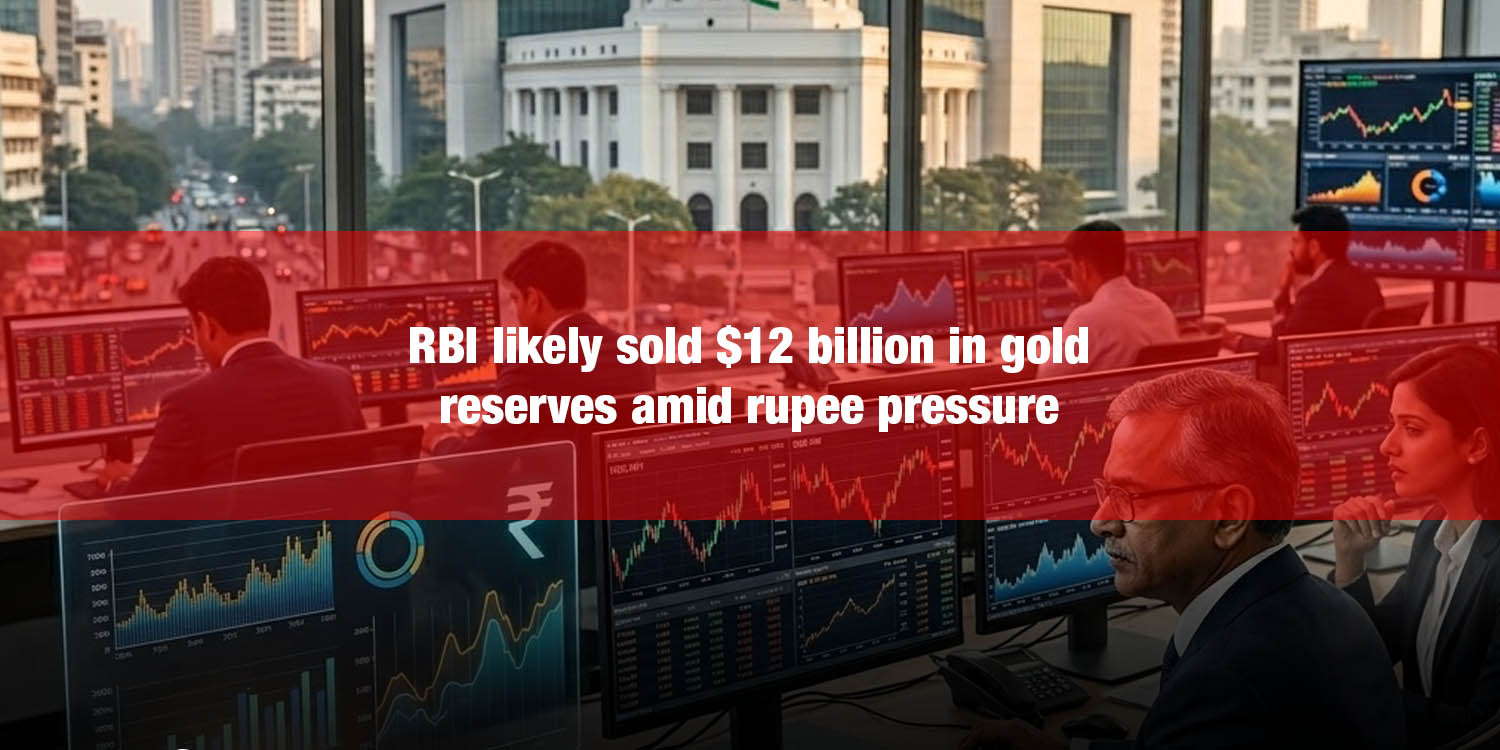
India’s central bank, the Reserve Bank of India (RBI), is estimated to have sold nearly $12 billion worth of gold reserves within a two-week period ending May 22.
The assessment, based on an analysis by Bloomberg Economics, suggests that the RBI simultaneously increased its holdings of foreign currency assets by about $7.5 billion, indicating a strategic shift in reserve composition.
Strategic rationale
The reported move is widely interpreted as an effort to stabilise the Indian rupee and protect foreign exchange reserves during a period of heightened global uncertainty. Economic pressures stem largely from:
- Rising crude oil prices
- Capital outflows from emerging markets
- Ongoing geopolitical tensions in West Asia
These factors have increased demand for dollars and placed downward pressure on the rupee, prompting central bank intervention.
Shift toward liquidity
Analysts note that gold, while a stable store of value, is less liquid compared to foreign currency assets. By reducing gold holdings and boosting dollar reserves, the RBI appears to be prioritising short-term liquidity and currency defence mechanisms.
The decline in reserves occurred despite higher import duties on gold, typically a factor that would increase the valuation of bullion holdings, further reinforcing the likelihood of active gold sales.
Broader economic context
India’s foreign exchange reserves have recently come under pressure, reflecting central bank actions to support the rupee amid global market volatility.
The reported gold sale also aligns with a broader global trend, where central banks have begun adjusting reserve strategies in response to geopolitical risks and financial market instability.