
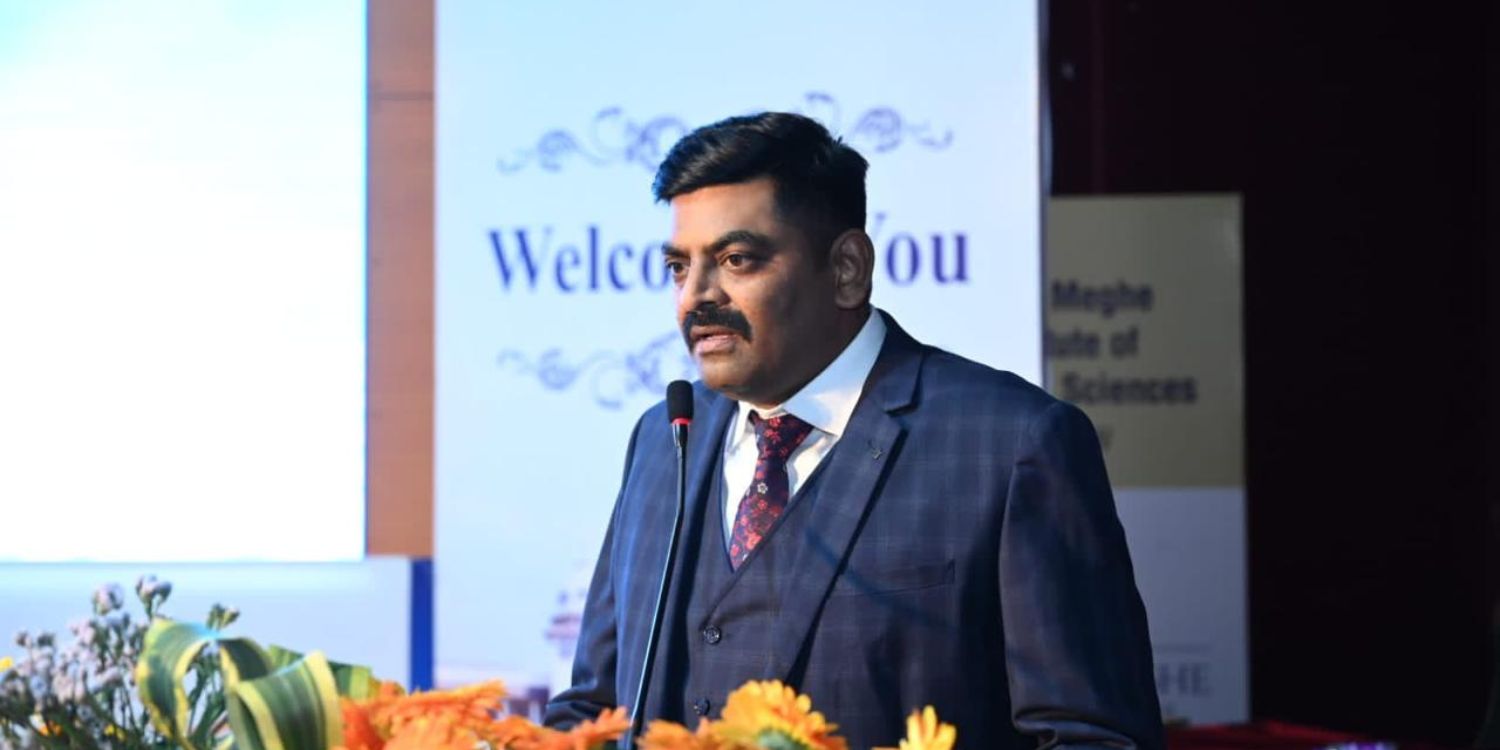
After 19 years of neurosurgical practice, complex clinical decision-making, and meaningful academic contribution, there comes a stage in a clinician’s journey where experience evolves into responsibility, the responsibility to educate, mentor, and contribute to the advancement of the field itself.
For Dr. Sandeep W. Iratwar, that transition was well planned. He chose to channel that experience toward strengthening neurosurgical education and expanding the discipline with the same precision that defined his clinical work. We feature him amongst the top neurosurgeons in India as a sign of respect and acknowledgement for his efforts in every perspective possible.
First Encounters, Lasting Impact
While pursuing his MS in General Surgery, repeated encounters with patients presenting with head injuries, spinal disorders, and brain tumours offered a first-hand understanding of the complexity and urgency that define neurological care. What proved decisive was witnessing the degree of transformation neurosurgical intervention could create. Patients often arrived in severely compromised neurological states, with poor functional capacity and uncertain outcomes. Yet with timely medical and surgical management, many demonstrated significant recovery.
The Neurosurgeon’s First Responsibility
Neurosurgery is frequently viewed through the lens of technical difficulty, but as Dr. Iratwar’s perspective makes clear, surgical execution is only one aspect of the specialty. Clinical judgment remains equally central.
A recurring principle in his practice is that neurosurgery must first be approached as neurological surgery. The responsibility is not simply to operate with surgical precision, but to determine which patients genuinely benefit from intervention and which are better managed medically. This distinction, he notes, is among the most difficult competencies to master and remains a lifelong learning process.
Alongside clinical decision-making came the technical demands of the field. Microsurgical neurosurgery required prolonged refinement, particularly given the precision necessary in operating around delicate neural and vascular structures. The later transition into endoscopic neurosurgical procedures introduced another layer of complexity.
At the Edge of Specialist Care
Following formal training, Dr. Iratwar joined the Datta Meghe Institute of Higher Education, Wardha, where he began practice as the only neurosurgeon serving that region. The clinical realities were demanding. Many patients came from rural communities, particularly agricultural backgrounds, often presenting late due to financial and geographic barriers to specialist care. Advanced intracranial tumours, including complex skull base lesions, were common, frequently accompanied by poor neurological condition at presentation.
Managing these cases became a formative stage in his independent practice. Skull base surgery, in particular, emerged as an area of sustained interest, requiring meticulous planning, advanced anatomical understanding, and high-stakes decision-making.
Building the Ecosystem of Neurosurgery
Dr. Iratwar’s contribution extended beyond operative practice into institutional development. At the time of his arrival, neurosurgical services at the medical college operated with minimal infrastructure, beginning from a general surgery ward without a dedicated neurosurgical operating environment.
Over approximately fifteen years, that framework evolved into a fully developed advanced neurosurgical department equipped with modern capabilities, including neuro-navigation and intraoperative neuro-monitoring systems. In many Indian healthcare settings, specialty growth is often inseparable from infrastructure development, and his career reflects that dual responsibility.
Academic leadership followed naturally. Dr. Iratwar became the first Professor of Neurosurgery in central India to initiate MCh neurosurgical training, establishing a formal academic pathway for future specialists. His first trainee successfully completed the programme, marking an important milestone in regional neurosurgical education.
Defining Surgical Philosophy
Across nearly 8,800 neurosurgical procedures, including approximately 1,800 brain tumour surgeries, Dr. Iratwar’s approach appears grounded in disciplined intervention rather than aggressive proceduralism. This is particularly evident in brain tumour surgery, where the guiding principle remains maximum safe resection. The distinction is critical. While extensive tumour removal may improve oncological control, preservation of neurological function remains equally essential, particularly when lesions involve eloquent regions responsible for speech, motor function, vision, or language. Contemporary techniques have made that balance more precise. Awake craniotomy, intraoperative neuro-monitoring, white matter functional mapping, and subpial dissection strategies allow surgeons to extend resection safely while preserving critical neurological pathways.
In 2016, advanced training in neuro-navigation guided keyhole neurosurgery under Professor Charlie Teo in Sydney expanded his minimally invasive cranial practice. Yet minimally invasive surgery, in his framework, is not synonymous with reduced ambition. Patient selection remains highly specific, requiring careful assessment of tumour location, neurovascular relationships, and surgical accessibility. When appropriately applied, keyhole techniques minimise tissue disruption without compromising operative goals.
The Future of Neurosurgery in India
Looking ahead, Dr. Iratwar identifies continued advancement in minimally invasive neurosurgery as an ongoing transition, but sees future shifts emerging from brain-computer interfaces and neuromodulation, particularly in severe neurological trauma.
At the same time, his perspective remains grounded in healthcare realities. Adoption of frontier technologies in India will depend not only on clinical readiness, but on affordability, infrastructure, and policy support. While public healthcare initiatives may gradually improve access, widespread integration remains a longer-term challenge.
And for the neurosurgical trainees, Dr. Iratwar’s message is notably direct: fundamentals cannot be bypassed.
Technical innovation, sophisticated instrumentation, and procedural advancements may transform how surgery is performed, but none replace mastery of core sciences, disciplined judgment, and learning from every patient encounter. In neurosurgery, where decisions carry immediate and often irreversible consequences, that foundation remains indispensable.