
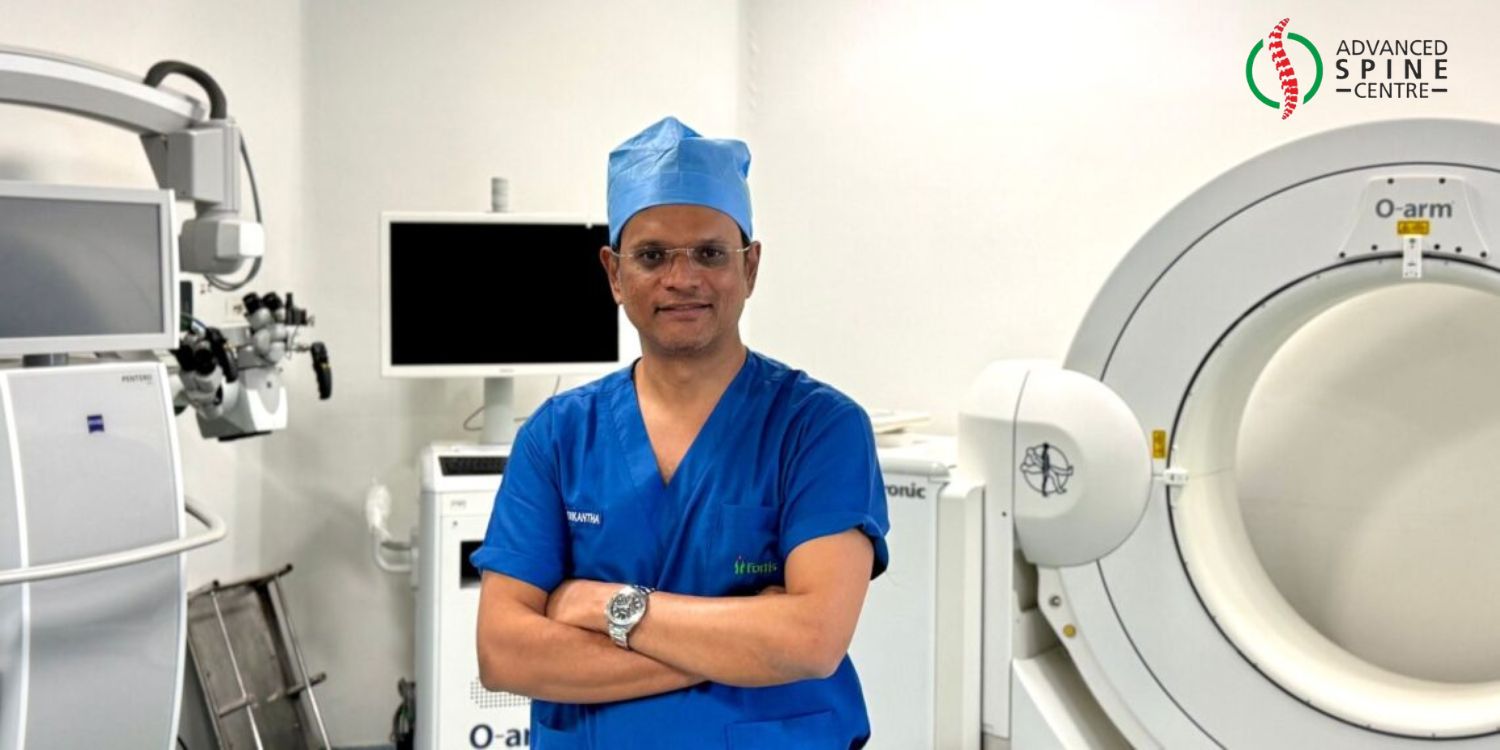
In an era defined by increasing cross-disciplinary integration and layered superspecialisation, achieving depth within a single domain demands sustained focus, discipline, and clarity of purpose. The pursuit of clinical finesse is not merely about breadth of knowledge, but about refining one’s core expertise to a level of precision and consistency that directly enhances patient outcomes. Dr. Umesh Srikantha exemplifies this approach.
Recognised and respected among peers in the medical community, his work reflects a measured commitment to both technical excellence and patient-centred care. It is in acknowledgment of this sustained contribution that we feature him among “India’s Most Distinguished Leaders in Neurosurgery – 2026,” highlighting a professional journey defined by focus, adaptability, and clinical integrity.
Where Direction Took Shape
Born in a small village in central Karnataka, Dr. Umesh Srikantha’s early life was shaped by mobility, owing to his father’s transferable profession. This exposure to multiple environments coincided with a strong academic inclination toward engineering and mathematics. Medicine was not an inherited aspiration; there were no doctors in the family. The decisive shift came after he secured a high rank in the entrance examination, making a medical seat readily attainable. Family influence played a determining role in this transition.
Commitment to Complexity
During his undergraduate medical training, an early interest in the nervous system began to develop. This aligned with a broader recognition that general medical qualifications were increasingly insufficient in a rapidly advancing clinical landscape. Super-specialisation was not viewed as optional, but essential. Neurosurgery offered both intellectual depth and long-term relevance.
His training at the National Institute of Mental Health and Neurosciences (NIMHANS) provided exposure to a wide range of neurological disorders within a high-volume, structured clinical environment. The experience was defined by rigorous mentorship and an emphasis on precision in patient care. Following this, he spent two to three years practising as a general neurosurgeon, performing a broad spectrum of procedures.
Subspecialising in Spine
A significant portion of his early clinical workload, approximately 50 to 60 percent, comprised spine-related cases. This distribution informed a strategic decision to subspecialise further. Around 2010, minimally invasive and endoscopic spine surgery were emerging fields in India, with limited but growing adoption. To advance his expertise, Dr. Srikantha pursued fellowship training in South Korea where he trained under Dr. Lee who was then a leading specialist for minimally invasive spine techniques. The fellowship introduced a model in which a substantial majority of procedures, up to 80–90% were performed using minimally invasive approaches.
From Niche to Norm
Over the past decade, Dr. Srikantha believes that the adoption of minimally invasive spine surgery in India has undergone a measurable shift. Early challenges were largely economic, with dependence on imported implants from American and European manufacturers limiting accessibility. The emergence of Indian manufacturers has significantly improved affordability and broadened access. At the same time, patient awareness has increased. Where earlier consultations required detailed explanation of newer techniques, patients today often seek minimally invasive options proactively, which denoted a shift in both information access and expectations.
Redefining Surgical Priorities
Dr. Srikantha’s approach has evolved from an early emphasis on technical precision to a broader focus on patient outcomes. He quoted that “Over time, I have realised that surgery is not the only answer to a patient’s problem. A lot of times, patients can be treated with non- non-surgical options, and this is something that I have been incorporating more and more into my practice. I strongly believe in exhausting all the non-surgical options before considering the surgery, in which case it becomes a more meaningful outcome”. Accompanying the principle of informed consent, recognising that many patients lack clarity about procedures and risks, he emphasises detailed communication regarding treatment options, surgical plans, and potential complications.
Beyond One-Size-Fits-All
Dr. Srikantha strongly advocates having surgical decision-making approached on a case-by-case basis, with no single technique applied universally. Factors such as pathology, symptoms, patient age, and expected outcomes guide the treatment plan. Proficiency across endoscopic, minimally invasive, and open approaches allows for flexibility in selecting the most appropriate method. Technological advancements have further enhanced this process. Intraoperative neuromonitoring improves safety by tracking neural function in real time, while three-dimensional navigation systems enable highly accurate implant placement, with precision rates approaching 99.8 percent.
Beyond the Operating Room
Beyond clinical practice, Dr. Srikantha engages in structured activities such as high-altitude trekking, including annual Himalayan expeditions reaching elevations of up to 16,000 feet along with his fellow neuro doctors.
For younger practitioners, his guidance is consistent: early identification of a focused area within one’s field enables deeper expertise and more meaningful contributions to patient care. In a healthcare environment increasingly defined by specialisation, sustained focus and continuous learning remain essential for long term clinical impact.