
In medicine, one occasionally encounters professionals whose pursuit of excellence is driven not by recognition, financial reward, or public acclaim, but by a deeply personal commitment to becoming better at what they do. Such a mindset is rarely incidental; it is often shaped through years of discipline, demanding experiences, and the quiet accumulation of hard-earned expertise.
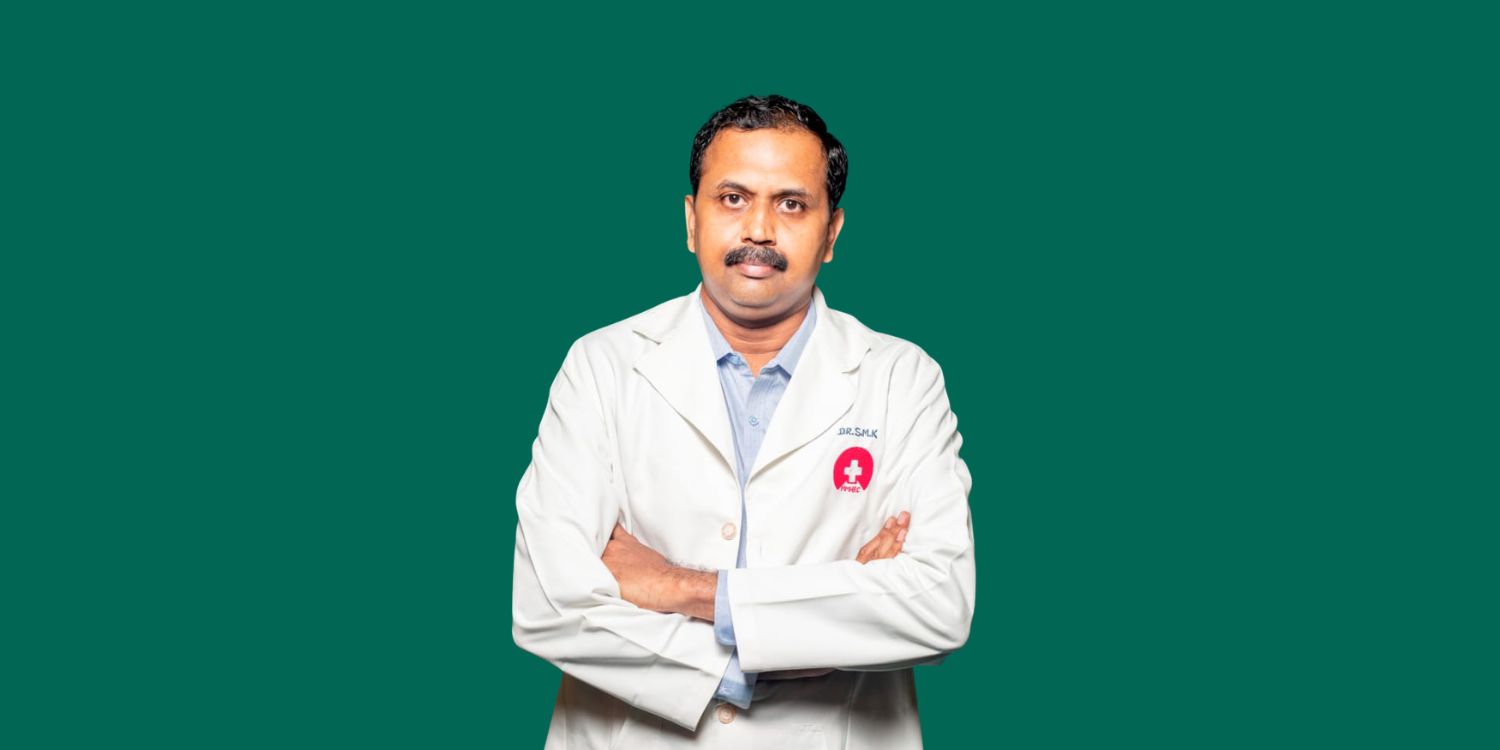
Hailing from Madurai, Dr. K. Selvamuthukumaran reflects this ethos through a career built on sustained effort and clinical dedication. Today, as Senior Consultant Neurosurgeon at Meenakshi Mission Hospital and Research Centre, his position represents not merely professional progression, but the outcome of years of rigorous practice, resilience, and a consistent pursuit of surgical excellence.
Neurosurgery, Then
For Dr. K. Selvamuthukumaran, the path to neurosurgery was an instant reckoning. The decision was made immediately after completing MBBS, driven by a clear and sustained interest in the discipline itself.
His postgraduate neurosurgical training, undertaken between the late 1990s and early 2000s, came during a markedly different era in Indian neurosurgical practice. The technological infrastructure that now defines contemporary neurosurgery, advanced navigation systems, high-definition endoscopic imaging, sophisticated operative adjuncts, and precision instrumentation, was either in its infancy or unavailable in many centres.
A significant part of this formative experience came through work in a high-volume neurosurgical environment with substantial trauma exposure. At the time, trauma neurosurgery formed a critical part of surgical training, providing repeated exposure to emergency decision-making, acute operative management, and high-pressure clinical scenarios.
The Weight of Firsts
Around 2003, he was involved in the management of a patient with a giant skull base meningioma, a highly complex intracranial tumour requiring technically demanding intervention. The case was clinically significant not only because of its complexity, but because of the circumstances surrounding it. The patient had reportedly been advised elsewhere that the prognosis was extremely poor, and the family approached surgery with little expectation of survival.
The surgery extended over approximately ten to eleven hours. The outcome, however, proved transformative. The patient recovered well and has reportedly continued long-term follow-up for nearly two decades. It is in such moments that the knowledge of altering a patient’s trajectory is accompanied by an experience that, in turn, reshapes one’s own life.
Neurosurgery, Now
The evolution of neurosurgery over the past two decades has been inseparable from technological advancement. Dr. Selvamuthukumaran’s career reflects this transition directly, particularly in the movement from conventional open approaches to minimally invasive and endoscopic techniques.
The transition to minimally invasive neurosurgery demanded significant capital investment in endoscopic systems, navigation platforms, imaging infrastructure, and specialized instrumentation. This shift required not only surgical readiness but administrative commitment. Establishing a minimally invasive neurosurgical programme meant convincing hospital leadership to invest in expensive systems whose clinical value would need to justify operational costs over time. Yet, Dr. Selvamuthukumaran was determined to make it happen.
Through a Sharper Lens
According to Dr. Selvamuthukumaran, endoscopic approaches account for the vast majority of contemporary pituitary interventions, with open surgery reserved only for select complex, multi-compartmental tumours.
This reflects a broader transformation in neurosurgical philosophy. Minimally invasive approaches are not simply smaller operations; they represent a recalibration of surgical goals around precision, reduced tissue disruption, faster recovery, and lower morbidity.
Technological improvements in visualization have played a decisive role in this change. Earlier endoscopic systems offered limited image clarity, constraining operative confidence and, in some cases, the completeness of tumour resection. The progression to high-definition and 4K imaging has significantly altered what surgeons can safely achieve. Better visualization allows clearer differentiation between pathology and surrounding normal anatomy, enabling more extensive yet safer resections.
The Persistent Human Challenge
Despite clinical progress, patient perception often lags behind medical reality. This remains particularly evident in neurosurgery, where fear surrounding operative intervention continues to shape decision-making.
Dr. Selvamuthukumaran notes that misconceptions surrounding brain and spine surgery remain common, particularly among patients from non-metropolitan settings. The belief that neurological surgery inevitably leads to paralysis, permanent disability, loss of consciousness, or death persists despite significant improvements in safety and outcomes.
These concerns are not entirely irrational; neurosurgery remains a high-stakes discipline. However, modern practice has materially reduced complication rates, mortality, and postoperative morbidity. Bridging this gap between clinical reality and public perception remains an important part of specialist practice.
What Neurosurgery Demands
During our interview with Dr. Selvamuthukumaran, we asked what’s the most important perspective of being a neurosurgeon, he quoted that, “in order to pursue neurosurgery, You have to keep this in your mind, that I am going to work for a long period of time. Neurosurgery has no fixed timings, you have to be on your toes all the time. Because emergencies can come at any time. Surgeries take hours together, and have to be mentally and physically tough. You need a strong mindset to sit through the entire surgery.”. Resilience, good decision making and mental preparedness is what can sail every young clinician through the ocean of medicine.