
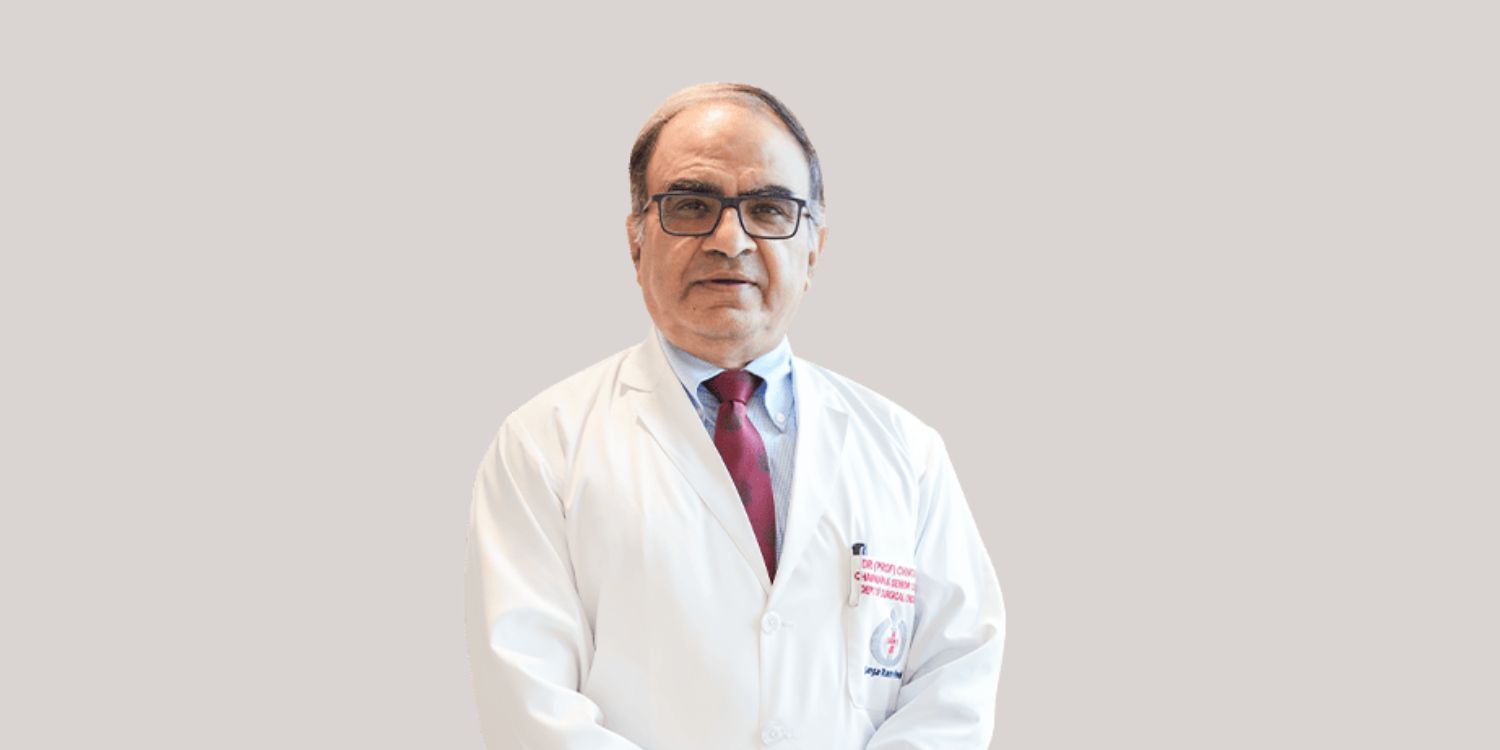
The wisdom of a surgeon is defined through their experiences of dealing with numerous cases of life and death and after more than four decades of working with cancer patients, Prof. Chintamani reflects on this perspective with clarity.
After many years of working as an oncologist, he reflects on the profound lessons the field has imparted. He notes, “Being with cancer patients teaches you about life, because most of us live with the assumption that we are not going to die tomorrow. They make you realise otherwise. And an awareness of death, in many ways, becomes the most honest way to understand life.”
Foundations of a Surgical Philosophy
Prof. Chintamani’s surgical journey began in 1986, at a time when subspecialisation in surgical oncology was not as sharply defined as it is today. Trained across multiple international centres, he was exposed to diverse systems of care and surgical philosophies.
From the outset, surgery was not merely a professional choice but an extension of a particular way of thinking about medicine. He has often articulated the view that a surgeon must first be a physician, and that operative skill is an addition rather than a substitute for clinical judgment.
From General Surgery to Oncological Focus
The move into oncology was not, by his own account, driven by a singular defining moment. Instead, it evolved gradually. During his early years of training, surgery was practised across organ systems. He wasn’t really fond of specializing in only a certain part of the body and surgical oncology, in that context, offered a way to retain a whole-body perspective while responding to an emerging need for specialised cancer care.
What began as a practical alignment of skills and opportunities eventually deepened into a sustained clinical focus. Repeated exposure to cancer patients, particularly at a time when outcomes were less favourable than today, introduced a dimension of practice that extended beyond technical intervention. Oncology, for him, became less about the disease in isolation and more about the condition of the patient as a whole; physically, psychologically, and existentially.
Complexity in Practice
Over the past three and a half decades, Prof. Chintamani’s work has spanned multiple domains within surgical oncology, including head and neck cancers, breast surgery, endocrine surgery, and soft tissue tumours. His case mix reflects both epidemiological realities in India and a deliberate willingness to engage with technically demanding procedures.
Head and neck oncology, in particular, represents one of the more complex areas of his practice. These surgeries are characterised by densely packed anatomical structures, limited operative space, and significant functional implications for the patient. Procedures often extend over several hours and require sustained precision. At the same time, his work in breast cancer has evolved alongside broader shifts in surgical philosophy. Having practised through the transition from radical mastectomy to breast conservation and, subsequently, to oncoplastic techniques, he has adapted to changes in evidence and patient expectations. His current approach integrates oncological clearance with reconstructive considerations, recognising that long-term outcomes now extend beyond survival to include quality of life.
Integrating Reconstruction into Cancer Care
The development of oncoplastic breast surgery has altered the decision-making framework in breast cancer care. Where earlier approaches prioritised disease control often at the expense of form, contemporary practice seeks to balance both.
However, Dr. Chintamani’s emphasis remains sequential rather than parallel: oncological safety precedes aesthetic reconstruction. Once disease clearance is achieved, reconstructive techniques, whether through tissue displacement or replacement, are employed to restore or, in some cases, improve breast contour.
From Practice to Pedagogy
Parallel to his clinical work, teaching has remained a consistent priority. Over the years, he has trained a large number of students and surgical trainees, many of whom have gone on to establish independent practices. In addition to formal teaching roles, he has contributed to academic literature, authored books, and organised training programmes and workshops. Some of his early academic contributions began with a focused study on neck surgeries and the intricacies.
His digital presence, including recorded lectures and educational content, extends this engagement to a wider audience, particularly younger surgeons and trainees.
Recognition of his contributions includes the conferment of an honorary fellowship from the American College of Surgeons, a distinction he has described as significant primarily for its peer-based validation rather than its symbolic value. As an international surgical advisor for the Royal College of Physicians and Surgeons, Glasgow, UK, and also formerly for the Royal College of Surgeons of Edinburgh, UK, he has worked tirelessly towards a standardized approach towards teaching and training in surgery especially in the field of Surgical Oncology.
On Clinical Discipline
A recurring theme in Prof. Chintamani’s reflections is the role of effort and discipline in clinical practice. He has consistently underscored the importance of sustained hard work, both as a means of skill acquisition and as a determinant of professional progression. In his view, outcomes attributed to chance are often the cumulative result of consistent effort. Over the course of his professional excellence, he distinguishes between mistakes as part of the learning process and repeated errors as failures of judgment, a distinction that informs both his teaching and his clinical philosophy.
Beyond Milestones
When considering legacy, Prof. Chintamani’s focus remains on people rather than milestones. The measure of his career, in his own framing, lies in the competence and conduct of the students he has trained and the patients he has treated. He wishes for more students to understand that life and living are not the same thing, what differentiates them is the passion you find within yourself to work harder and become the best version of oneself.