A common misconception persists within the healthcare landscape that Oncology is inherently associated with prohibitively high costs. This perception often reflects systemic gaps, in which access and affordability remain largely tied to urban healthcare infrastructure, leaving rural populations comparatively underserved.
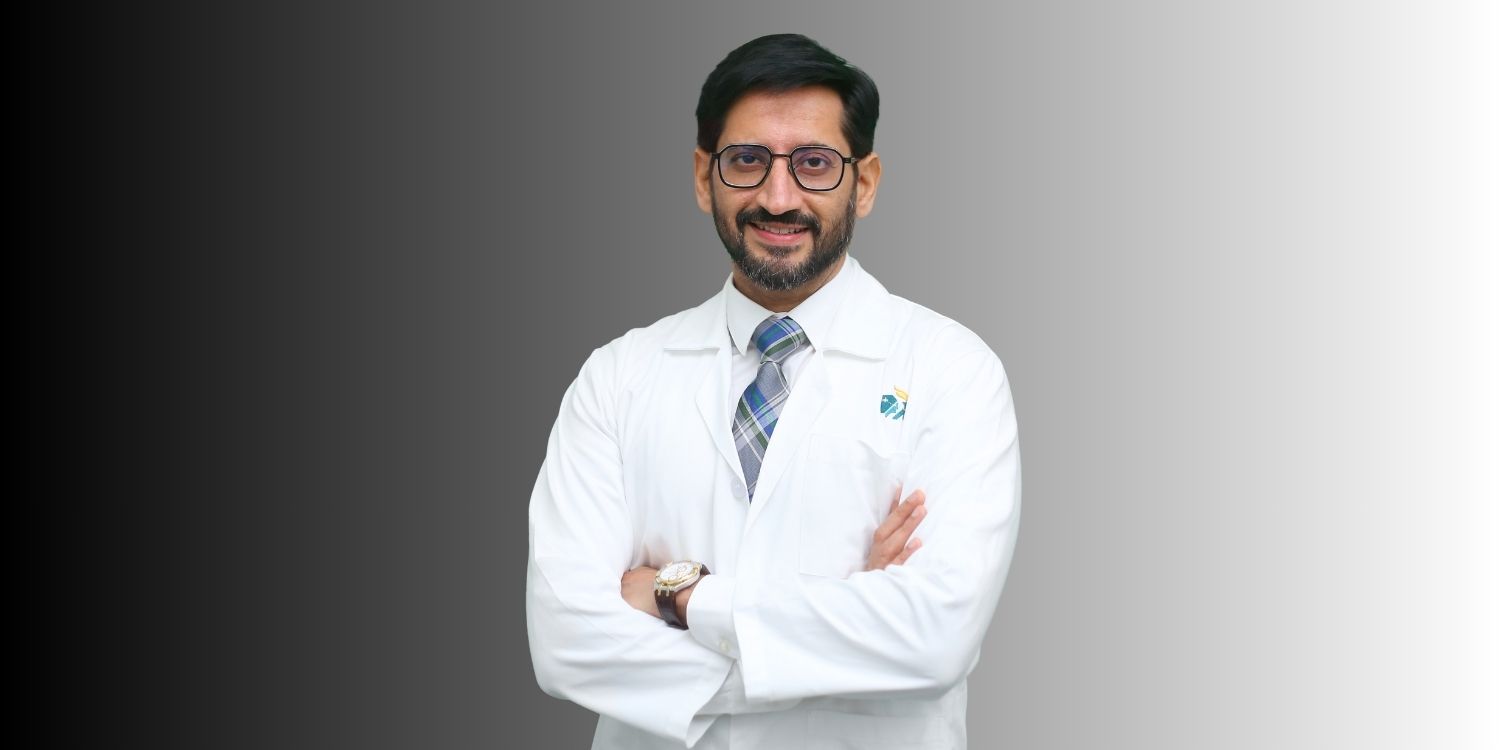
To counter this imbalance, oncologists such as Dr. Nikhil Suresh Ghadyalpatil have taken active steps to address these disparities, working towards making cancer treatment more accessible and feasible as a standard healthcare service. To feature him under “India’s Top Most Renowned Oncologist 2026” is a privilege.
The Making of an Oncologist
Exposure to medicine, for Dr. Nikhil Suresh Ghadyalpatil, was shaped less by legacy and more by the social value associated with the profession. Without a family background in medicine, his entry into the field was influenced by parental guidance and a broader understanding of medicine as a service-oriented discipline.
He pursued postgraduate training in Internal Medicine at King Edward Memorial (KEM) Hospital, Mumbai. Oncology became a part of his professional choice due to KEM Hospital being located adjacent to Tata Memorial Hospital, one of Asia’s largest cancer centres. In Dr. Ghadyalpatil’s vision, Oncology stood out as both a clinical challenge and a pitfall of systemic gaps. The disproportion between patient volume and specialist availability, combined with a personal experience and the evolving nature of cancer research, influenced his decision to explore the ocean of Oncology.
Clinical Integration in Oncology
Oncology, as a discipline, operates at the intersection of multiple specialties. Being an Oncologist, Dr. Ghadyalpatil’s primary focus is the administration of Chemotherapy, Immunotherapy, Targeted Therapy, and Cellular Therapies. His practice is an integration of the nature of cancer care, where diagnosis and treatment require coordination across Pathology, Radiology, Surgical Oncology, Radiation Oncology, and Medical Oncology. What intrigued him was the fact that Cancer Management is inherently complex due to the heterogeneity of the disease. Treatment decisions are rarely linear and often involve sequencing different modalities, including surgery, systemic therapy, and radiation. This necessitates structured collaboration, typically through multidisciplinary tumour boards, where individual cases are evaluated to determine optimal strategies.
Personalising Cancer Treatment
A defining shift in Oncology over the past decade has been the move towards Personalised or Precision Medicine. Dr. Ghadyalpatil emphasises that two patients with the same cancer type and stage may require entirely different treatment approaches based on underlying tumour biology.
Advances in genomic profiling have enabled clinicians to identify specific mutations and biomarkers, guiding the use of targeted therapies. Similarly, immunotherapy has altered treatment paradigms by enabling the immune system to recognise and act against cancer cells, which often evade detection through biological mechanisms.
Bridging Gaps in Cancer Care
Despite advancements, disparities in access to cancer care remain a defining challenge in India. Urban centres are equipped with advanced infrastructure. In contrast, patients in rural and semi-urban regions often face limited access to even basic oncology services.
This gap extends beyond infrastructure to include economic and logistical barriers. Dr. Ghadyalpatil expresses his concern over the matter that patients frequently travel long distances for treatment, incurring indirect costs. While government-backed schemes like Ayushman Bharat and Arogyashree Schemes have improved financial access to care, they do not fully address the variability in treatment quality across regions.
In response to systemic gaps, Dr. Ghadyalpatil, along with a group of like-minded oncologist friends, has been involved in initiatives aimed at decentralising cancer care delivery. This effort led to the establishment of the Optimus Oncology platform, conceived to make oncology services more accessible and feasible beyond metropolitan centres. Since its inception, oncology centres have been set up across smaller cities in Maharashtra, including Akola, Solapur, Latur, and Dhule, with further expansion currently underway.
These centres operate with a model that leverages government healthcare schemes to sustain treatment delivery while reducing the financial burden on patients as much as possible. By bringing services closer to patients’ homes, the model addresses both access and continuity of care, particularly for treatments such as Radiation Therapy that require repeated sessions.
Tailoring Therapy in Complex Cases
Dr. Ghadyalpatil highlights the importance of assessing physiological rather than chronological age. Chemotherapy becomes a topic where so many angles are considered before administering it. Geriatric evaluations and risk stratification tools are used to determine treatment suitability, with dose modifications or alternative therapies considered where necessary. The increasing use of targeted therapies and immunotherapy has provided additional options for patients who may not tolerate conventional regimens.
Choosing Oncology as a Discipline
For medical professionals considering Oncology, Dr. Ghadyalpatil strongly advises that oncology carries both complexity and scope for impact. It demands sustained engagement with emerging science, multidisciplinary collaboration, and a patient-centred approach. Yet, it also offers opportunities to contribute beyond clinical practice, particularly in addressing structural inequities in healthcare delivery. To utilize it for the greater good becomes a target of every aspirant entering this field.
Dr. Nikhil believes that there is hope for cancer patients. With emerging science and new advances in Surgical Radiation as well as Medical Oncology complemented with better understanding of genomics and newer therapeutic approaches would continue to improve the outcomes of patients in an accelerated manner.