
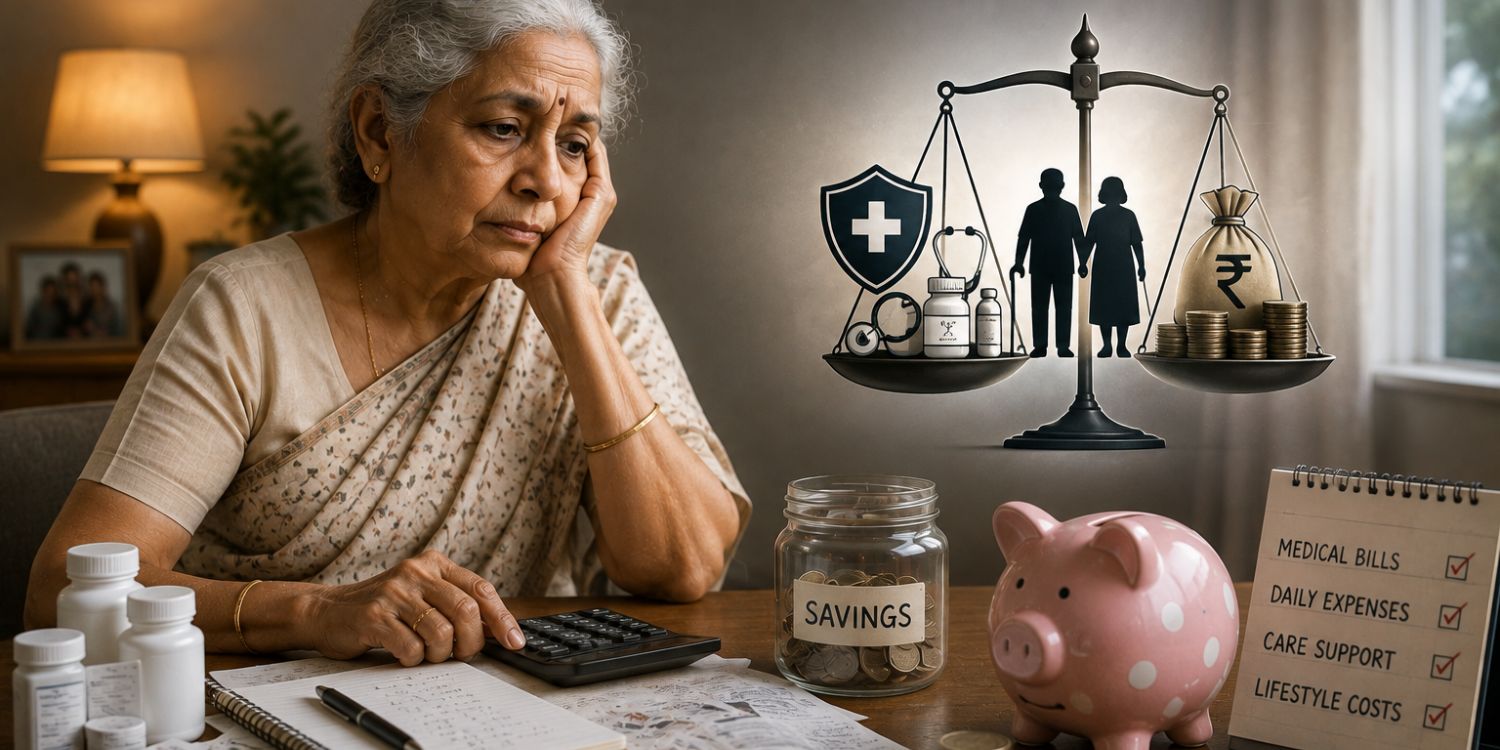
There is a version of India’s elder care story that reads like an investor’s pitch deck. A booming silver economy, a rising middle class, glossy senior living communities, and a generation of children eager to buy their parents comfort and dignity. It is a real story, but it is not the whole story.
The other version is quieter and far more common. It involves an elderly couple stretching a modest pension across rising medical bills, a widow with no pension at all relying entirely on a son’s uncertain income, or parents who worked their entire lives in the informal economy and now have nothing to show for it in old age except family goodwill. For the vast majority of elderly Indians, formal care is not a lifestyle choice. It is simply out of reach.
A Pension System Built for a Minority
India’s pension coverage was designed for a workforce that mostly does not exist anymore, or perhaps never fully existed in the way policy assumed. Formal sector jobs with employer-backed retirement benefits cover only a fraction of the population. The vast informal workforce, farmers, daily wage earners, small traders, domestic workers, retires with little more than savings, land, or the hope that their children will provide.
The result is a striking statistic that should sit at the center of any honest conversation about elder care in India: a large majority of elderly citizens have no pension cover whatsoever. Nearly eight in ten older Indians enter their final decades without a guaranteed income stream of their own. That is not a policy footnote. It is the defining fact of old age in this country.
When Family Becomes the Only Safety Net
With formal financial security largely absent, the family has had to function as India’s de facto pension system and insurance policy combined. The vast majority of elderly Indians depend on their families for everyday maintenance, from food and housing to medical expenses. This is not a cultural preference so much as an economic necessity. When the state and the market both fail to provide a safety net, the household becomes the only one left.
But this arrangement is under real strain. As covered in our previous piece on the shift from family to formal care, migration, nuclear families, and changing work patterns mean that adult children are often unable to provide the level of day-to-day support that earlier generations could. The safety net is thinning at exactly the moment more people need to rely on it.
The Two-Tier Reality of Elder Care
This affordability gap is quietly splitting India’s elder care landscape into two very different worlds. In one, urban, upper-middle-class families are investing in premium senior living, professional home care, and specialized services for conditions like dementia. In the other, the much larger population of elderly Indians, especially in rural areas where the majority actually live, has access to neither strong family support nor formal alternatives they can afford.
Private providers, understandably, have built their business models around the segment that can pay. That is not a criticism so much as an observation about how markets work. But it means that the fastest-growing, most visible part of India’s elder care sector is also the part serving the smallest share of India’s elderly population.
What Needs to Change
Government programs like the National Programme for Health Care of the Elderly and recent budget allocations for caregiver training are meaningful steps, but they are working against a structural gap that decades of informal employment created. Expanding pension coverage, particularly for informal workers, is not just a labor policy question anymore. It is an elder care policy question, because a secure income in old age is often the difference between a family being able to afford care and a family simply doing without.
For providers and policymakers alike, the affordability gap is the uncomfortable subplot beneath the silver economy headlines. The market opportunity in Indian elder care is real, but so is the much larger population it currently cannot reach. Closing that gap will take more than better products. It will take a rethink of how India funds old age itself, for everyone, not just those who can pay for it.