
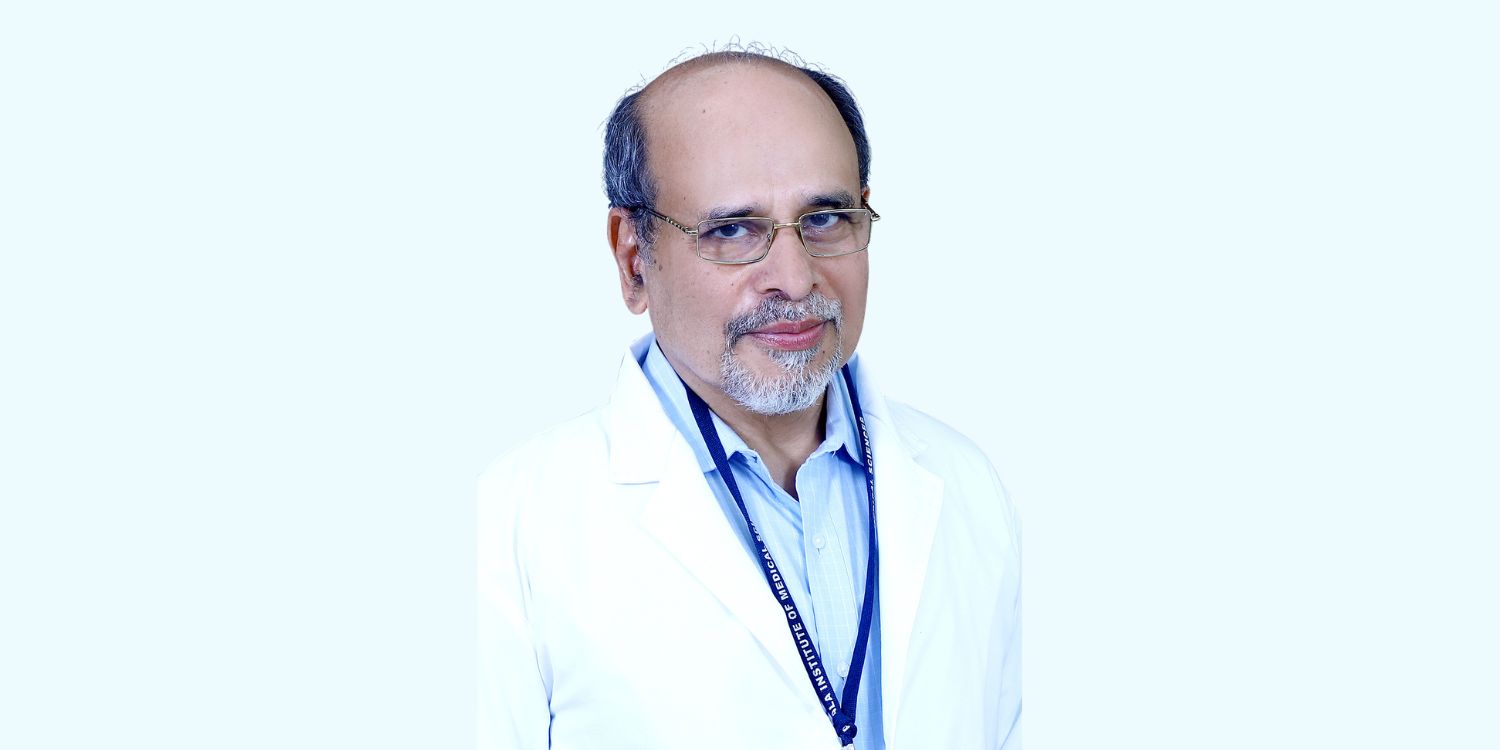
Sometimes, what we wish for is completely different from where we eventually end up, and that is understood in different ways by different people.
Dr. Dominic Puthoor, as he quotes from the Holy Bible, “In their hearts humans plan their course, but the Lord establishes their steps” (Proverbs 16:9), found his calling in orthopaedic oncology after multiple setbacks and dead ends. Today, he has established himself as a recognised name in his field.
An Unplanned Route to Orthopaedics
Dr. Dominic K. Puthoor’s academic path began outside medicine. After modest pre-degree results, he enrolled in B.Sc. Chemistry and completely dedicated himself to the subject, which led to him securing first rank at Calicut University in 1976. Despite his passion for chemistry due to his circumstances. His initial goal was to serve as a general practitioner, particularly for the rural population.
While in government health service and after starting a family, he profoundly brought a new perspective to life. He chose to pursue postgraduate training. He prepared for the entrance examination and secured admission to M.S. Orthopaedics. The discipline offered a combination of clinical assessment and operative work, which shaped his decision to specialise.
The Oncology Shift
After completing his postgraduate training, his application for a specialist position in the health service was rejected on technical grounds, leaving him without a post. Soon after, he joined Amala Cancer Hospital, Thrissur, where an orthopaedics department was being established. While others were hesitant about the terms, he accepted the position and took responsibility for developing the unit.
At Amala, the case load included a significant number of bone tumour patients. Continuous exposure to these cases led him to focus on orthopaedic oncology. He began presenting his unique cases and experiences at conferences, gradually establishing his practice in this subspecialty. Close association with Indian Musculoskeletal Oncology members and its academic activities helped him to keep abreast of developments in that subspeciality.
Changing Standards in Bone Tumour Care
Over the course of his career, the management of bone tumours has changed considerably. In the early years, amputation was the standard treatment for conditions such as osteosarcoma. This later shifted toward limb-salvage procedures.
During the early 1990s, reconstructive options included arthrodesis. He also performed rotationplasty during that period, which turned out to be the first case in South India. The introduction of mega prostheses changed tumour surgery. Initially, these implants were custom-made, requiring several weeks for production. Later, modular systems became available, allowing intraoperative assembly based on patient requirements.
Recent developments such as 3D printing and surgical navigation have improved accuracy in tumour resection and reconstruction. Indigenous prosthesis development in India, particularly by Prof. Ajay Puri and his team at Tata Memorial Hospital has also reduced dependence on imported systems.
Building a Multidisciplinary Orthopaedic Unit
When he joined Amala in 1988, it functioned primarily as a cancer hospital. By 2023, it had developed into a medical college. The orthopaedics department during this period expanded into matters such as sports medicine, arthroplasty, spine surgery, paediatric orthopaedics, and trauma care.
He limited his own work to orthopaedic oncology and entrusted leadership of other subspecialties to colleagues. Dr. Puthoor strongly believes that the entire department growth is nothing but the results of commitment and strong teamwork. That led to complex tumour surgeries being performed with support from multiple departments, including oncology, vascular surgery, and plastic surgery.
Execution of Limb-Salvage Surgery
Limb-salvage procedures form a major part of his work. These cases require detailed planning from the first consultation. He has been assisted by Dr. Dijoe Davis for 15 years now and recently, his former student, Dr. Ajith John, joined him in this demanding work. Patients are often referred from across Kerala. His typical work flow starts with a CT-guided core biopsy that is typically performed on the same day to establish diagnosis.
Preoperative preparation includes reviewing MRI scans with radiologists, coordinating with pathologists for intraoperative frozen sections, and involving oncology, plastic, and vascular surgeons when required. Operating theatre preparation includes ensuring sterility and confirming the availability of implants and prosthetic systems.
Addressing Gaps in Training
Outside his work, he is committed to endorsing education of his field specifics. He stated, “One of the greatest gaps I have observed is, the inadequate exposure postgraduate students receive in bone tumour management. Even when exposed, many faculty members are either unaware of or indifferent to developments in this field, leading to frequent mismanagement. On the other hand, there is a group of conditions known as tumour like lesions which I have found quite often overtreated. Classic examples are simple bone cyst and fibrous dysplasia.”
To address this, he has conducted a 10-day annual online course on bone pathology and tumours for the past twelve years. The program is aimed primarily at postgraduate students in orthopaedics. It includes lectures and a final live interactive session with personalities like Prof. Nirmala Jambhekar (former HOD of Pathology, Tata Memorial Hospital), Prof. Amit Janu (Radiologist, Tata Memorial Hospital), and Dr. Chetan Anchan (renowned orthopaedic oncologist from Mumbai). The course also includes academic assessments and awards. The next program is scheduled for February 2027.
Defining Surgical Excellence
Dr. Puthoor hopes to see a future where aspiring surgeons are better equipped to diagnose and manage bone tumours with precision, compassion, and confidence.
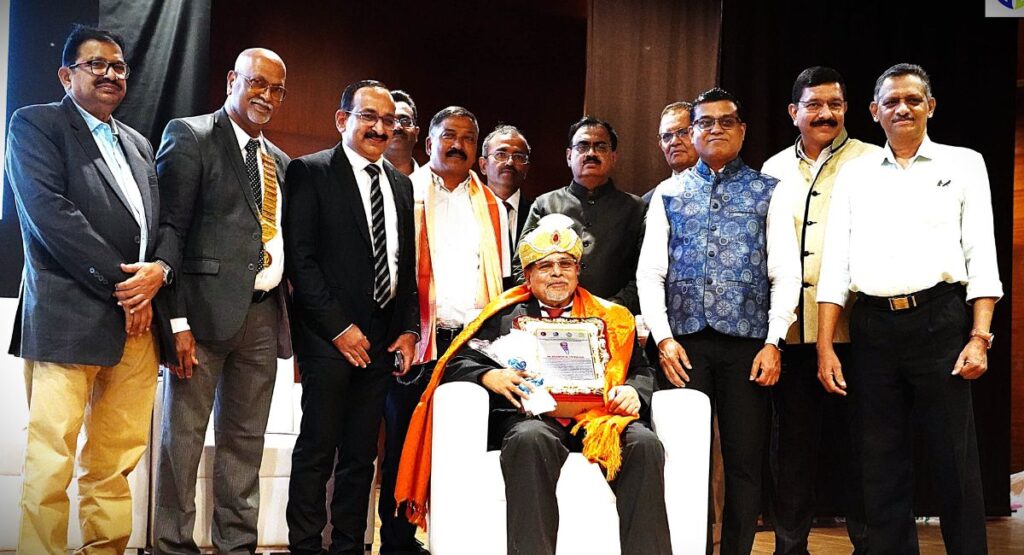
He states. “I strongly encourage young surgeons to embrace technology and minimally invasive techniques. While I personally could not master many of the newer methods, I ensured that my juniors received training and brought those innovations into our practice. The key lies in incorporating new techniques wisely, balancing innovation with sound clinical judgment. Openness to new developments, combined with unwavering adherence to the basics, continues to define excellence in orthopaedics. Technical mastery is important, but humility, adaptability, and respect for fundamentals are what make a surgeon truly exceptional.”