
India’s orthopaedic landscape is undergoing a quiet transformation. As trauma cases rise alongside an ageing population and a booming demand for joint health, the country is witnessing a shift from purely reactive treatment toward precision driven, evidence backed care. Spinal surgery, once considered a niche and high risk domain, is now at the centre of this change, with minimally invasive techniques and global best practices finding their way into Indian operating rooms.
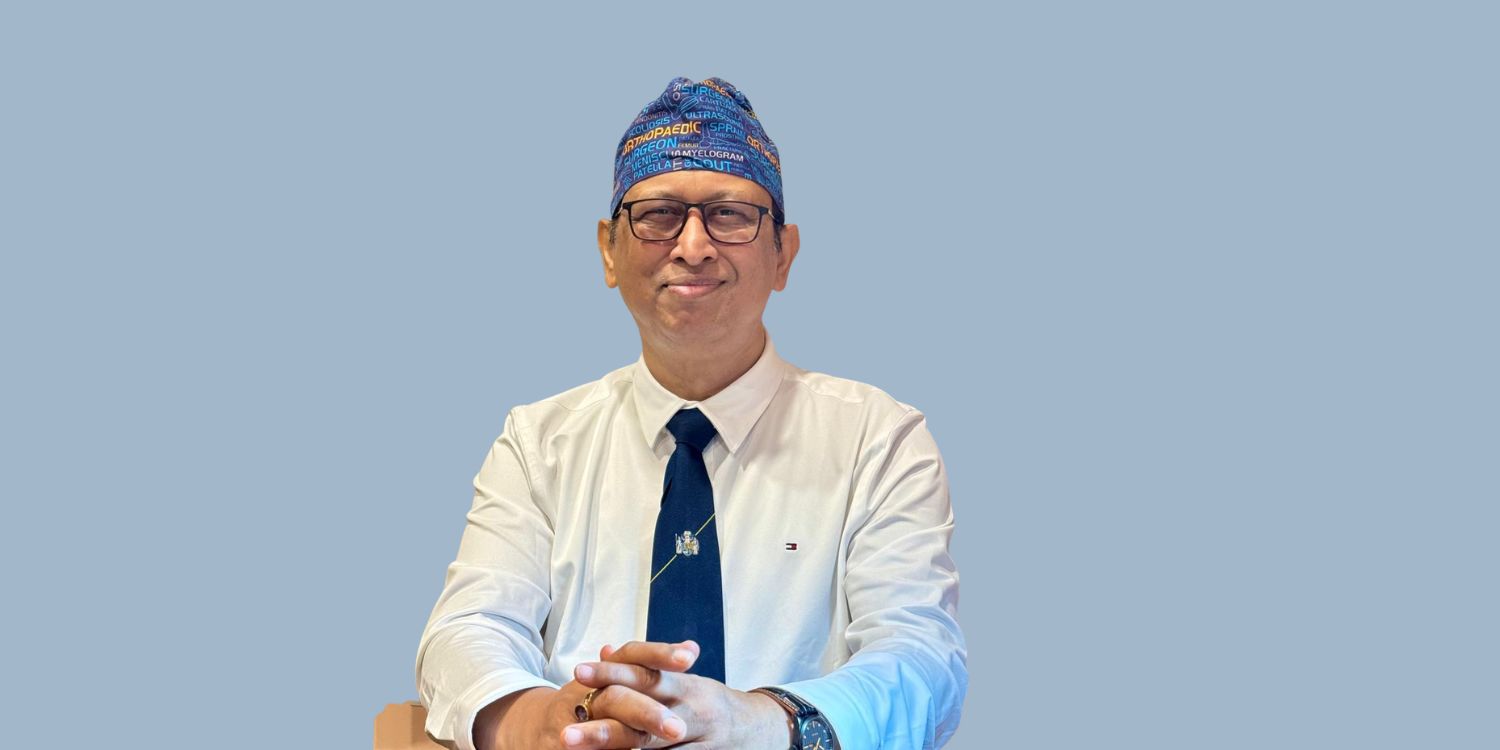
Few names capture this evolution as fully as Prof. (Dr.) Ujjwal Kanti Debnath. A Consultant Orthopaedics and Spine Surgeon with nearly four decades of experience across India, the UK, the Middle East and the United States, he has built a career on bridging international standards with the realities of Indian healthcare. From pioneering scoliosis correction for underprivileged patients through Operation Straight Spine to mentoring the next generation of surgeons, his work reflects a rare blend of technical mastery, research depth and social commitment, making him a natural inclusion among India’s leading orthopaedic voices this year.
Where it All Began
Dr. Debnath’s journey began in 1989, when he took up a role as Senior House Officer in Calcutta at Ramakrishna Mission Seva Pratisthan. It was here that his fascination with complex skeletal and spinal deformities, structural anatomy, fractures and human biomechanics first took root, setting the direction for everything that followed.
What started as a focused clinical interest soon widened into a truly international career. Over the years, he built experience across the UK, Ireland, the Middle East, India and the United States, guided by a simple yet ambitious philosophy of making world class healthcare accessible beyond privileged circles. This conviction would later find its most meaningful expression in Operation Straight Spine.
Alongside this expanding practice came a strong academic foundation. A Doctorate and Spine Fellowship from Nottingham, combined with FRCS training and a Certificate of Completion of Training earned over seven years in the UK, shaped his approach to medicine in lasting ways. These experiences instilled a philosophy he continues to uphold – that every treatment decision must rest on solid clinical data and long term predictive outcomes rather than convention alone.
It is this steady, methodical progression, spanning nearly every subspecialty within the field, that has shaped him into what he describes as a complete orthopaedic surgeon. Today his expertise extends across spinal surgery, joint replacement of the hip and knee, arthroscopic procedures of the knee and shoulder, fracture management and foot and ankle surgery.
Evidence Over Convention
Beyond the operating room, Dr. Debnath has built a substantial body of academic work, with numerous publications and book chapters to his name. Asked how this research shapes his everyday clinical decisions, he points to his most significant body of work – a doctoral thesis at the University of Nottingham on lumbar spondylolysis, centred on complex spinal deformities.
He explains that surgical knowledge was once passed down almost entirely through a learning partnership, with technique inherited rather than tested. His own doctoral work took a different route, focusing on predicting surgical outcomes through rigorous data rather than convention. “Evidence-based orthopaedics demands hard data,” he says, describing this as the real shift he has tried to bring into his practice.
This approach carries direct consequences for patients. Rather than recommending surgery by default, Dr. Debnath uses outcome data to guide conversations, at times telling a patient there is an 85% chance of spontaneous recovery through non-operative management, with surgery offering only a marginal improvement.
It is a principle he has carried into more complex territory as well, particularly paediatric spinal deformity and scoliosis. Summing up his philosophy, Dr. Debnath describes evidence-based orthopaedics not as a rigid formula but as a meeting point of three elements – the best available research, the surgeon’s own clinical judgement, and the individual patient’s values and lifestyle.
Precision as the New Standard
Looking ahead, Dr. Debnath is candid about where he believes the specialty is headed. Asked which innovations will define orthopaedics in the coming years, he lays out a handful of frontiers he sees converging, to be specific – smart implants paired with remote patient monitoring, a new generation of bioresorbable and bioactive materials, AI driven diagnostics working alongside advanced robotics, and 3D printing evolving beyond surgical guides.
For him, precision will soon move from being an advantage to becoming an expectation. “Sub-millimetre accuracy will become the standard,” he says, predicting that this level of exactness will extend well beyond elective hip and knee replacement into far more demanding territory, including time sensitive trauma cases and intricate spinal fusions.
Advice for the Road Ahead
For a specialty as demanding as his, Dr. Debnath believes success is built less on individual brilliance and more on sustained discipline. Mastering orthopaedics and spine surgery, he says, calls for a lifelong commitment to learning and scientific inquiry.
His advice to the next generation is straightforward yet layered. He urges young surgeons to pursue advanced international fellowships, recalling his own Fellowship at Nottingham as a defining chapter. He speaks equally of balance, between clinical workload and academic research, and between individual excellence and teamwork, crediting many of the assistant and associate professors he has trained for growing alongside him rather than merely under him. Just as importantly, he encourages young surgeons to find a mentor early, calling it essential to long term growth in the field.
All in all, for Dr. Debnath, technical skill and social responsibility are not separate pursuits but two halves of the same calling.