
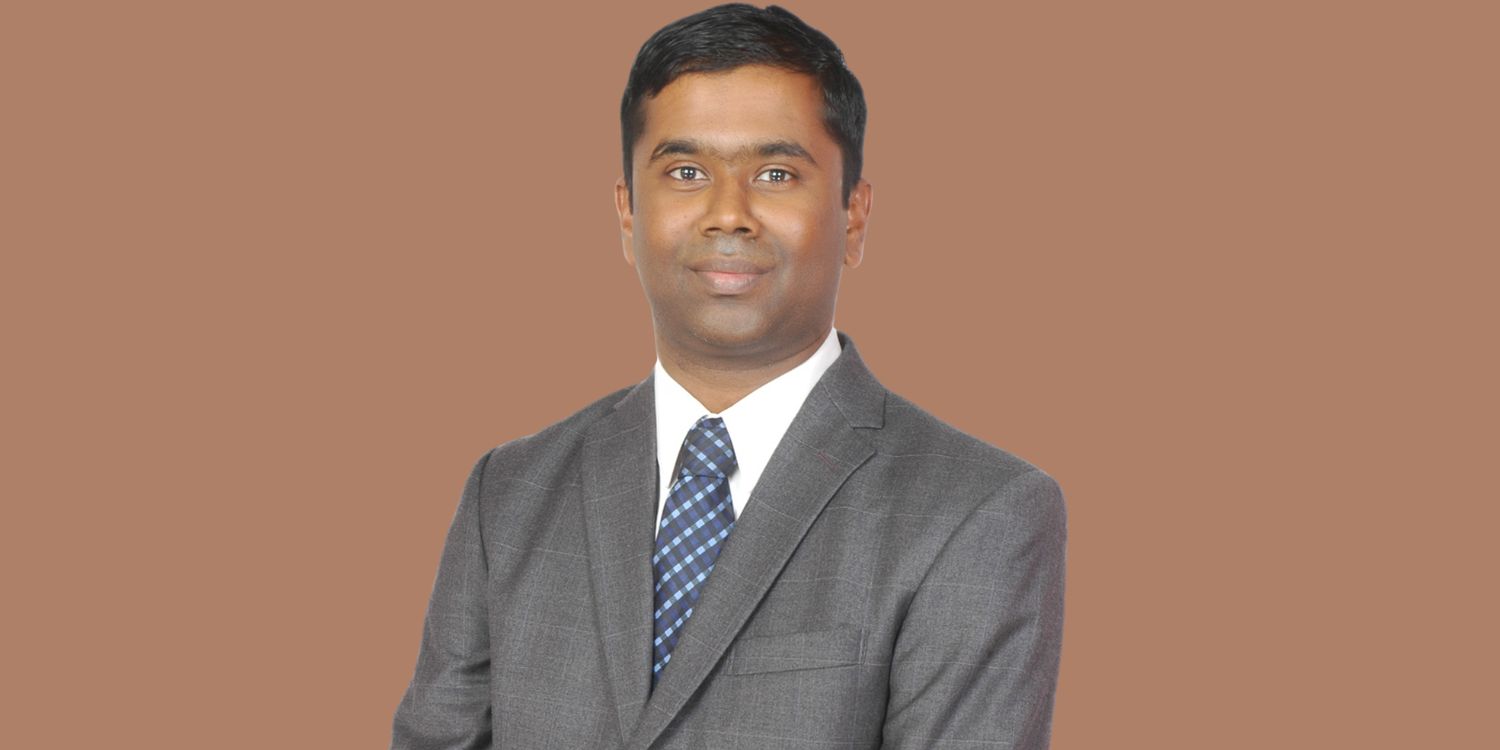
Orthopaedics occupies a curious space among medical specialties, part science, part engineering, part craft. Few fields offer a surgeon the ability to change a patient’s life as visibly and immediately as restoring a joint that has stopped working. It’s a discipline where precision in the operating room translates directly into a patient’s ability to walk, travel, or simply keep up with their grandchildren. Dr. Mohan K Puttaswamy, Consultant Reconstructive Orthopedic Surgeon at Fortis Hospital, Bangalore, embodies that balance, technical mastery earned across continents, paired with a dedicated focus on the patient in front of him. Dr. Puttaswamy’s training took him from rural trauma wards in India to a fellowship under a pioneer of modern knee replacement in the US, then to Harvard. Today, he’s come full circle in Bangalore, treating patients from over 20 countries.
The Making of a Surgeon
Dr. Puttaswamy traces his pull toward orthopaedics back to medical school, where he was struck by how directly the specialty could change a patient’s quality of life. “Few specialties allow you to restore mobility, relieve pain, and give patients back their independence so dramatically,” he says. Even after two decades in the field, he says the reward hasn’t changed – watching patients return to things they’d long given up, whether that’s walking without pain or simply enjoying time with family.
A defining chapter in his training came in the United States, where he trained under Dr. Kenneth Krackow, widely credited as one of the early pioneers of uncemented total knee arthroplasty. The lesson that stayed with him wasn’t about any particular device or technique, it was philosophical. “Successful joint replacement is built on principles rather than technology,” he explains, recalling Dr. Krackow’s insistence on meticulous surgical technique, careful soft tissue handling, and an uncompromising commitment to precision. He describes his mentor’s rare ability to hold both the individual patient and the wider impact of a surgical change in mind at once.
Two Worlds, One Standard of Care
Before his international fellowships, Dr. Puttaswamy spent four years as Assistant and Associate Professor of Orthopaedics at PESIMSR, treating a heavy trauma caseload in a teaching hospital setting. That experience, he says, exposed him to “the full spectrum of orthopaedic surgery”, from acute trauma to deformity correction and revision work, and taught him to think modestly without compromising on quality, a skill honed by working with limited resources.
That grounding proved unexpectedly valuable once he reached Harvard for his pediatric orthopaedics fellowship at Massachusetts General Hospital. Describing Harvard as an environment defined by a continuous chase for excellence, he credits the high-pressure exposure with sharpening his ability to manage complex deformity cases, a skillset he now applies to patients arriving in India, many of them war-injured or having gone through multiple failed prior surgeries. What stayed with him most from moving between a resource-poor Indian teaching hospital and a resource-rich American one was a simple realization that patient expectations, comfort for their loved ones, and a fast return to normal life, remain identical regardless of a community’s wealth.
A Career of Evolving Technique
Over a career spanning close to 1,000 joint replacement surgeries, including complex primary and revision cases, Dr. Puttaswamy has watched the field evolve substantially. In his view, the single biggest shift has been the move from standardized to personalized surgery. “Earlier, the emphasis was largely on implanting a prosthesis accurately,” he notes. “Today, we recognize that every patient’s anatomy, ligament balance, functional demands, and expectations are different.” Robotics, advanced imaging, and data-driven planning have made that individualization possible, but he’s equally quick to point out that perioperative care, from pain management to enhanced recovery protocols, has transformed the patient experience just as much as the surgery itself.
Correcting Common Misconceptions
Years of clinical practice have also given Dr. Puttaswamy a clear-eyed view of what patients get wrong. Chief among them is the belief that surgery should be delayed as long as possible. “Excessive delay often leads to worsening deformity, muscle weakness, reduced mobility, and declining overall health,” he cautions, noting that this can make eventual recovery harder, not easier. He also regularly finds himself clarifying the role of robotic-assisted surgery, reassuring patients that the robot enhances a surgeon’s precision rather than operating independently, and that surgical judgment remains firmly in human hands.
Looking Ahead for Indian Orthopaedics
Asked where the field is headed, Dr. Puttaswamy points to a wave of adoption of robotics, AI, and advanced imaging across Indian hospitals, but he’s careful not to frame technology as the whole story. For him, the bigger opportunity over the next five years lies in improving accessibility, standardizing training nationally, and strengthening multidisciplinary collaboration between surgeons, physiotherapists, and anaesthesiologists. His advice to younger surgeons deciding between an international fellowship and building a practice at home echoes this patient-first philosophy: fellowships are valuable, but what ultimately defines a surgeon is “curiosity, humility, and a commitment to lifelong learning,” wherever that learning happens.
Beyond the Operating Room
Away from surgery, Dr. Puttaswamy credits family time, reading, and staying current with developments in joint replacement as what keeps him grounded through demanding schedules. He also speaks of academic work, reviewing literature, writing, and mentoring as one of the more rewarding parts of the job, one that keeps him intellectually engaged and reinforces a belief that, in medicine, the learning never really stops.