
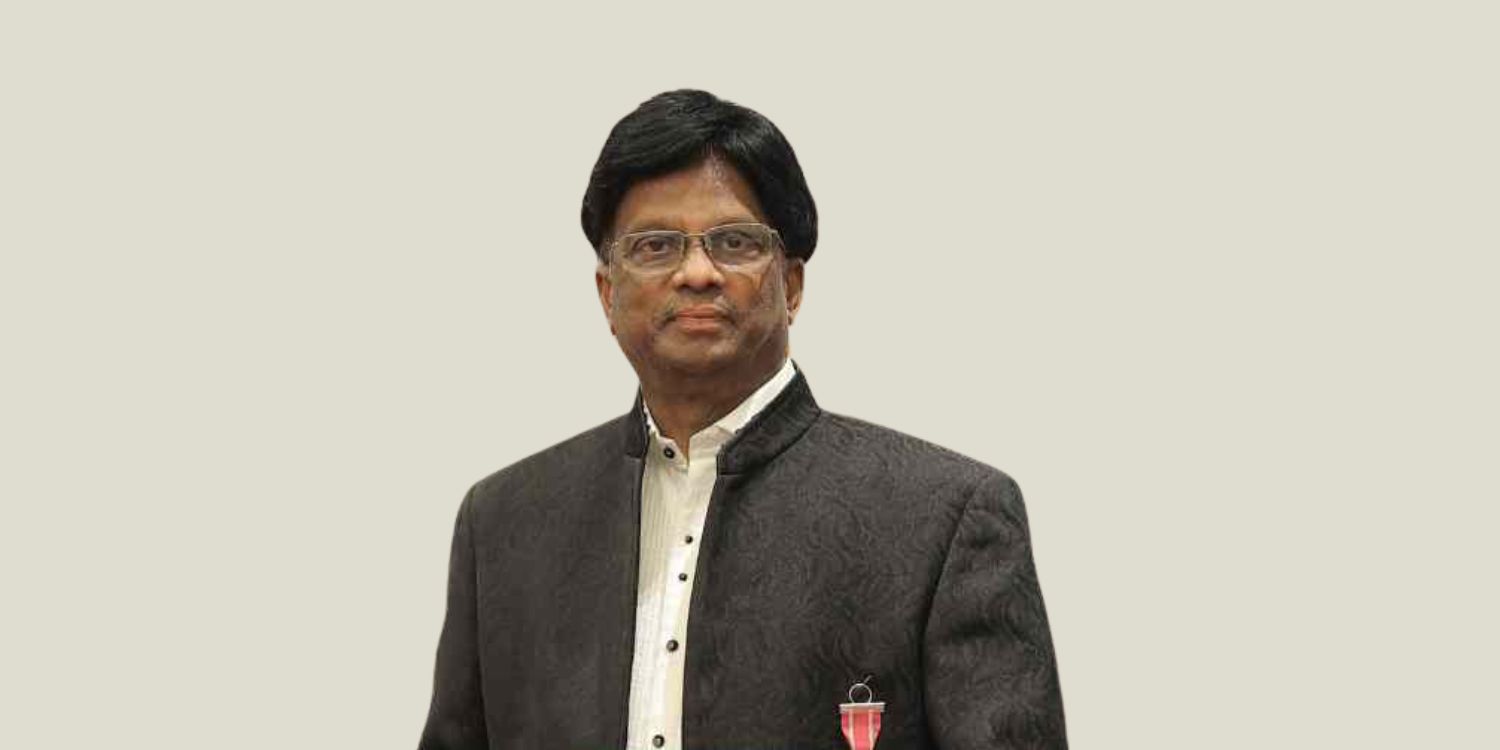
In a field where success is so often measured in surgeries, X-rays and range-of-motion charts, Dr. John Ebnezar built his career around a harder question – what happens after the fracture heals, but the patient still isn’t well?
It is this question, more than any single surgery or scan, that has shaped the four-decade-long body of work behind one of Karnataka’s most decorated medical names. Rtn. Prof. (Dr.) John Ebnezar, Padma Shri awardee and consulting orthopaedic and spine surgeon at Parimala Hospital, Bengaluru, has spent his career trying to close the gap between clinical success and genuine patient recovery.
A Pattern That Wouldn’t Let Him Rest
The early years of orthopaedic practice often set the direction of a clinician’s entire career, and for Dr. Ebnezar, those years surfaced a pattern he could not ignore. Fractures healed. Joints were corrected. And yet, patient after patient continued to report persistent pain, functional limitation, and a diminished quality of life long after the procedure was complete.
Alongside this clinical realization sat a personal one – the values of compassionate, patient-centred care instilled in him early on by his mother Sampath Kumari. Together, these two influences became the foundation for an approach to orthopedics that looks well beyond structural correction, toward the physical, emotional, social, and lifestyle dimensions of a patient’s health.
Where Academia Meets the Clinic
Parallel to his clinical practice, Dr. Ebnezar built a second, equally demanding career in academic medicine. He has authored more than 200 orthopedic books to date, a body of work that earned him 2 Guinness World Records for book authorship alongside 6 Guinness World Records for social service and public health awareness. Sustaining that volume of scholarship required constant engagement with evolving evidence and treatment protocols, and it shaped the way he communicates with patients.
Over time, his clinical experience and academic output converged into a defined clinical framework called Wholistic Orthopedics. The model integrates conventional orthopaedic methods with rehabilitation, structured exercise, yoga-based therapy, and preventive health measures, not as an alternative to modern orthopaedics but as an expanded approach. His commitment to this integration runs deep enough that he became the first orthopaedic surgeon in the world to complete a PhD in yoga, going on to lead six original yoga-research studies, including what is recognised as the world’s largest clinical trial on the role of yoga in osteoarthritis of the knee. He also holds a unique record of getting three best Research Awards, two for trauma, Fractures (2010), Spinal Cord Injuries (2022) apart from Arthritis (2012). With this he becomes the only Orthopedic Surgeon in the world to try the role of Yoga in acute injuries.
The Gaps Conventional Orthopedics Doesn’t Always See
Modern orthopaedics has made measurable, well-documented progress in trauma management, joint replacement, and spinal surgery. But the long-term management of chronic musculoskeletal disorders, Dr. Ebnezar argues, is a different challenge altogether. Clinical experience across his decades of practice indicates that structural abnormalities alone rarely account for persistent symptoms in a large share of patients.
He points instead to lifestyle-related contributors, physical inactivity, obesity, occupational strain, poor posture, and psychological stress, as frequent drivers of disease progression and delayed recovery. Standard treatment pathways, in his assessment, often address the anatomical problem while leaving these variables unexamined. The integrative model he has spent his career refining attempts to close exactly this gap, shifting the goal from episodic treatment toward sustained functional improvement.
Beyond Standard Protocols
Patient expectations in orthopaedics have shifted considerably over the decades Dr. Ebnezar has practised. Where limited mobility and chronic pain in older patients were once simply accepted as part of ageing, today’s geriatric population increasingly seeks functional independence and long-term mobility. It’s a shift that led Dr. Ebnezar to found an entirely new subspecialty within orthopaedics – Geriatric Orthopedics, a distinction reflected in his role as Founder President of the Geriatric Orthopedic Society of India (GOSI) and Founder Director of the Geriatric Orthopedic Association of India (GOAI). He has his own “Karnataka Orthopedic Academy” and was the former Vice President of the Indian Orthopedic Association (2010).
Building a Treatment Plan Around the Whole Patient
In Dr. Ebnezar’s practice, conditions such as osteoarthritis of the knee are approached with conservative management as the clear first line of treatment. Surgical intervention enters the picture only when these measures fail to deliver relief and functional impairment becomes significant.
He applies the same principle to neck pain, spinal disorders, including disc prolapse and chronic low back pain, where the evidence, in his experience, points to the majority of patients benefiting from non-surgical management. Surgery is reserved for clearly defined indications, such as neurological deficits or severe structural compromise. The underlying principle, as he puts it, stays consistent across every case, and that is – intervene surgically only when necessary, and only when it offers a clear functional advantage.
A defining feature of the Wholistic model is its integration of biomechanical assessment with systemic evaluation. Chronic joint pain, in his framework, may call for mechanical correction alongside weight management and stress reduction, rather than either in isolation.
A Career Built on Recognition
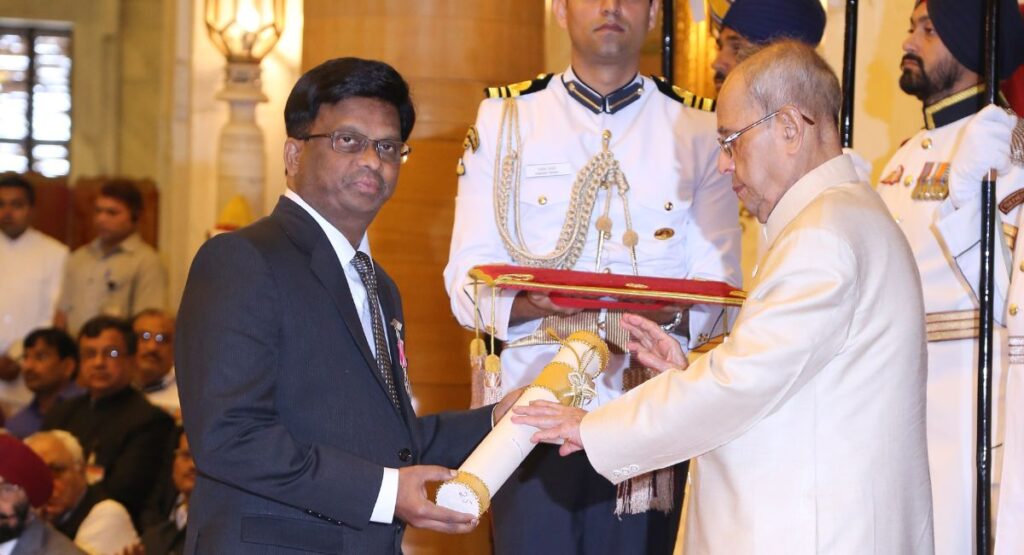
The scale of formal recognition for this body of work is considerable. In 2016, Dr. Ebnezar received the Padma Shri, India’s fourth-highest civilian honour, becoming the first orthopaedic surgeon from Karnataka, and only the 15th orthopaedic surgeon out of nearly 42,000 nationwide, to receive it. He also holds the Dr. B.C. Roy National Award, the highest honour in the field of medicine in India, making him the only doctor in the country to receive both the Padma Shri and the Dr. B.C. Roy Award in the same calendar year. His research on osteoarthritis of the knee received a strong recommendation from the American Association of Orthopedic Surgeons in its 2013/2021 guidelines for OA-knee management, the only Indian orthopaedic surgeon so recognised.
His public-facing work runs alongside the clinical and academic record. In 2017, he became the first Indian orthopaedic surgeon to deliver a TEDx talk, titled “Wholistic Orthopedics – When East Meets West.” Later he delivered 2 more TedX talks in 2023 and 2025, making him the only Indian Orthopedic Surgeon to deliver an unprecedented 3 TEDx talks. So far he has delivered 411 orations all around the globe including India. He has also received the Karnataka Rajyotsava Award (2010), the Kempegowda Award (2011), the Indian Medical Association Award (2012), and the Mother Teresa National Award (2013), among more than 400 honours in all. He received his 2nd National Award in 2017, “Silver Jubilee Research Award” by the Medical Council of India for his outstanding Research. Thus he holds the unique distinction of 2 National Awards both for Social Service and Research by an Indian Orthopedic Surgeon. A committed Rotarian, he has conducted over 500 free health camps through his Swaasthya Foundation and Handicapped Trust, Rotary and Innerwheel clubs, and allied NGOs, including a 2016 event that set a world record for the “Largest Arthritis Lesson,” held with Rotary Bangalore South and seven Rotary Clubs of Tumkur, followed by a twin GWR on “Largest Foot Care Lesson” and “Largest Back Care Lesson” on the same day in 2018 setting up an unique World Record. He also served in the 2015 Nepal Earthquake and worked as a Frontline Corona Warrior for 274 days.
Where Orthopedics Is Headed
Dr. Ebnezar sees emerging technologies regenerative medicine, biologics, and digital rehabilitation platforms as forces that will meaningfully expand the scope of both surgical and non-surgical orthopaedic care in the years ahead. But he is equally clear that technology alone won’t shift long-term outcomes.
As orthopaedic practice moves toward more integrated systems of care, rehabilitation, patient education, and prevention are likely to stay central to how musculoskeletal health is managed. It is a future Dr. Ebnezar has, in many ways, already been practising for decades.
“The future of orthopedics lies not merely in replacing joints or correcting deformities, but in preserving mobility, restoring function, and enhancing quality of life,” Dr. Ebnezar says. “My lifelong mission has been to integrate scientific excellence with wholistic healing so that we treat not only bones and joints, but the whole human being.”