
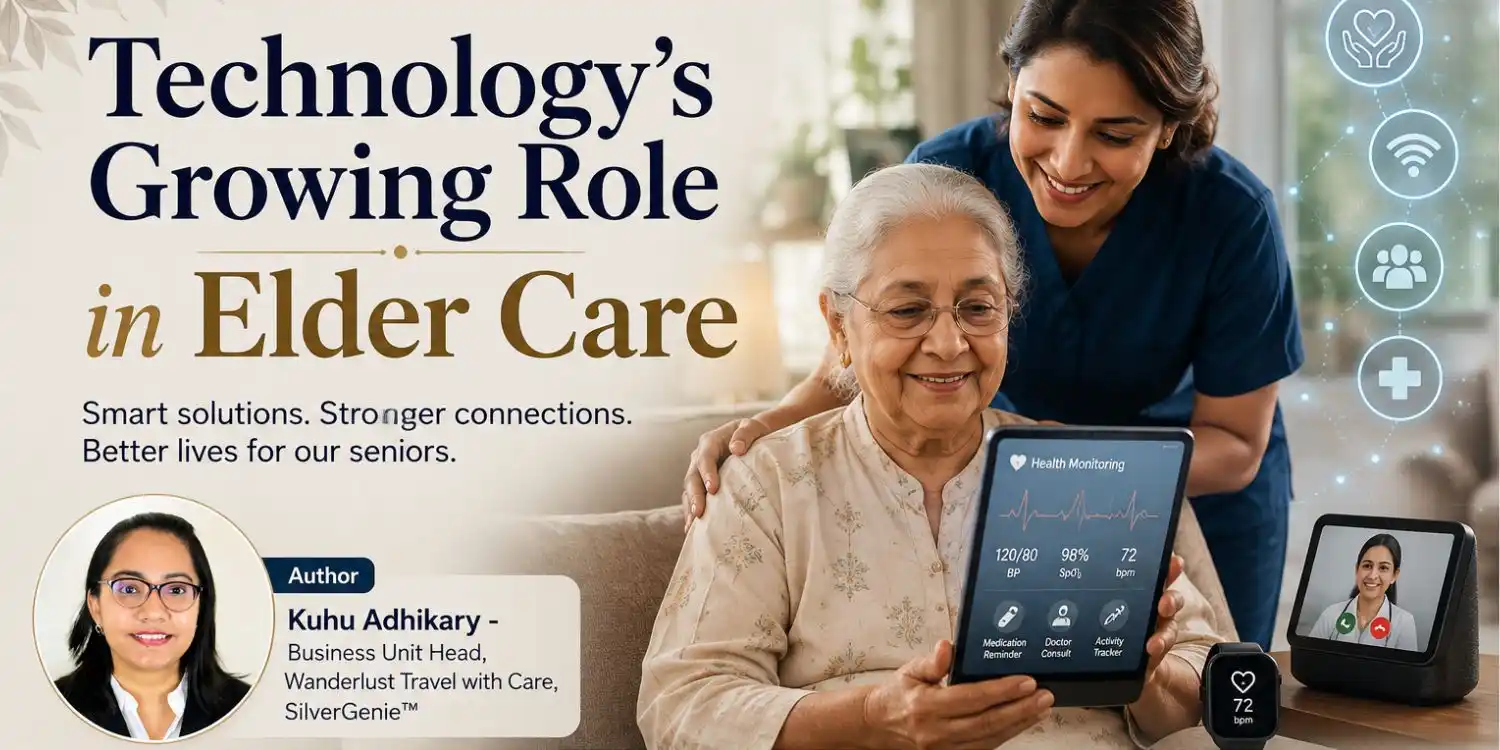
Ageing is often described as a demographic challenge. It is better understood as a design challenge: how can society help older adults remain safe, independent, connected and purposeful while supporting the families and professionals who care for them? Technology is becoming central to that answer, but its real promise lies not in replacing people. It lies in giving people better information, faster coordination and more time for human care.
The scale of the challenge
The research paper Researching the Care Economy shows why this shift is urgent. The care economy already employs about 381 million people, or 11.5 per cent of global employment, although that benchmark largely reflects data around 2018. The nursing workforce reached 29.8 million in 2023, yet the World Health Organisation projects a global shortage of roughly 11 million health workers by 2030. At the same time, more than 2.5 billion people need at least one assistive product. Longer lives, chronic conditions and smaller families will stretch conventional systems further.
The pressure is not only clinical. Women perform 76.2 per cent of unpaid care hours worldwide and spend 3.2 times as much time on unpaid care as men. In 2024, care responsibilities kept 748 million working-age people outside the labour force, including 708 million women. Technology that genuinely saves time can therefore advance both ageing and greater gender equity.
Technology that extends care
Digital tools can extend care beyond clinics and institutions. Teleconsultations reduce unnecessary travel. Electronic records help doctors, nurses, caregivers and families work from the same information. Remote monitoring can flag changes in mobility, sleep or vital signs. Medication reminders, accessible interfaces, hearing and communication aids, and smart home adaptations can strengthen daily independence. Scheduling systems can match needs with available professionals, while digital payments and service histories improve transparency.
Artificial intelligence adds another layer. It can support documentation, triage, translation, rostering, risk identification and clinical decisions. Used thoughtfully, AI can free up professional time for conversation, observation, and reassurance; relational work makes care truly effective. The research suggests most care roles are more likely to be augmented than automated. A machine may identify a pattern; it cannot replicate trust, touch, judgement or the comfort of a familiar voice.
Here’s the cleaned-up version — I removed the duplicate pass, the stray “PAGE 3” artifact, and the mid-sentence line breaks:
Guardrails for dignity
Yet the risks are real. Digital systems can exclude older adults with limited connectivity, language access, vision, hearing or confidence. Poorly governed monitoring can become surveillance. Biased algorithms can produce unfair eligibility or risk decisions. Opaque platforms can intensify caregiver workloads or weaken employment protections. Sensitive health and family data can be exposed. Most damagingly, organisations may use devices as substitutes for companionship.
The right safeguards are therefore as important as the technology itself: informed consent, minimal and secure data collection, transparent decisions, accessible design, human review, safety testing and clear accountability. Older adults, families and care workers should participate in selecting and evaluating tools. Practical questions should judge every innovation: Does it save caregiver time? Improve outcomes? Reduce anxiety? Strengthen independence? Protect dignity? Preserve human contact?
A deeply human future
Technology’s growing role in elder care should ultimately be measured not by the number of apps, sensors or dashboards deployed, but by the quality of life they enable. The future is neither purely digital nor purely traditional. It is a coordinated care ecosystem in which technology handles complexity and people provide empathy.
Author:
Kuhu Adhikary – Business Unit Head, Wanderlust Travel with Care, SilverGenie™
Bio:
A technology leader turned social-impact professional, Kuhu Adhikary carries 20 years of experience spanning cybersecurity, risk management, quality and process excellence, and IT service delivery. She has led enterprise-wide cybersecurity programs, IT delivery teams, and risk-governance frameworks across global organisations. Today, she serves as Business Unit Head, Wanderlust Travel with Care, at SilverGenie™, India’s pioneering full-stack senior-care solutions company. She leads care-integrated programs such as Wanderlust Genie travel experiences, retirement-readiness initiatives and care skilling, building partnerships and operational frameworks that improve the quality of life for seniors.