
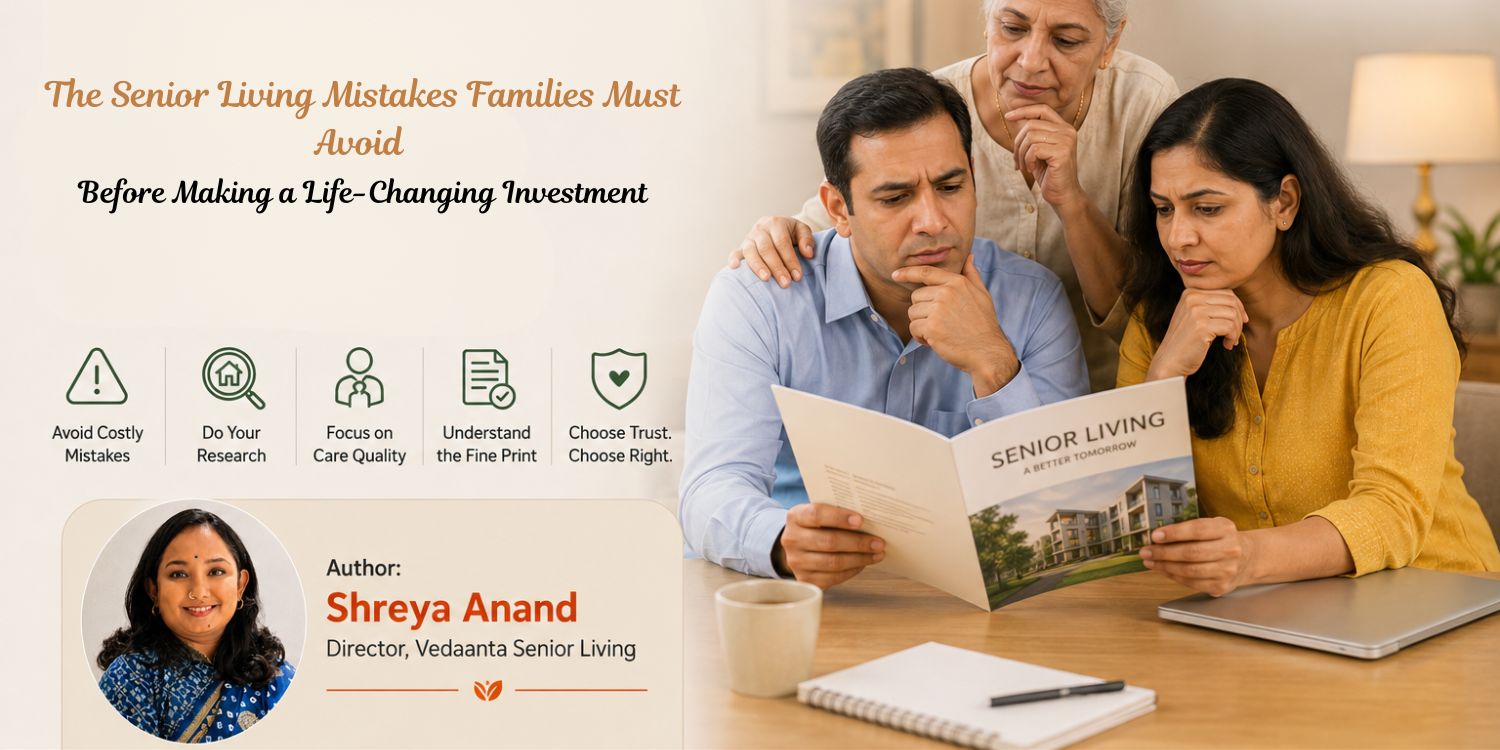
Moving into a senior living community is a significant decision, financially, emotionally and practically. Yet, families often approach it much like a conventional property purchase, comparing location, apartment size, amenities and price before looking closely at whether the community will continue to meet the resident’s needs several years down the line.
The right decision requires a broader lens. Senior living is not simply about buying a home. It is about choosing an environment, a lifestyle, a support system and, potentially, a long-term care ecosystem.
Here are some of the most common mistakes families make and how they can avoid them.
1. Choosing the property before understanding the resident’s needs
One of the first mistakes is beginning the search with the property rather than the person who will live there.
Senior living is not a single, standardised model. Communities may offer independent living, assisted living or different levels of care, while services, staffing, facilities and personalisation can vary significantly. The needs of a healthy 65-year-old couple may be very different from those of an 80-year-old who requires assistance with daily activities.
Families should therefore assess both current and anticipated needs. Mobility, medical requirements, social preferences, food habits, hobbies, proximity to family and the possibility of requiring additional support later should all form part of the decision.
The objective should be finding the right fit, rather than simply choosing the most premium option.
2. Assuming that a senior living community should replicate one’s existing home
Another common misconception is that moving into senior living should feel exactly like moving into another apartment or villa.
It will not, and it should not.
Community living introduces a different way of life, with shared spaces, planned activities, services, dining options and greater opportunities for social interaction. Families need to understand this transition and discuss expectations openly with the senior.
A community should be assessed for what it adds to everyday life: convenience, safety, social engagement, maintenance support, wellness and access to assistance when required.
The question should not be, “Does this look exactly like the home we already have?” but rather, “Will this enable the seniors to live the way they want, with greater ease and security?”
3. Making the decision without the senior
Perhaps the most emotionally difficult mistake is making the decision entirely on behalf of the parent. Even when the intention is to provide greater safety and comfort, excluding the senior can make the transition feel like something being imposed on them.
Where possible, seniors should be involved from the beginning. They should visit the community, explore the homes, understand the daily routine and interact with residents. Experiencing the food, activities and services firsthand can provide a much more realistic understanding than a brochure or website.
Most importantly, families should have honest conversations about independence, privacy, social life, care requirements and expectations.
The person who will live there should have a meaningful voice in choosing where they live.
4. Looking only at the purchase price
Price is important, but the purchase price alone does not tell the complete financial story. Senior living may involve maintenance charges, utilities, service fees and additional costs for healthcare or care-related services. Families should understand which services are included, which are charged separately and how charges may change over time.
Operating costs can rise as manpower, maintenance and service requirements change. Buyers should therefore ask how maintenance is calculated, what the historical pattern of increases has been and whether there is a clearly defined mechanism for future revisions.
A realistic financial assessment should consider the total cost of living over the long term, rather than simply comparing the upfront property price.
5. Treating legal and ownership due diligence as an afterthought
Senior living involves both a property component and a service component. Consequently, legal due diligence needs to go beyond checking the sale deed.
The property’s title, land records, approvals, construction agreements and ownership structure should be independently reviewed by a qualified legal professional.
Equally important is understanding the service agreement. Families should know precisely what services they are entitled to, what obligations they have and what happens if they require additional services later.
Common amenities also deserve attention. Buyers should understand whether they have ownership rights or only usage rights and how those facilities are maintained.
6. Ignoring resale, exit and inheritance provisions
Families often focus heavily on entering a senior living community and overlook what happens when circumstances change.
Before purchasing, buyers should understand the resale and exit mechanisms, including whether there are restrictions on resale or rental, how the process works and whether the operator has any role in facilitating it.
Inheritance provisions should also be clearly understood. Families should establish what happens to the property if the resident passes away, including the rights of nominees and legal heirs.
These conversations may feel uncomfortable, but clarity at the beginning can prevent considerable financial and emotional stress later.
7. Choosing based only on amenities
A swimming pool, clubhouse, landscaped gardens or restaurant may look attractive, but amenities alone should not determine the decision.
Families should look deeper into how a community actually functions. What is the staffing model? How are emergencies handled? What support is available if a resident’s mobility or care requirements change? How accessible are essential services? How active is the resident community?
The difference between a visually impressive development and a well-functioning senior living community often lies in the quality and consistency of the services behind the physical infrastructure.
Making a decision for the next decade, not just the next year
The most important principle is simple: match the community to the senior’s needs, not someone else’s expectations.
A premium community is not automatically the right choice, just as an affordable community is not necessarily a compromise. The right decision is one that balances financial considerations with safety, independence, social connection, services and future requirements.Families should take their time, ask difficult questions, read every agreement carefully and involve the seniors throughout the process.
Ultimately, senior living is not merely a real estate decision. It is a decision about how a person wants to spend an important chapter of life. The best choice is therefore not necessarily the property with the longest list of features, but the community that continues to make sense as life evolves.
Author Bio
Shreya Anand, Director, Vedaanta Senior Living
Shreya Anand is the Director at Vedaanta Senior Living, where she leads Sales and Marketing and contributes to the company’s growth and resident-first approach. A Chartered Accountant, she brings experience across finance, strategy, sales and community management. Her work focuses on understanding the evolving needs of India’s senior population and shaping senior living experiences that balance independence, community, safety and quality of life.