
India is in the grip of a cancer burden it is only beginning to fully understand, where official numbers likely understate the true scale of the disease. Less than 5% of the population is covered under any organised cancer screening programme, a gap that widens further in regions like the Northeast. For most Indian families, a cancer diagnosis is not just a medical crisis but a financial one, where studies consistently show that the majority of patients face treatment costs that outstrip what their households can reasonably bear, pushing many into debt, distress sales, or abandoned treatment altogether.
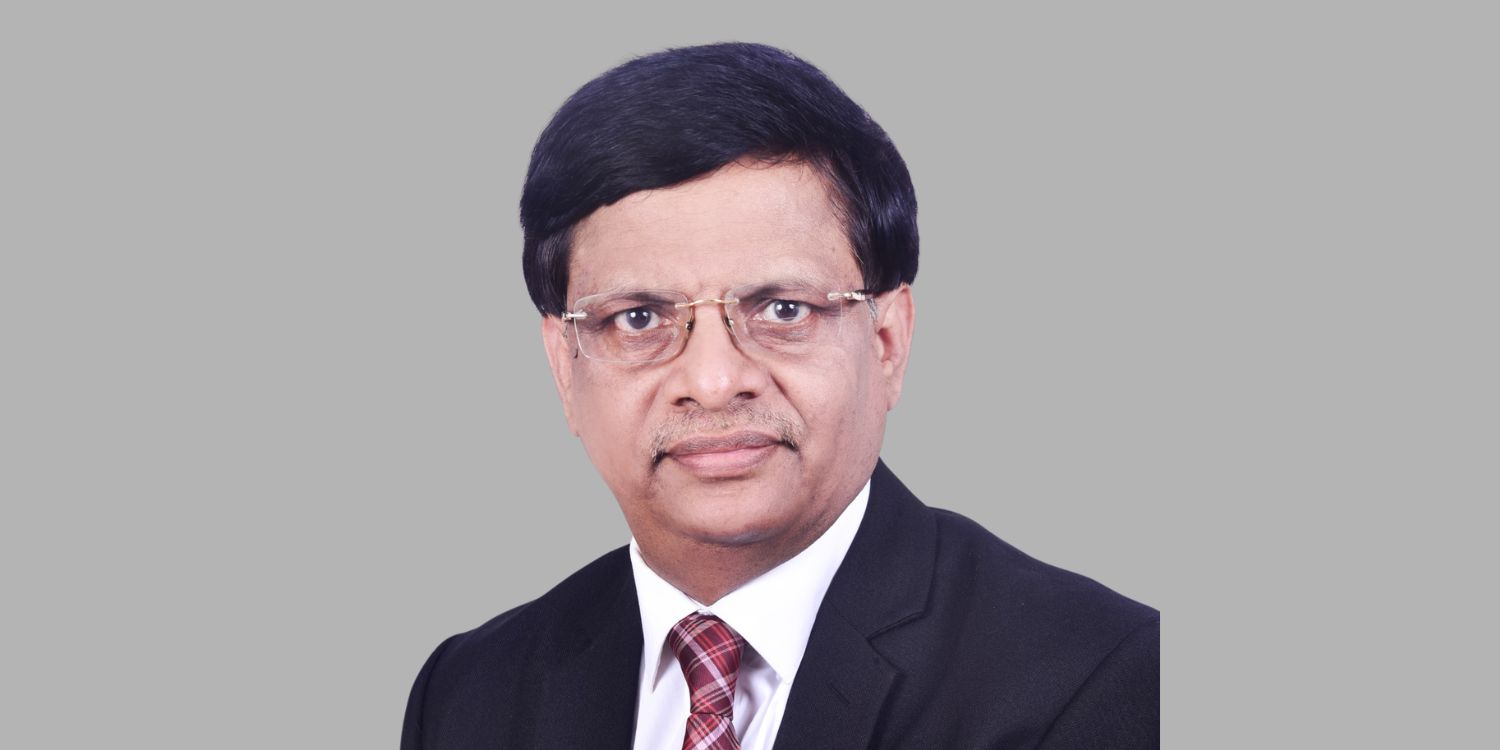
Few clinicians have watched this landscape change as closely, or worked as hard to change it, as Prof. (Dr.) Surendra Nath Senapati. Across a career spanning more than three decades, he has witnessed radiation oncology transform from the era of conventional cobalt therapy to today’s precision oncology, powered by genomics, immunotherapy, and artificial intelligence. Today, as President of the Association of Radiation Oncologists of India (AROI), President of the Odisha Society of Oncology (OSO), and a Council Member of the Federation of Asian Radiation Oncologists (FARO), he continues to champion a simple but powerful conviction, that quality cancer care should reach every patient, regardless of geography or financial standing. It is this conviction, translated consistently into action, that has earned him a top spot among India’s most renowned oncologists.
From Witness to Warrior
Driven by a strong conviction to give back to society, Prof Senapati grew up in the temple town of Puri, witnessing patients arriving with advanced oral cancers, a grim but common consequence of widespread tobacco use in the region. Most walked through hospital doors far too late, held back not by the disease alone but by a lack of awareness, empty pockets, and the simple absence of a specialist anywhere nearby.
It was this recurring, sobering pattern that drew him toward Radiation Oncology, a path he pursued at the Acharya Harihar Post Graduate Institute of Cancer in Cuttack. Even there, the same story repeated itself, patients funding their own treatment with whatever they had, and many walking away from therapy midway, unable to keep pace with its cost.
Those formative years left an imprint that has never faded, and a strong understanding that cancer, at its core, is never just a medical diagnosis. It is a social awakening, an economic burden, and a public health emergency, all folded into one.
Three Decades, One Mission
Since stepping into the field in 1992, Prof Senapati has worn many hats over the decades – a clinician, a teacher, an institution builder, a researcher, and eventually, a voice at the national level. When he began, the toolkit available to oncologists was a modest one, nothing beyond plain teletherapy machines running on cobalt, treatment plans mapped in two dimensions, and chemotherapy options that were, by today’s standards, limited. That journey has now led him to the presidency of the Association of Radiation Oncologists of India (AROI), a role from which he intends to push for changes far beyond the walls of any single hospital.
Central to his two-year tenure is a push for the government to set up Radiation Oncology departments in every medical college in the country, alongside dedicated teaching programmes in Radiation or Clinical Oncology at both the MBBS and DM levels. His reasoning is rooted in something he has seen firsthand throughout his career: “Patients in remote areas of our country are deprived of healthcare supported by high-end technology, as most such advancements are concentrated in metros and cities.”
The urgency behind this push is hard to ignore. Citing WHO projections, he points to a future where India could see 29.5 million new cancer cases and 16 million cancer-related deaths annually by 2040. It’s a number that has shaped his agenda as much as his own clinical experience has – “Our vision is to advocate with state governments to make cancer a notifiable disease and to expand cancer care facilities across the country.”
Passing the Torch, Closing the Gaps
For Prof Senapati, none of this progress means much if it isn’t passed on. Across his years with AROI, the Indian College of Radiation Oncology (ICRO), and partnerships with the American Society of Therapeutic Radiation Oncology, the American Society of Clinical Oncology, ESTRO, and FARO, he has worked steadily to widen access to continuing education, mentorship, and international academic exchange for the next generation of oncologists. His reasoning for this is disarmingly simple – “Every new lesson learned by a doctor ultimately benefits hundreds of future patients.”
Yet for all the ground gained in treatment, Prof Senapati holds firmly to the belief that prevention, not therapy, is where India stands to gain the most in the fight against cancer. His priorities read like a roadmap rather than a wish list – tobacco control, universal HPV vaccination, greater breast cancer awareness, healthier everyday lifestyles, and community-based screening for early detection.
He is quick to credit one initiative in particular for moving this needle in his home state towards the decentralisation of oncology services in Odisha, a step he considers among the most significant healthcare reforms in recent years. Being undertaken by the Odisha government under the leadership of Sri Mohan Charan Majhi, Radiation Oncology departments are steadily being set up across government medical colleges in the state, bringing chemotherapy, radiotherapy, palliative care, and follow-up visits within reach of patients who once had to travel far from home for each of these.
A Cure Worth Reaching
Prof. (Dr.) Surendra Nath Senapati’s career is, in many ways, a mirror held up to Indian oncology itself, its struggles, its breakthroughs, and everything it has fought to become. It is a conviction that has outlasted every technological leap he has witnessed, and one that continues to shape how India’s oncologists, hospital administrators, and policymakers think about the road ahead. As the country stands at the crossroads of scientific excellence and social responsibility, few voices make as strong a case as his, a cure is only as meaningful as the number of people it actually reaches.