
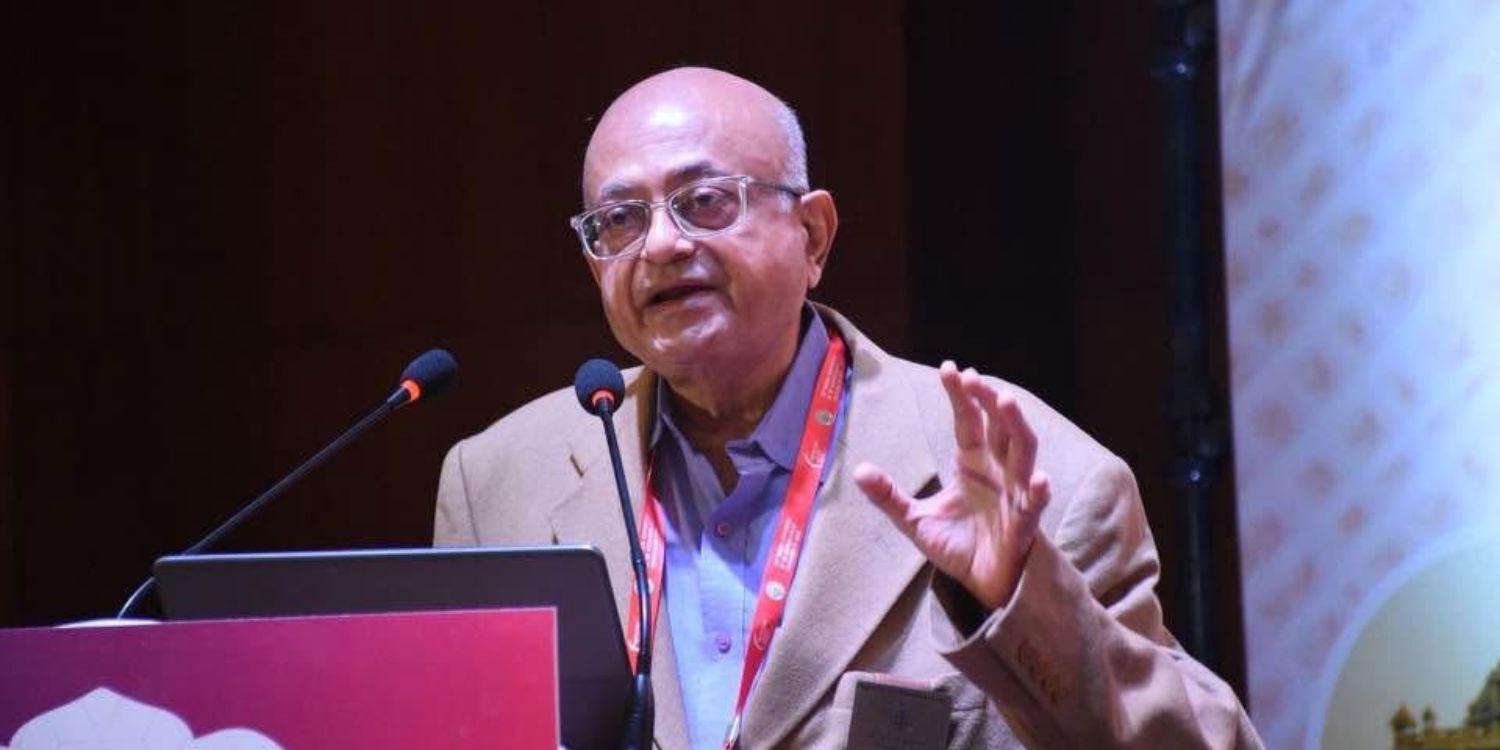
To bring about a revolutionising change in a field that has long relied on traditional approaches requires patience, careful consideration, and sustained effort. Every step is closely accounted for. The ICU is one such unit that cannot afford errors of any kind; preparedness is not optional but a baseline expectation.
This is a standard that Dr. Ashit Madhusudan Bhagwati has consistently upheld throughout his professional career, contributing to the evolution of critical care systems in India into more structured, safer, and clinically reliable environments.
Foundations in Critical Care
Trained in general medicine at the postgraduate level, Dr. Bhagwati’s early clinical exposure played a decisive role in shaping his trajectory. His tenure at Breach Candy Hospital under senior physicians provided him with first-hand experience in intensive care settings. This phase introduced him to the procedural and clinical complexities of managing critically ill patients, and more importantly, highlighted the absence of clearly defined systems in critical care delivery at the time.
Subsequent work at Cumbala Hill Hospital, where intensive care services were still developing, further reinforced his interest in contributing to the field at a structural level. Currently he is practising at Bhatia Hospital Saifee Hospital and Wockhardt Hospital (South Mumbai).
Defining ICU Practice in India
The early 1990s saw a collective recognition among physicians in Mumbai of the need to formalise and standardise critical care. Dr. Bhagwati was part of a group of clinicians from institutions such as Bhatia Hospital, Hinduja Hospital, and Bombay Hospital who came together to establish a critical care society. The objective was to create a platform for knowledge exchange and to define what constituted a functional and effective ICU in the Indian context.
At Bhatia Hospital, where Dr. Bhagwati was appointed in the early part of the decade, he undertook the task of designing and establishing a modern intensive care unit. Around 1993–94, this involved transitioning from an existing, relatively basic setup to a more structured and clinically aligned ICU model. The unit was designed to reflect contemporary practices, integrating monitoring systems, procedural protocols, and multidisciplinary coordination.
Operationalising Modern ICU Care
Dr. Bhagwati identifies this transition as one of the defining challenges of his career. Aligning colleagues, administrators, and support departments with a more systematised model of care required not only clinical credibility but also organisational engagement. Over time, as outcomes improved and workflows became more efficient, acceptance followed.
The impact extended beyond the ICU itself. A more robust critical care unit enabled surgical teams to undertake complex procedures with greater confidence, while also improving overall hospital preparedness in managing high-risk cases.
Principles of Intensive Care Practice
Central to Dr. Bhagwati’s approach is the view that critical care is not a separate discipline but an extension of general medicine applied under conditions of severity. He underscores that intensive care demands a level of commitment and precision that may not align with every physician’s training or inclination. The ability to synthesise clinical data, respond rapidly to deterioration, and manage multi-organ involvement defines the scope of the intensivist’s role.
Coordinated Care in Critical Settings
Leadership within the ICU, in Dr. Bhagwati’s view, is inherently collaborative. The intensivist functions not in isolation but as a coordinator across multiple departments, including pathology, radiology, nursing, and surgical teams. The decision-making process is therefore shared, with the intensivist guiding acute management while ensuring alignment across disciplines.
Advancing Frontiers in Critical Care
Over the course of his career, Dr. Bhagwati has observed a marked transition in the landscape of critical care and has actively been a part of it. This evolution became particularly visible during the COVID-19 pandemic, when ICUs across India played a central role in managing severe cases. At present, the field continues to advance through innovations in monitoring, therapeutics, and training, with increasing integration into global critical care networks.
Dr. Bhagwati was actively involved in initiating and setting up modern burns unit/ICU at Bhatia Hospital along with the help of other departments, served as the President of Indian Society of Critical Care Medicine and was nominated as the office bearer in other medical societies including Association of Physicians of India, Hypertension Society of India.
He also plays the role of a teacher in critical care medicine. He has trained several students both doctors and nurses in critical care medicine who now occupy respectable positions as intensivist and intensive care nurses in reputed hospitals in the country.
A Word for the Youth
Despite these advancements, Dr. Bhagwati maintains that the foundation of effective practice remains clinical acumen. He cautions younger physicians against over-reliance on technology at the expense of bedside skills. Instead, he advocates for a balanced approach that integrates evolving tools with strong diagnostic reasoning.
From Practice to Perspective
Now in the later phase of his career, Dr. Bhagwati continues to practice as a physician and intensivist while contributing in an advisory capacity as a past president of the critical care society he helped establish. His current focus extends beyond clinical work, with increasing engagement in philosophical and reflective pursuits. Rather than focusing on recognition, he emphasises the importance of building systems, training future practitioners, and contributing to the continuity of care.
In tracing his journey, it becomes evident that the development of critical care in India has been shaped not by singular breakthroughs, but by sustained, system-level efforts led by clinicians willing to engage with both medical and institutional challenges.