
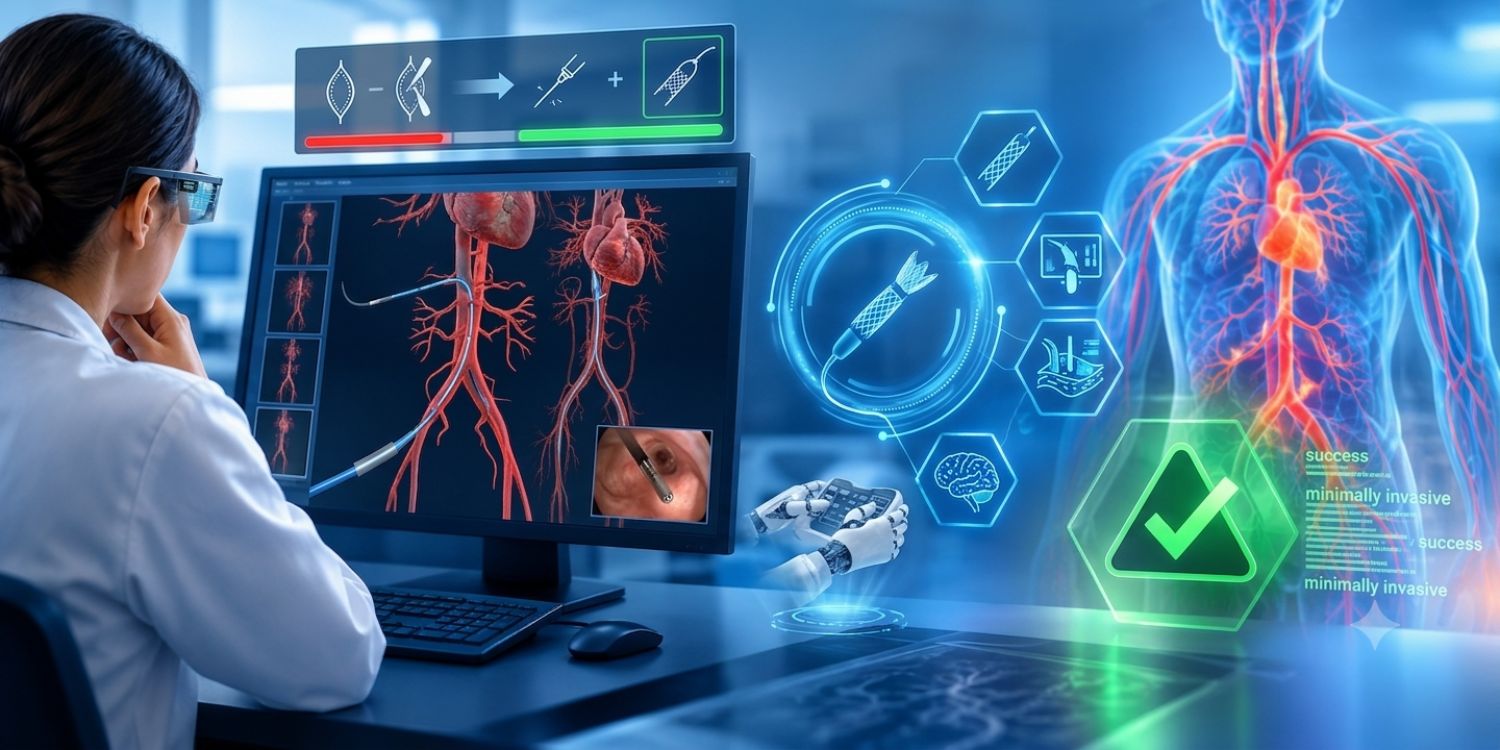
Artificial intelligence is rapidly reshaping vascular diagnostics. High-volume imaging modalities such as computed tomography angiography, duplex ultrasound, and magnetic resonance angiography generate massive, detailed datasets that push human processing limits. Machine learning algorithms now assist clinicians by automating tedious measurements, identifying subtle vessel occlusions, and flagging critical conditions like aortic dissections in seconds. These digital tools promise faster triage, reduced diagnostic delays, and higher diagnostic accuracy across busy emergency departments and cath labs.
The core strength of diagnostic artificial intelligence lies in image segmentation and pattern recognition. Algorithms trained on tens of thousands of vascular scans can quickly trace complex vascular trees, quantify luminal stenosis, and map plaque composition. Beyond mere detection, predictive models analyze real-time hemodynamics to estimate aneurysm expansion rates or identify vessels at high risk of re-occlusion post-stenting. By acting as an automated second reader, artificial intelligence helps standardize image interpretation, minimizing human fatigue and oversight.
Despite these remarkable capabilities, significant technical and ethical caveats demand caution.
Diagnostic algorithms rely entirely on the quality and diversity of their training datasets. If an algorithm is trained primarily on data from specific populations or specific imaging hardware, its predictive accuracy degrades when deployed elsewhere. This black box nature of deep learning networks also presents an operational challenge. Machine learning systems rarely explain their underlying reasoning, making it difficult for physicians to verify how a specific diagnostic conclusion was reached.
Automation bias poses another operational hazard in clinical workflows. Clinicians who over-rely on automated reports may overlook subtle physical symptoms or misinterpret artifacts caused by motion or calcification. Artificial intelligence reads pixels, not patients. It cannot evaluate a patient’s overall frailty, clinical history, or specific anatomical variations that fall outside its training baseline.
Moving forward, artificial intelligence must be viewed strictly as a clinical assistant rather than a diagnostic replacement. Regulatory oversight, rigorous external validation, and algorithm transparency remain essential safeguards. The true value of artificial intelligence in vascular medicine will be realized only when cutting-edge computational speed is anchored by sound human clinical judgment.