
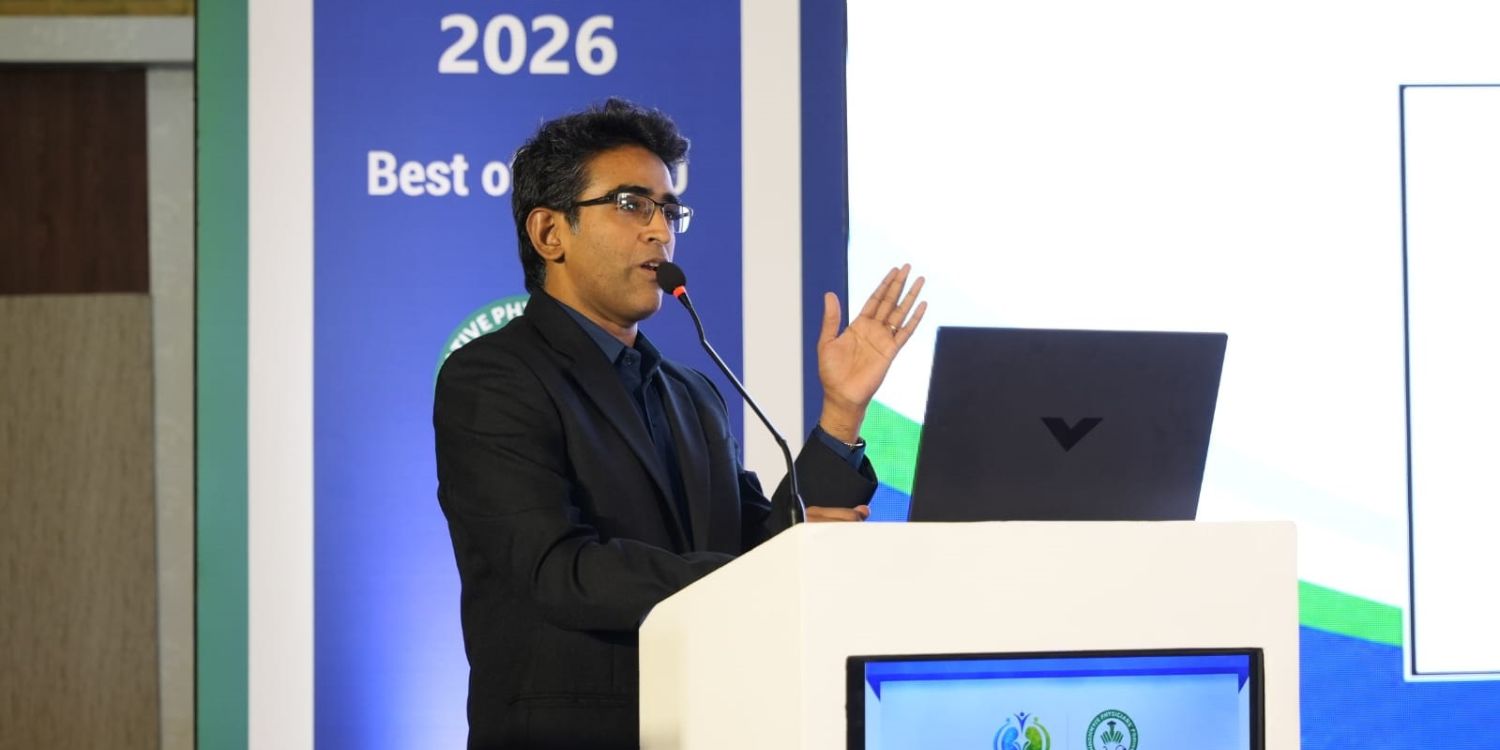
Too many Indian patients meet a nephrologist only when their kidneys have almost stopped working. Diabetes and hypertension, the leading causes, are silent for years. By the time patients arrive, dialysis looms and transplant is the only real way out, but blood-group mismatch, antibodies from earlier transplants and a shortage of deceased donors can close even that door. Dr. Balaji Kirushnan, Senior Consultant Nephrologist at Kauvery Hospital, Chennai, works on both ends of this problem. He pushes for screening early enough to prevent kidney failure, and he builds the transplant and training capacity to treat it when prevention fails.
A Calling Handed Down by a Grandmother
Dr. Balaji Kirushnan is the first doctor in his family. His grandmother admired the selfless physicians of her generation and told him to become one. A school science teacher added a warning he still remembers: if you choose medicine, sacrifice and passion will matter more than early financial rewards.
He began at M.S. Ramaiah Medical College, Bangalore, in 2002. Paediatrics attracted him first, until the constant milligram-per-kilogram dosing put him off. “I wasn’t very good at maths,” he says with a laugh. He took up general medicine at JSS Medical College, Mysore, where his professors taught him that “a good physician is someone who really hears the patient out first and then heals them.” His nephrology teacher, Dr. Manjunath Shetty, drew him towards the kidney, which he describes as the organ that interacts with all the others. “We get to see the system as a whole,” he says.
Learning Under Dr. M.K. Mani
Getting a nephrology seat under Dr. M.K. Mani at Apollo Hospitals, Greams Road, was famously hard. Dr. Kirushnan spent six months in Dr. Mani’s unit to prove his commitment, then cleared the entrance exam on his first attempt. He still measures his decisions against his mentor’s standards. “For the last 12 years, we always think how Dr. Mani would approach this situation,” he says.
After his training he spent six months at Apollo as a senior registrar. He then did a short fellowship in Italy under Prof. Claudio Ronco, a pioneer of extracorporeal therapies for critically ill patients, covering continuous renal replacement therapy and sepsis-related blood purification. He spent two years at MIOT International before joining Kauvery in 2016-17.
Building a Department
At Kauvery, Dr. Balaji and his senior colleague, Dr. R. Balasubramaniam, started with eight dialysis machines. The unit reached 25 within two years and now runs close to 40, delivering about 2,500 haemodialysis sessions a month. The transplant programme began in 2017 and grew slowly. In 2025 it performed around 29 transplants, from living and deceased donors, and this year is on a similar track. The unit also performs ABO-incompatible transplants, which cross blood-group barriers.
About four years ago the department won National Board of Examinations recognition. It now trains two DNB nephrology candidates a year through the national entrance system, with teaching in nephropathology and nephro-radiology. He has also added a transplant immunology fellowship and a course under Dr. Shruti Tapiawala in Mumbai, because he sees immunology as the field’s hardest frontier.
Why Dialysis Rounds Come First
Dr. Balaji Kirushnan’s day starts in the dialysis unit. Guidelines say a monthly review is enough, but he sees dialysis patients two or three times a week. “Dialysis patients are the backbone of our department,” he says. He recalls Dr. Mani’s rule that if dialysis patients have problems, the rounds or the prescription are wrong. Ward rounds follow, covering ICU cases, CRRT and plasma exchange. Afternoons and evenings go to outpatients and dedicated post-transplant and lupus clinics. He also runs a twice-or-thrice-weekly outreach clinic so patients can avoid Chennai’s traffic. He lives a few streets from the hospital, which makes late-night emergency calls manageable.
The Next Frontier
For Dr. Balaji, transplantation is where nephrology’s progress will come. Many recipients return to dialysis after 15 to 20 years, and a second transplant is harder because the body has built antibodies against the first kidney. He is following new therapies such as imlifidase, and he wants India to do more donation after cardiac death, which the Supreme Court has endorsed for inclusion in national guidelines. He is active in the Indian Society of Organ Transplantation and its social media team. He is also watching trials of wearable artificial kidneys, and says he would welcome collaborations with US institutions.
Prevention, From the Ground Up
His public-health message comes from Dr. Mani’s village screening work, which found diabetes, hypertension and kidney damage with three simple checks of blood pressure, urine sugar and urine protein. Dr. Balaji Kirushnan recommends a routine health check, with blood tests, urine tests and a scan, from age 30, earlier for diabetics.
He also points to chronic kidney disease of unknown origin, seen among agricultural workers in places such as Uddanam in Andhra Pradesh and parts of Tamil Nadu near Puducherry, and he welcomes India’s move to build a registry for it. His diet advice is practical:
- Cut salt. The WHO recommends about 5 grams a day, while Indian households average 10 to 12.
- Drink enough fluids.
- Avoid long-term painkillers and unsupervised antibiotics.
- Be wary of contaminated native medicines.
- Keep weight in check and exercise regularly.
He notes that a mostly plant-based diet slows progression in people who already have kidney disease, but it is not a guaranteed preventive.
The Second Chapter

Asked what keeps him in nephrology, he returns to transplants. “It’s like giving birth to a new life,” he says, comparing it to an obstetrician’s joy at a safe delivery. “There is a life after kidney failure also.”
Outside the hospital he is a trained singer who has performed on stage, sung film songs and recorded music-therapy videos for Kauvery. His wife is an anaesthetist at another hospital, and family support keeps the household running. His working creed comes from Dr. Mani: “Work is worship.”