
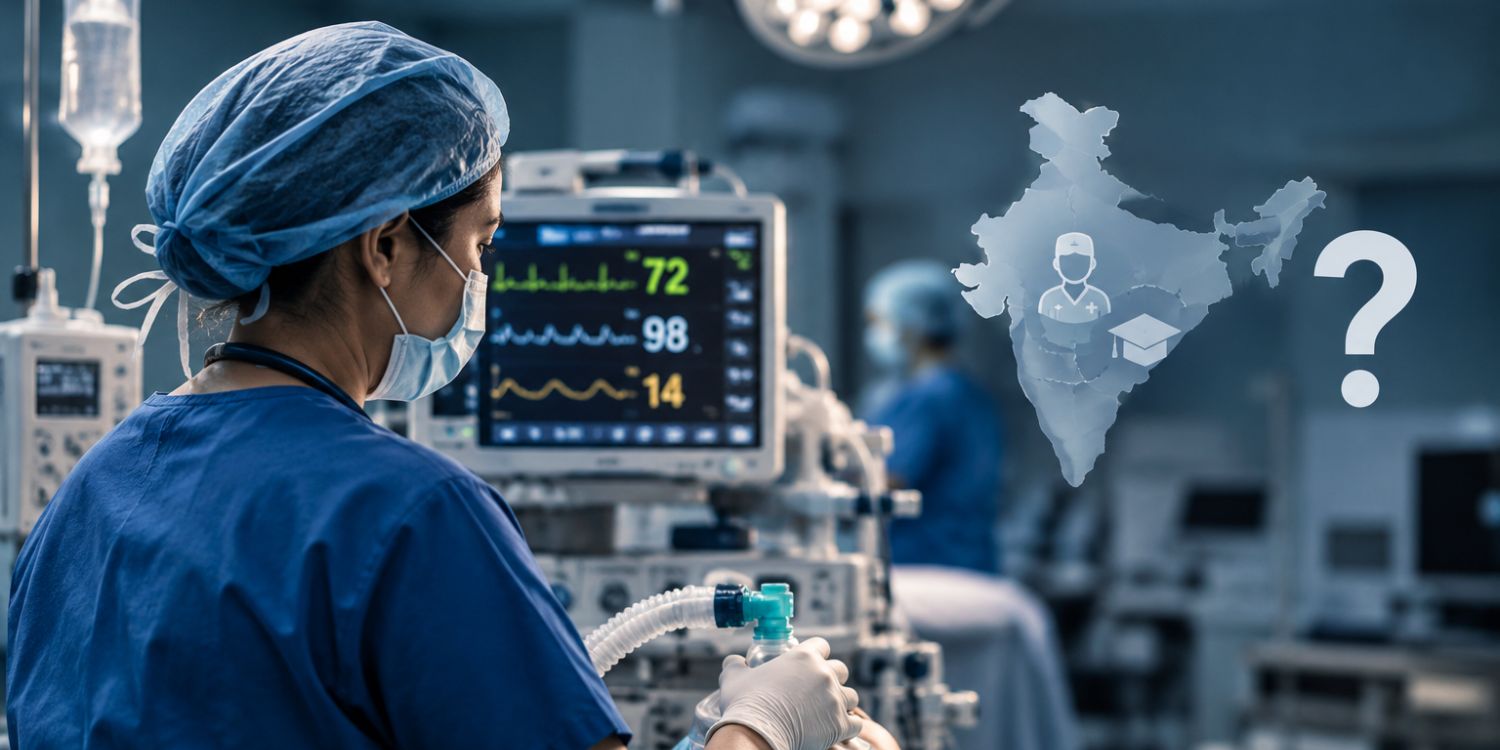
A caesarean section at midnight, an emergency operation after a road accident, a hip replacement for an 80-year-old. Each of these depends on a specialist most patients meet for only a few minutes. Without an anaesthesiologist, surgery cannot happen safely. As India marks World Anaesthesia Day on 16 October, it is worth asking whether the country has enough of them. The answer, for now, is no.
Where the gap is felt
The national average hides a sharper problem. Most trained anaesthesiologists work in cities, where large hospitals offer modern theatres, intensive care units and steady career growth. District and rural hospitals struggle to attract them. A hospital with a surgeon but no anaesthesiologist cannot offer safe surgery, and patients must travel, often at the very moment when time matters most, as in an obstructed labour or a serious injury.
What has been done
Training capacity has grown. The 2025 counselling round offered more than 5,000 MD Anaesthesiology seats, one of the largest allocations among clinical specialties, and the National Medical Commission added more during the year.
What would help
More seats alone will not close the gap. Newly qualified anaesthesiologists need reasons to work beyond the metros, such as fair incentives, functioning theatres, reliable monitoring equipment and a clear path to career growth. District hospitals need trained anaesthesia technicians and nurses so that one specialist can lead a safe team rather than work alone.
The doctors featured in these pages show what the specialty looks like at its best. They combine precise clinical judgement with calm under pressure, and many are training the next generation. India will need many more like them. Recognising their work, this World Anaesthesia Day and beyond, is a good place to start.