
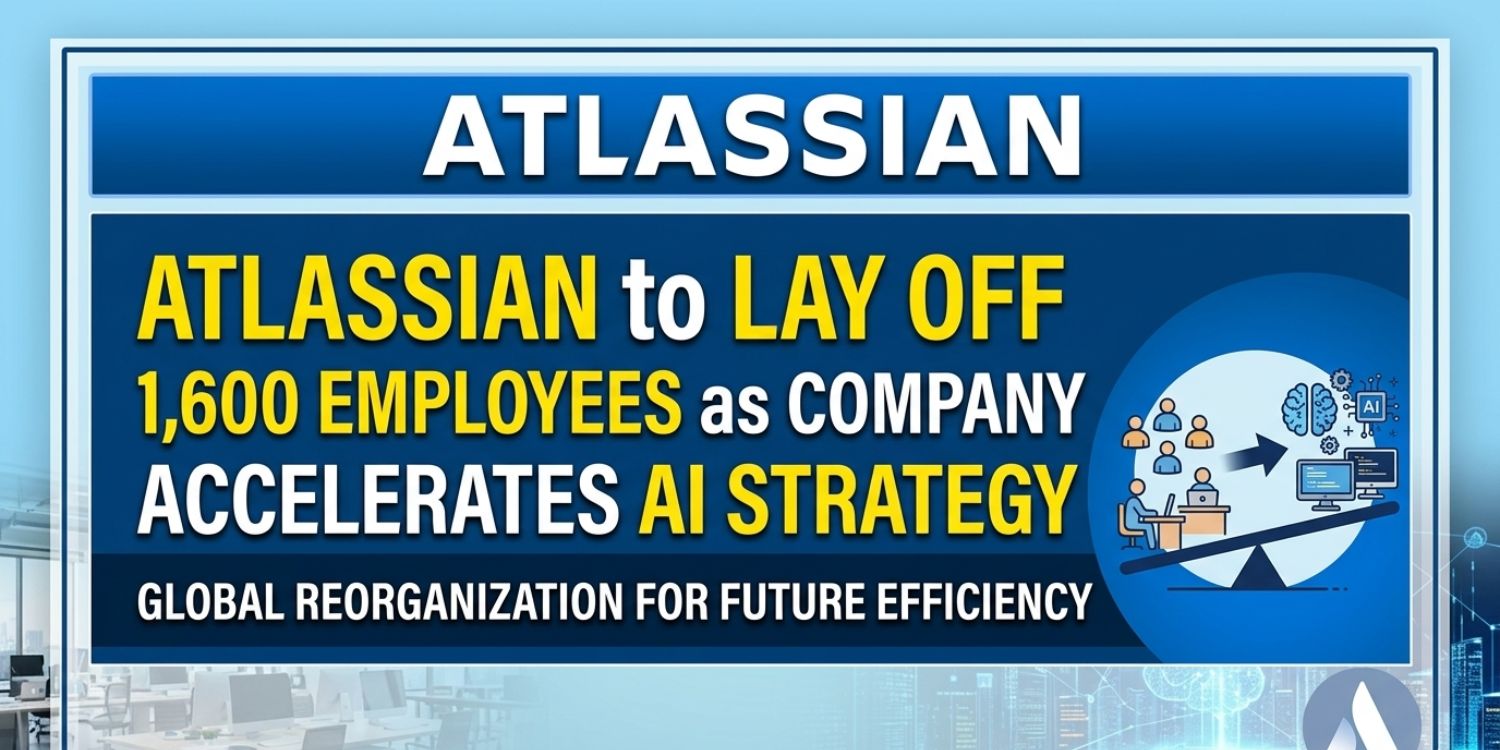
Australian software giant Atlassian has announced plans to cut around 1,600 jobs globally, approximately 10% of its workforce, as part of a major restructuring aimed at accelerating its shift toward artificial intelligence and enterprise sales. The decision marks one of the largest tech layoffs of 2026 and reflects how AI is reshaping the global software industry.
The layoffs were confirmed by CEO Mike Cannon-Brookes, who stated that while AI will not fully replace workers, it is significantly changing the type of skills required within the company. According to Cannon-Brookes, the company must adapt its workforce and internal structure to stay competitive in what he described as the “AI era.”
The job cuts will affect employees across several regions, with around 40% of layoffs occurring in North America, 30% in Australia, and roughly 16% in India. Smaller reductions are expected across Europe, the Middle East, Africa, Japan and the Philippines.
Atlassian expects the restructuring to cost between $225 million and $236 million, primarily covering severance packages and reductions in office space. Despite the workforce reduction, the company indicated that the move is intended to free up resources for investment in AI-driven products and enterprise-focused services.
The restructuring also includes leadership changes. Chief Technology Officer Rajeev Rajan is set to step down at the end of March as the company reorganizes its leadership around AI innovation.
Atlassian, best known for collaboration tools such as Jira and Confluence, has faced growing pressure from investors amid rapid advances in AI technology that threaten traditional software-as-a-service (SaaS) models. Analysts say companies across the tech sector are increasingly restructuring to integrate AI capabilities and improve operational efficiency.
While the layoffs highlight the disruptive impact of AI on the tech workforce, Atlassian maintains that the transformation is necessary to support long-term growth and to reposition the company in an increasingly AI-driven software market