
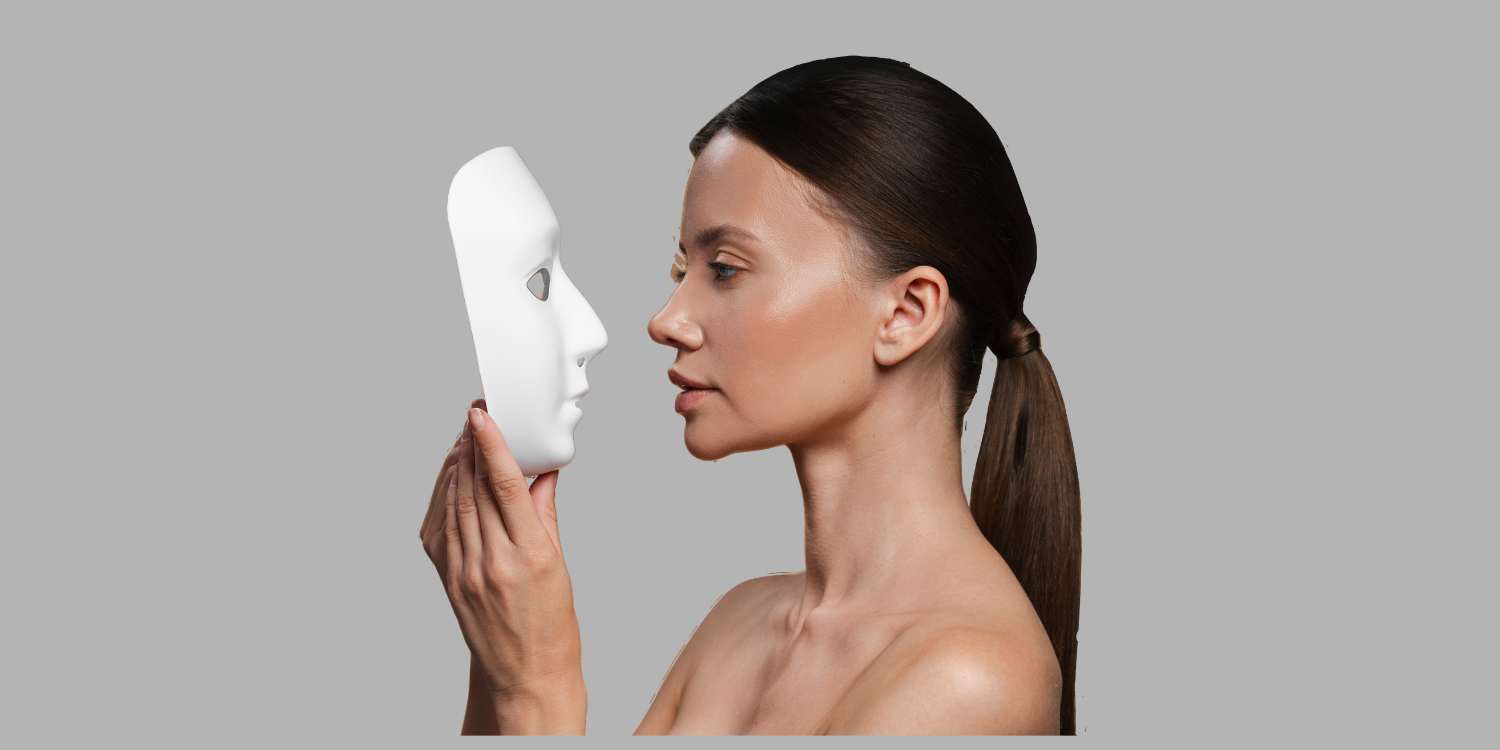
“Why do I look ugly?” “Why do I feel unattractive?” These may be some of the most quietly repeated questions one asks in the mirror. The answer is never as simple as yes or no. The real question should have always been: who made me think this, and why do I believe it?
Body dysmorphia is not about appearance, it is about perception. Clinically known as Body Dysmorphic Disorder (BDD), it is a condition where individuals fixate on perceived flaws that are often invisible or insignificant to others. Yet to the person experiencing it, these flaws feel overwhelming, real, and deeply personal. Mirrors become interrogation tools, and reflection turns into criticism. What begins as a passing insecurity slowly reshapes into a persistent narrative: that something is wrong, and it must be fixed.
In today’s world, this narrative rarely develops in isolation. Social media has become one of its most powerful amplifiers. We are surrounded by faces that seem flawless, bodies that appear sculpted, and lives that look effortlessly perfect. But what we often forget is that these images are curated, filtered, edited, and selectively presented. The line between reality and enhancement has blurred so extensively that the artificial begins to feel normal. And when “normal” is unattainable, dissatisfaction becomes inevitable.
This is where plastic surgery enters the conversation, not as the villain, but as a complicated participant. For many, it offers genuine transformation and restored confidence, particularly in reconstructive cases or when addressing features that cause real distress. However, the industry is also growing in response to a demand fueled, in part, by insecurity. When the problem lies not in the face or body, but in perception, surgery risks becoming a temporary solution to a deeper, unresolved issue.
This is something ethical plastic surgeons are increasingly aware of. Contrary to popular belief, their role is not simply to alter appearances, but to assess whether change is truly necessary. A responsible surgeon looks beyond the physical request and pays close attention to the psychological state of the patient. Are the expectations realistic? Is the concern proportionate? Is the individual seeking improvement, or chasing an impossible ideal?
In many cases, surgeons choose not to operate. They may instead recommend counselling, gently guiding patients toward addressing the root of their dissatisfaction rather than its surface. This refusal is not rejection, it is responsibility. Confidence, after all, cannot be surgically implanted. It must be built, understood, and, at times, relearned.
That is not to say surgery has no place. There are situations where it can genuinely enhance well-being and align external appearance with internal identity. The distinction lies in intention. When the desire for change comes from a place of clarity rather than compulsion, the outcome is often healthier, both physically and psychologically.
Perhaps, then, the question is not whether we should change how we look, but why we feel the need to. Because in a world that constantly tells us to fix ourselves, the most radical act might be to pause and ask: who defined what needed fixing in the first place?