
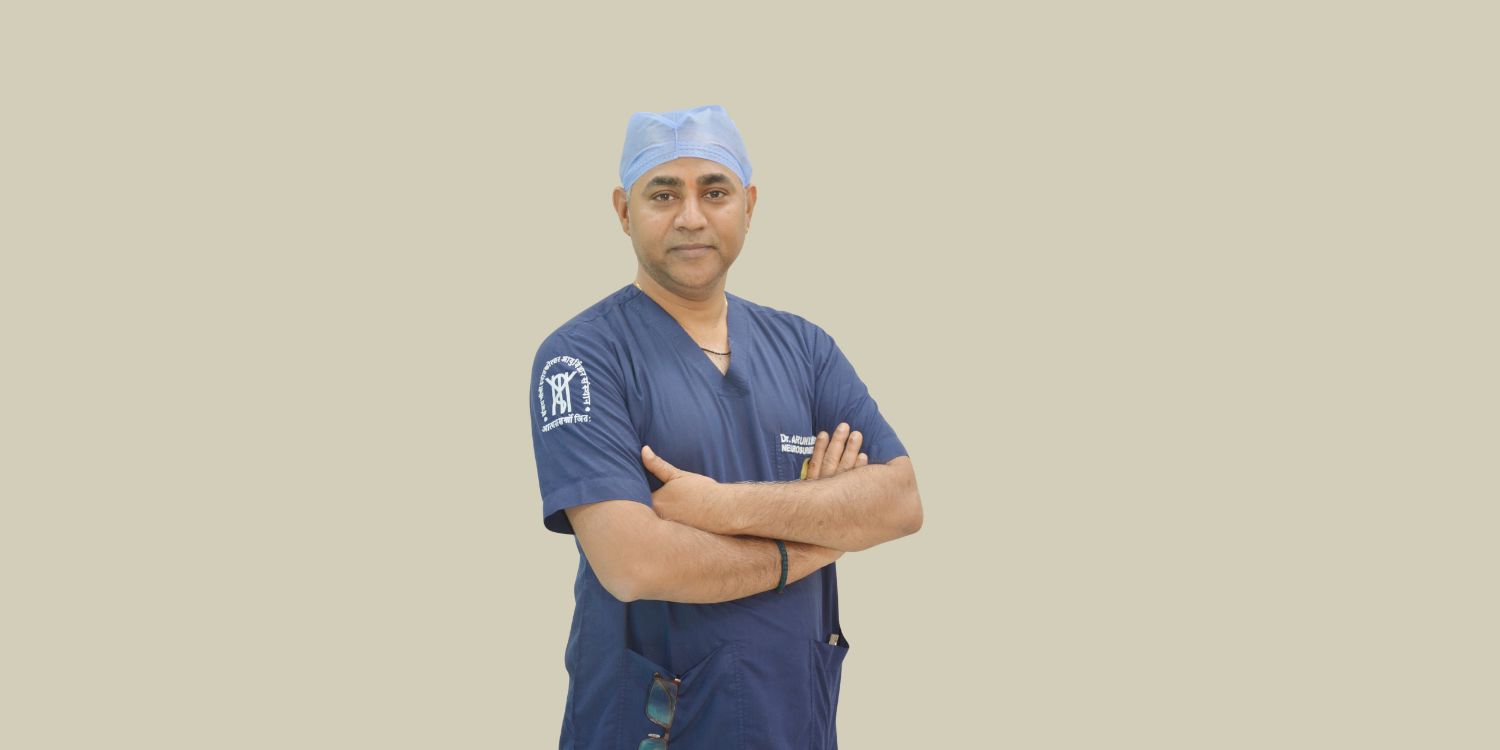
A commitment to serving one’s community often takes shape early in life, evolving through sustained effort and discipline into a long-term professional and personal pursuit. Over time, this sense of responsibility becomes a consistent source of motivation, guiding individuals toward work that extends beyond individual achievement to broader social impact.
In the case of Dr. Arun Kumar Srivastava, this orientation is reflected in his approach to his entire career. His work illustrates how clinical excellence, when combined with a focus on accessibility and responsibility, can help bridge the gap between advanced medical care and those who require it most. In this edition, “India’s Most Distinguished Leader in Neurosurgery 2026,” we feature Dr. Srivastava in recognition of this integrated approach.
The First Aspiration
Dr. Arun Kumar Srivastava’s journey into neurosurgery is anchored in a disciplined upbringing in Gorakhpur, Uttar Pradesh. Born into a middle-class family, he was raised in an environment shaped by strong ethical values. His father, the late Shri Harish Chandra Srivastava, practiced law, while his mother, late Smt. Sushila, managed the household with diligence. A defining influence in his formative years was his elder brother, Hon’ble Justice Ajay K. Srivastava, whose encouragement played a decisive role in directing him toward medicine and, eventually, neurosurgery. The aspiration to become the first neurosurgeon from his town was both a personal and contextual milestone.
The Learning Arc
Dr. Srivastava joined a government medical college in Bellary, Karnataka, where exposure to a high patient load enabled the development of early clinical judgement. He later pursued M.Ch in Neurosurgery at AIIMS in 2005, a period marked by intensive training under experienced neurosurgeons and access to advanced surgical technologies.
He chose to return to his home state, to fulfill his dream of making advanced neuro technicalities available for the needy. He joined the Sanjay Gandhi Postgraduate Institute of Medical Sciences (SGPGIMS) in 2008, an institution and superspecialty hospital that integrates patient care with teaching and research. His participation in national and international forums further contributed to refining his surgical skills and research orientation.
The Academic Surgeon
As a professor of neurosurgery, Dr. Srivastava’s responsibilities extend across complex surgical practice and structured mentorship. His clinical work involves managing high-risk and technically demanding cases, requiring a combination of precision and measured decision-making. Within the academic setting, he emphasises continuity in clinical training, encouraging junior colleagues to engage comprehensively, from preoperative planning to postoperative care.
Advancing the Edge
Dr. Srivastava’s work includes notable contributions to advancing neurosurgical techniques in challenging anatomical regions. His efforts in cavernous sinus surgery have helped expand operative possibilities in an area historically regarded as difficult to access. Through cadaveric training initiatives, he has also contributed to skill development among emerging neurosurgeons.
In addition, he has introduced refinements in intraoperative neuromonitoring to enhance safety during complex skull-base procedures. His contributions to vascular neurosurgery include reviving and refining surgical clipping techniques for complex aneurysms such as paraclinoid and basilar trunk variants. Other technical developments include the “Knock and Drill” technique for craniovertebral junction anomalies and modifications to endoscopic optic nerve fenestration for select visual conditions. His work on the modified pial suture technique has also influenced outcomes in intramedullary spinal tumour surgeries.
Next-Gen Neurosurgery
Dr. Srivastava’s practice reflects the growing role of technology in neurosurgery. The use of robotic-assisted systems and neuronavigation aligns with contemporary surgical standards focused on precision and minimally invasive approaches. He is also involved in research initiatives incorporating artificial intelligence to improve diagnostic accuracy and treatment planning, particularly in trauma and tumour care. While specific study details remain undisclosed, the direction indicates a shift toward data-driven clinical decision-making.
Beyond Clinical Boundaries
A structured daily routine supports his clinical responsibilities. His day typically begins with meditation and planning, followed by detailed preparation for surgical procedures. Beyond medicine, he maintains an active interest in sports, particularly cricket and tennis. His involvement in developing a cricket facility within the institutional campus. He strongly credits his wife, Parul Saxena as a great strength and support in maintaining a good work-life balance being a physician herself. He sticks by his mantra “Santosham Param Sukham” (Contentment is the supreme happiness) and advocates the practice of maximum effort with minimal expectation.