
Neurology as a subject demands both theoretical and practical knowledge; to understand the anatomy of a human is to understand a million possibilities that could, either individually or concurrently, play the role of cause and effect. In such scenarios, you, as a neurosurgeon, need to find far more than just passion to be regarded among the best in the field.
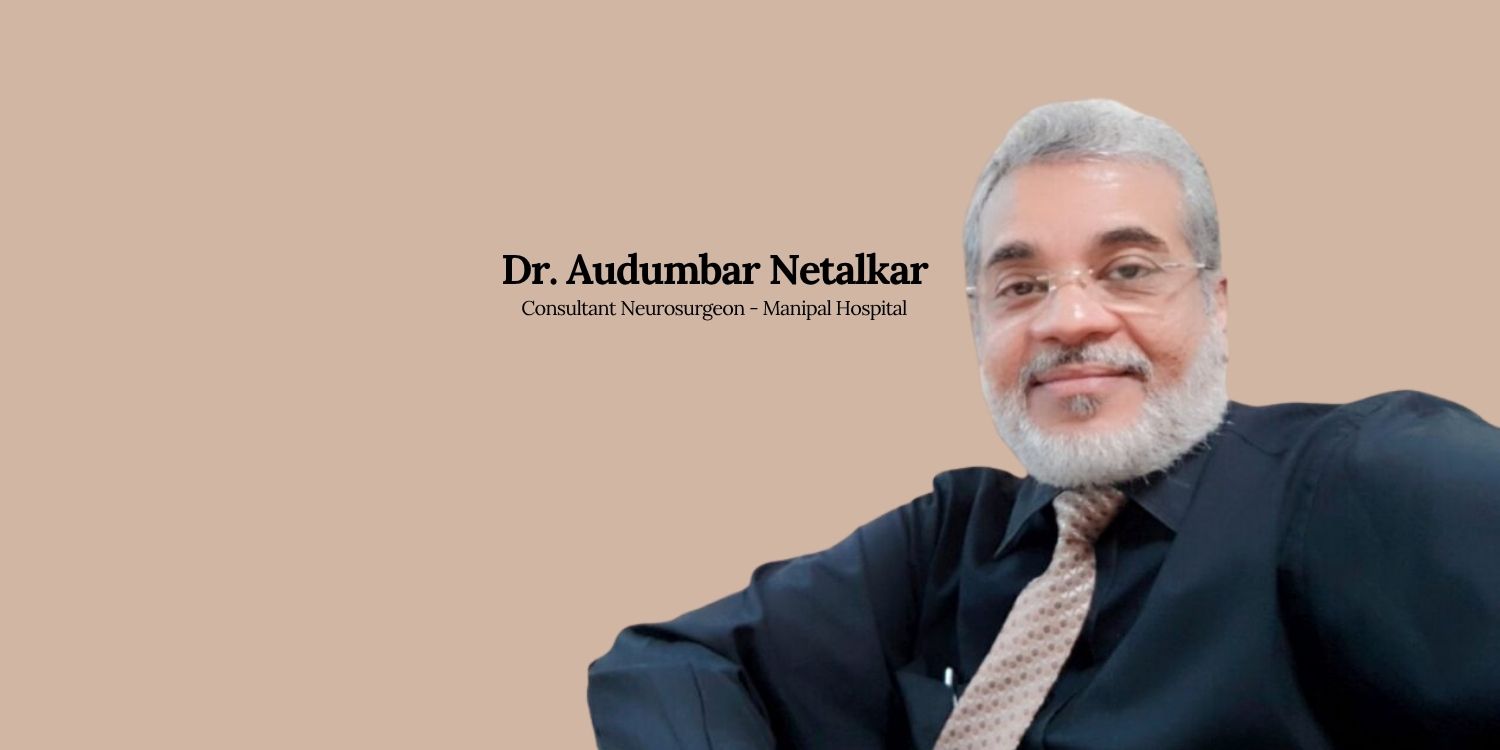
Dr. Audumbar Netalkar represents one such instance, where the foundation required to be a skilled surgeon is only the beginning of navigating the larger complexities of neurosurgery.
The Formative Edge
Dr. Audumbar Netalkar’s trajectory into neurosurgery is rooted in sustained academic distinction from an early age. Raised in Mardol, a village in Goa, he consistently ranked first in school from the age of five. His formative milestone came in 1973, when he secured the first rank in the SSLC examination across Goa at the age of 15, graduating from A.J. de Almeida School in Ponda. This was followed by top performance in the Premedical Interscience examination and a first rank in the medical entrance examination in 1975.
He completed his MBBS at Goa Medical College before moving to Mumbai for specialised training at Seth G.S. Medical College and KEM Hospital. At a time when Goa lacked neurosurgical training infrastructure, this transition was necessary for advanced education. His M.Ch. in Neurosurgery, completed in 1985 under the University of Bombay, was marked by the highest marks in the final examination.
Building Clinical Depth
Dr. Netalkar’s early professional years were shaped in Mumbai’s high-volume public healthcare system. Between 1979 and 1987, he worked at KEM Hospital, where he also received recognition for technical proficiency, including a first prize in vascular microanastomosis under Professor Brunelli, which led to a fellowship opportunity in Europe.
He subsequently transitioned to the private healthcare sector at PD Hinduja National Hospital as an Associate Neurosurgeon, gaining exposure to a different patient demographic and care model. By the age of 35, he had been appointed Consultant Neurosurgeon at Sir HN Hospital in Mumbai and further trained in the United Kingdom at Royal Preston Hospital focused on microneurosurgery and spine surgery.
Building Neurosurgery in Goa
In 2003, Dr. Netalkar returned to Goa, where neurosurgical services in the private sector were virtually non-existent. Over the next five years, he established neurosurgical infrastructure across seven private hospitals in the state. These institutions, which have since evolved into facilities with capacities ranging from 100 to 150 beds, did not initially have the capability to support specialised neurosurgical care. For approximately 15 years, he managed these services largely independently, handling both clinical and operational responsibilities.
Dr. Netalkar joined Manipal Hospital in Goa in 2003, at a time when the institution functioned primarily as a cancer care centre without dedicated neurosurgical services. His role involved developing a comprehensive neurosurgery department from the ground up. Over time, the hospital evolved into a regional referral centre serving not only Goa but also parts of Maharashtra and Karnataka.
His contributions extended beyond clinical practice to professional organisation and academic engagement. He was a founder member and secretary of the Goa Association of Neurological Surgeons, established in 2008. He has also been involved in organising national and international conferences, including the WFNS conference in 2009 and the National Neurotrauma Conference in 2025, which saw participation from over 800 delegates.
What the Field Demands
In addressing younger medical professionals, Dr. Netalkar offers a measured perspective on neurosurgery as a career. He emphasises that the field requires long-term commitment, often extending over two decades of training and practice before reaching stability. He cautions against entering the specialty based on perceived prestige or financial incentives, instead highlighting the importance of informed decision-making and resilience.