
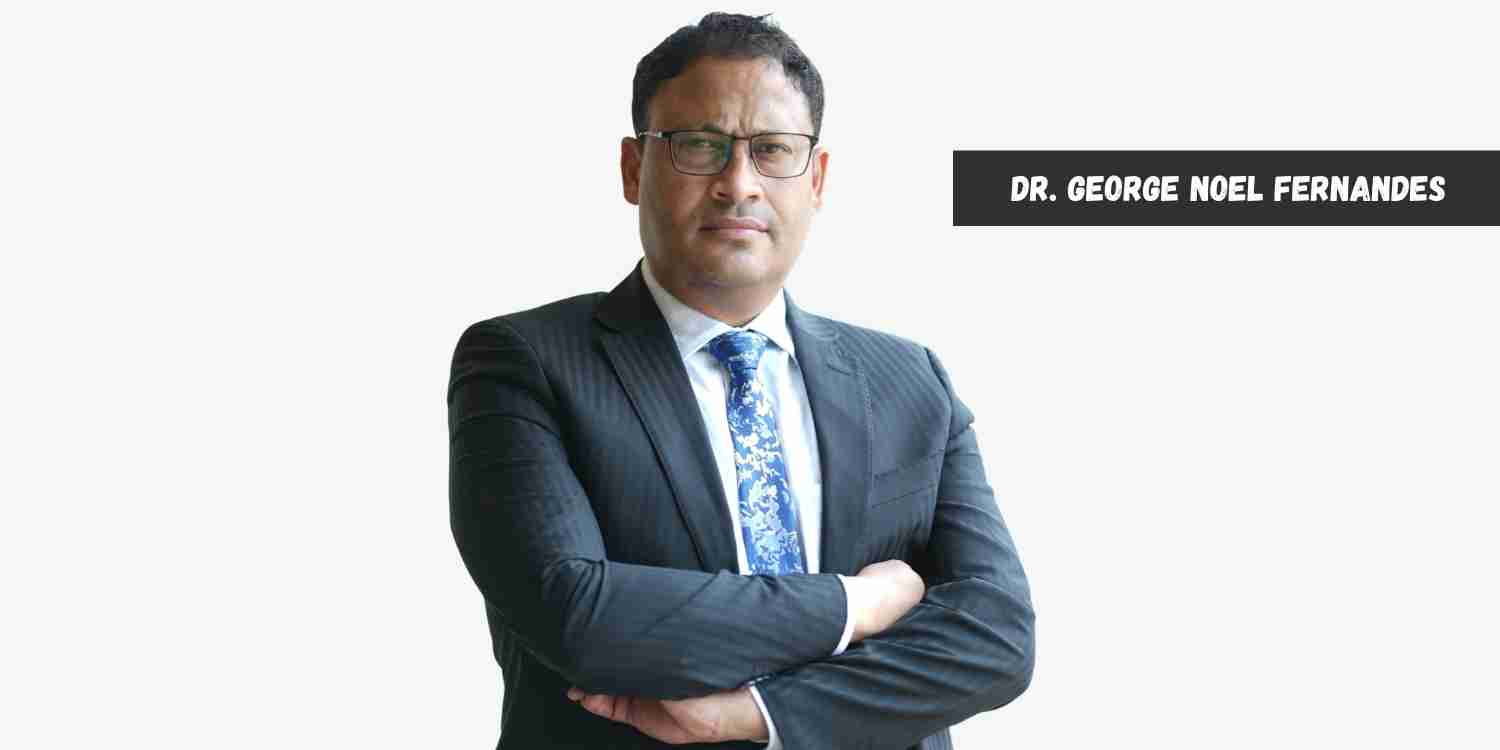
For those who dedicate their lives to the care of others, success reveals itself quietly, in the trust of patients, in lives restored, and in the countless moments where healing takes precedence over everything else. In a profession where decisions carry the weight of life itself, there are individuals whose commitment goes beyond duty, becoming a lifelong pursuit of service. Such doctors are not merely practitioners; they become pillars of reassurance for generations they serve.
It is in honour that we bring to light one such individual, Dr. George Noel Fernandes. His journey stands as a testament to what it truly means to place patients above all else, embodying both clinical excellence and unwavering compassion. We are proud to feature him under “India’s Most Influential Healthcare Visionaries – 2026”, celebrating a life devoted to healing and impact.
In Moments That Matter Most
Dr. Fernandes’ entry into medicine was not influenced by family tradition, but rather by a deeply personal experience. The untimely passing of his father, due to a condition that probably could have been diagnosed through a better system, became a moment of reckoning. It instilled in him a conviction that timely medical intervention is not just beneficial, but often decisive.
This realisation did not merely guide him towards medicine; it shaped his choice of specialisation. He gravitated towards critical care, a field where time, precision, and decision-making directly determine outcomes. For Dr. Fernandes, the focus was clear: not only to save lives, but to ensure that patients returned to a meaningful quality of life.
Dr. Fernandes’ career trajectory began with serving in rural and underserved regions and led him to working in disaster management environments, he sought exposure where systems were tested and response times mattered most.
From Intervention to Insight
His initial years were firmly rooted in curative care, addressing acute and critical conditions. However, repeated exposure to late-stage diagnoses, particularly in oncology and chronic illnesses, led to a shift in perspective. Preventive medicine became the next logical step, focusing on early detection and timely intervention.
Today, his work increasingly centres on predictive healthcare, driven by advancements in artificial intelligence and data analytics. Having witnessed the transition from paper-based systems to AI-enabled clinical support,he figured that AI, when used correctly, can become a very powerful tool in healthcare administration and operations. His approach is particularly evident in cancer care, where structured screening protocols for high-risk individuals aim to detect disease at an early, manageable stage. Similarly, his initiatives across more than 40 villages focus on identifying diabetes and hypertension early, conditions that, if unmanaged, contribute significantly to long-term morbidity.
The Discipline of Trust
While Dr. Fernandes attributes much of his personal grounding to his wife, Mrs. Manisha Fernandes, he translates that same sense of balance into a strong, outcome-driven leadership philosophy as the CEO of Kamalnayan Bajaj Hospital. When he is incharge, his focus remains on measurable indicators that directly impact patient care, mortality rates, infection control, recovery timelines, and deviations in clinical pathways. The premise is straightforward: sustainable growth in healthcare institutions is a by-product of trust, and trust is built through consistent clinical excellence.
Equally central to his leadership style is the principle of servant leadership. He leads by example, whether it is being present on the hospital floor before operating hours, engaging directly with patients, or setting behavioural benchmarks for staff. In his view,
every member of the institution, from frontline workers to senior clinicians, contributes to the patient experience.
Among operational challenges in hospital administration, Dr. Fernandes identifies communication as one of the most underestimated. For him, effective healthcare delivery extends beyond diagnosis and treatment, it requires continuous, transparent engagement with patients and their families. This includes clear explanations of clinical decisions, financial implications, and alternative treatment pathways. Avoiding medical jargon and empowering patients to participate in decision-making are central to this approach. Importantly, communication does not end at discharge; it extends into post-hospitalisation care, where adherence to treatment and lifestyle modifications become critical.
Lessons from the Frontline
Coming directly from his experiences of working with the Indian and US Armed Forces in disaster management, he advocates for greater public awareness of basic life support, structured emergency training, and regular simulation exercises. He also emphasises the role of emerging technologies, such as drones for medical supply delivery and remote monitoring systems, in bridging access gaps, particularly in remote or disaster-affected regions. At the institutional level, he calls for better infrastructure planning, including the ability to segregate treatment zones during pandemics to ensure continuity of care.
A Message to the Next Generation
For aspiring medical professionals, Dr. Fernandes offers a perspective that is both simple and profound. Medicine, in his view, must be driven by the passion to save lives, not by financial considerations. The true reward, he emphasises, lies in the impact one creates, the ability to restore health, alleviate suffering, and contribute meaningfully to another person’s life. Continuous self-improvement, ethical practice, and a commitment to service remain, in his words, non-negotiable.