
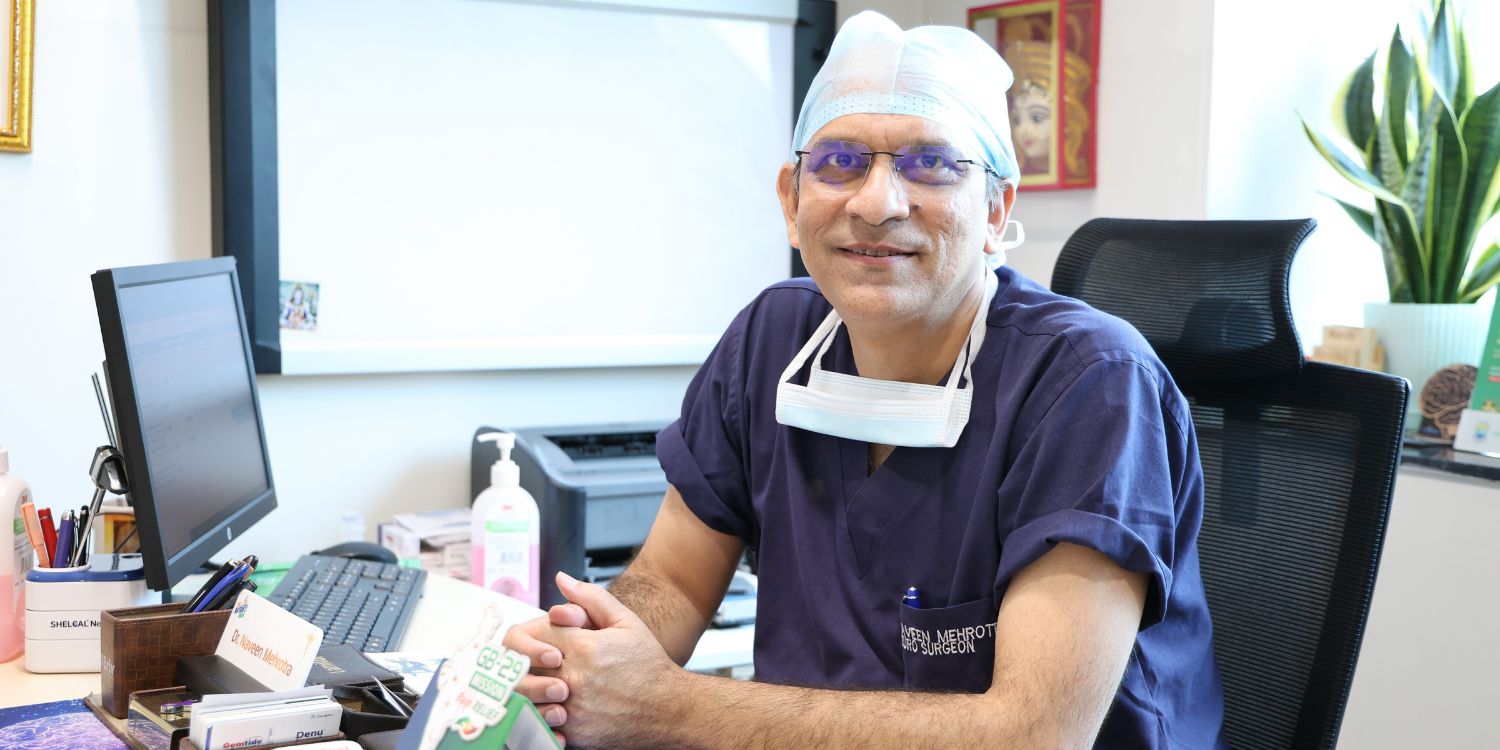
For a surgeon, depth within a single specialty is often considered a benchmark of clinical excellence. Neurosurgery, however, extends beyond conventional specialisation, requiring a multidimensional understanding of intricate anatomy, disease variability, and operative precision, where the margin for error is exceptionally narrow.
For Dr. Naveen Mehrotra, this complexity is reflected in a practice that integrates both minimally invasive and open neurosurgical approaches. His clinical scope spans a wide patient spectrum, from neonates to senior citizens, demanding adaptability across age-specific anatomical and physiological considerations.
In recognition of this breadth of expertise and sustained contribution to the field, we take the honour to feature him as “India’s Most Distinguished Leader in Neurosurgery – 2026.”
The Brain’s Calling
For Dr. Naveen Mehrotra, an early inclination toward science created a natural pathway into medicine, a discipline that offered a direct interface between theoretical knowledge and tangible human outcomes. A formative childhood memory, observing the regard accorded to a visiting family physician, left a lasting impression where respect was embedded not demanded.
What fascinated him more about neurosurgery was the brain’s complexity demanding a degree of surgical precision and accountability that is uniquely high.
Foundations of Excellence
Dr. Mehrotra completed his undergraduate training at King George’s Medical College followed by specialised neurosurgical training at the Sanjay Gandhi Postgraduate Institute of Medical Sciences, where he secured the top rank in the entrance examination.
Early professional experience as a faculty member at Nizam’s Institute of Medical Sciences in Hyderabad added a teaching and mentorship dimension to his career. However, a defining phase of his development came through international exposure. Selection for a highly competitive American Association fellowship in the United States, awarded annually to only two neurosurgeons globally. His approach was further enriched by advanced paediatric neurosurgical training in Canada, offering early exposure to complex cases involving the brain, spine, and paediatric populations.
Tailored Neurosurgery
Surgical decision-making in neuro-oncology requires the reconciliation of multiple variables, including tumour biology, anatomical location, and patient-specific considerations. Dr. Mehrotra’s approach balances protocol-driven frameworks with individualised treatment strategies.
Minimally invasive techniques are increasingly integrated into neurosurgical practice, and his team demonstrates a clear inclination toward these approaches where appropriate. However, the preference is conditional rather than absolute. When minimally invasive surgery can achieve outcomes comparable to conventional open procedures, while reducing morbidity and recovery time, it is prioritised. Conversely, open surgery remains the preferred option where it offers superior access, control, or completeness of tumour resection.
The decision-making process is supported by advanced imaging, intraoperative navigation, and multidisciplinary discussions. Importantly, the emphasis remains on maximising safe resection, preserving neurological function, and aligning interventions with the patient’s overall prognosis and goals.
Precision Under Pressure
Operating on neonates and infants introduces a distinct set of clinical and ethical challenges. The small anatomical scale, limited physiological reserves, and low blood volume significantly narrow the margin for error. Surgical interventions must therefore be executed with heightened precision and planning.
Beyond intraoperative considerations, paediatric neurosurgery requires a longitudinal perspective. Outcomes are not assessed solely on immediate surgical success but on long-term neurodevelopmental trajectories. This necessitates a comprehensive understanding of paediatric neurodevelopment alongside technical competence. While keeping all this into consideration, a major factor playing its role is the emotional dimension. Managing the expectations and anxieties of families forms an integral part of the clinical process, often requiring communication and reassurance that extend beyond surgical parameters.
Dr. Mehrotra’s cerebrovascular procedures reflect the high-pressure nature of neurosurgery, where conditions can change within minutes. Effective leadership relies on preparation, detailed preoperative planning, clear team roles, and structured communication. Composure in critical moments is essential. While protocols guide action, effective response depends on experience. Anticipating complications and preparing for multiple scenarios allows the surgical team to function cohesively under pressure.
The Role of Balance
The demands of neurosurgery necessitate deliberate efforts to maintain personal equilibrium. For Dr. Mehrotra, activities such as playing tennis, listening to music, and engaging in reading serve as mechanisms for mental recalibration. Short family-oriented travel further contributes to this balance. He is committed to staying updated with advancements in medical science. In a field characterised by rapid evolution, sustained focus and clarity depend as much on rest and renewal as on continuous academic engagement.