
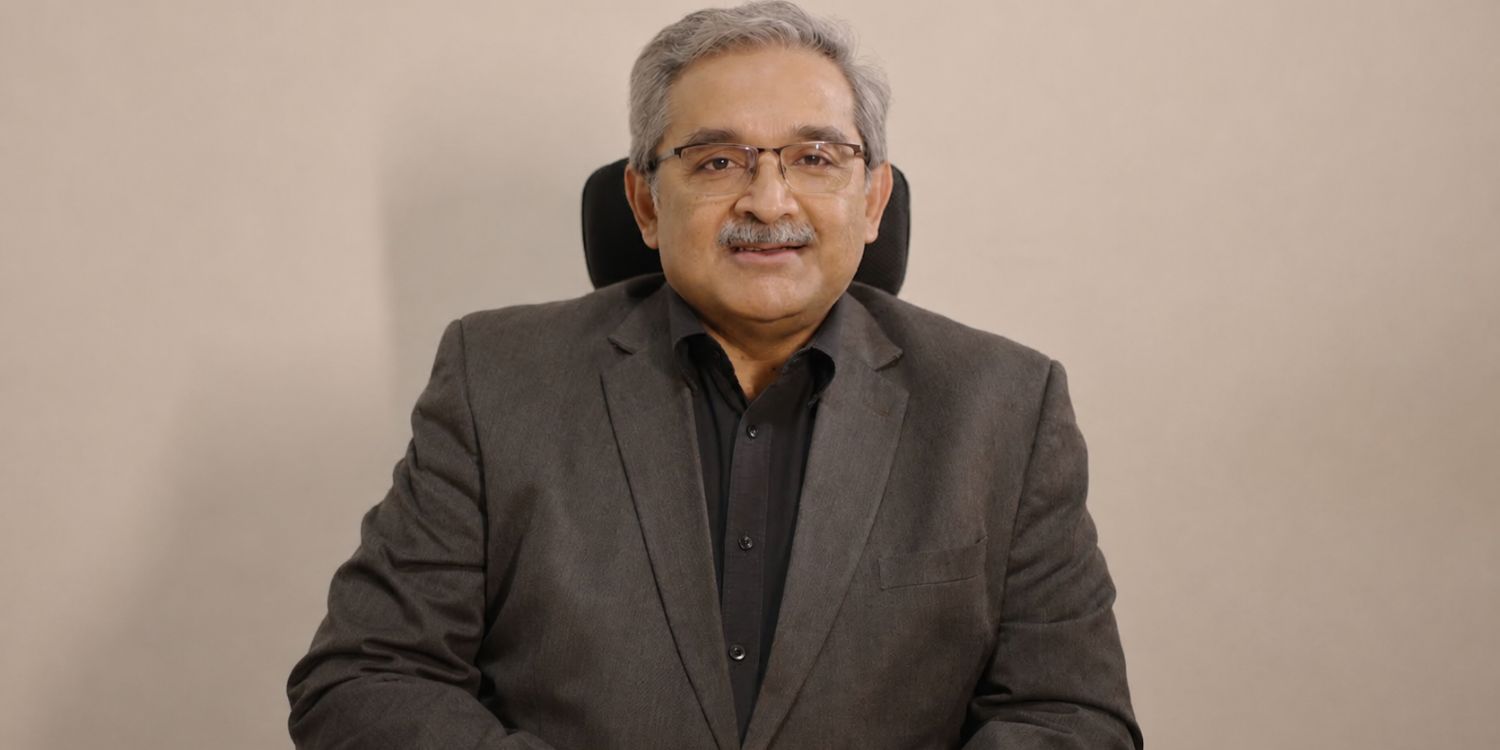
“My father has always been my greatest inspiration. It was not only his passion for neurosurgery that influenced me, but also his remarkable ability to enjoy life, connect with people, and remain deeply involved in everything around him. During his career, he was intensely committed to building and developing NIMHANS into a world-class institution, a task that was undoubtedly all-consuming. Yet, despite the demands of his profession, he always made time for his family. There were occasions when professional responsibilities prevented him from being present, but whenever he was with us, he more than compensated with his enthusiasm, energy, and affection. As a child, I was diagnosed with dyslexia. Today, these conditions are far better understood by both medical professionals and educators, and schools are much better equipped to support children with learning differences. However, during my childhood, many children like me found school and education particularly challenging. What made the difference in my life was the unwavering support and understanding of my parents. My father, in particular, helped me understand that these challenges did not define my potential. He and my mother, Mrs. Malathi Varma, who herself was an educator, gave me the confidence to accept my difficulties, focus on my strengths, and find my own path to success.”
These are the words of a man who draws inspiration from every little aspect of life. He is the living proof that something as challenging as dyslexia, weighing your entire life down, can always be turned around, shaping him into one of the well-known neurosurgeons in India.
This is the story of Dr. Ravi Gopal Varma, a renowned neurosurgeon, Director-Aster Global Center of Excellence in Neuroscience and Lead Consultant Neurosurgeon at Aster Hospitals, Bangalore who inspires many young neurosurgeons and aspiring doctors over the course of his career.
Foundations of Functional Neurosurgery in India
Dr. Ravi Gopal Varma is deeply motivated and inspired by his father, Dr. Ravi Marthanda Varma, the Founder Director of the National Institute of Mental Health and Neurosciences (NIMHANS). Dr. Ravi Gopal Varma strives to see his father’s reflection in himself both personally and professionally and therefore sees following his father’s footsteps as his ambition in life. Dr. Varma’s early academic inclinations were aligned with the neurosciences. Subjects such as neuroanatomy and neurophysiology held sustained interest, not merely for their complexity but for the degree of uncertainty that continues to define them.
Unlike more systematised branches of medicine, the brain remains only partially understood, and it is this incomplete knowledge base that often draws clinicians toward the discipline. Following his foundational training, he pursued a Fellowship in Functional Neurosurgery at the University of Western Ontario, Canada, from 2003 to 2005, where he trained under Dr. Andrew Parrent at the London Health Sciences Centre (LHSC). He decided to come back with all the knowledge and establish something similar in India.
It took nearly three years to establish a dedicated Functional Neurosurgery Department at M.S. Ramaiah Medical College, making it one of the first such departments within a medical college in India.
Advancing Movement Disorder Care
Dr. Varma’s father was a pioneer of the “Varma Technique” This procedure involved creating a targeted lesion in the brain through a minimally invasive percutaneous approach using a needle passed through a skull foramen to treat tremors and movement disorders. Following his father’s footsteps led him to discover the fields that were truly meant for him. He developed a special interest in the brain, focusing on its functionality and associated diseases, including Parkinson’s disease and epilepsy. Deep brain stimulation (DBS) remains his central modality. With experience exceeding 450 DBS procedures, Dr. Varma has contributed to the normalization of this technique within the Indian clinical context.
Between Science and Faith
Dr. Varma states that his philosophy over life, death and everything in between has changed tremendously. He stated that “When I began my journey as a doctor, my understanding of medicine and human behaviour was very different from what it is today. Decades of working in neurosurgery have taught me humility and deepened my appreciation of the fragility of life. Every day, we encounter situations that remind us how precious life is and how little separates health from illness. The more I have worked in this field, the stronger my faith in God has become. I believe that my work is guided and that I am merely an instrument through which healing can occur. While skill, training, and experience are essential, there is also a profound responsibility and privilege in caring for patients during some of the most vulnerable moments of their lives.”
From Milestones to Modern Mastery
Dr. Varma strongly believes that staying at the forefront of technology and innovation is critical. Neurosurgery is constantly evolving, and the ability to understand, adapt, and adopt new technologies directly impacts patient outcomes. Whether it is neuromodulation, epilepsy surgery, robotics, or advanced imaging, embracing innovation remains essential to delivering the best possible care.
Dr. Varma recalls his first DBS surgery as a very significant one. He expressed this with fond regard, “After returning to India, one of our major milestones was organizing and conducting what was then the world’s first live DBS surgery workshop in 2010. My mentor, Dr. Andrew Parrent, travelled to India and actively participated in the surgery and educational program, making it a landmark event in the advancement of functional neurosurgery and neuromodulation in the country.
Our first DBS procedure was performed in 2008, marking the beginning of a new era in functional neurosurgery at our institution. Since then, the field has evolved tremendously. Procedures that once required prolonged operating times are now performed with significantly greater precision and efficiency. With the integration of advanced imaging, navigation systems, and robotic assistance, modern DBS procedures can typically be completed within 2–4 hours, leading to improved accuracy, workflow, and patient outcomes.”
Legacy in Neuroscience
Dr. Varma reminisced, When people speak of legacy, I do not view it as my own. It is my father’s legacy that I have been privileged to follow. His influence continues to guide many of the decisions I make today, both professionally and personally.
We asked Dr. Varma, how do you define success at this stage of your career? He stated that, “At this stage of my career, success is not measured by titles or achievements alone. It is measured by the patients whose lives we improve, the institutions we help build, the young doctors we mentor, and the values we pass on to future generations. My Father’s values, vision, and commitment to excellence have shaped not only my career but also the aspirations of the next generation. My elder son (Dr. Vignesh Varma) is getting trained to be a Neurosurgeon at NIMHANS, fulfilling a lifelong ambition of his own, and my younger son (Dr. Vishnu Varma), who is training to become a surgeon, also aspires to pursue neurosurgery just like their grandfather, to become a 3rd generation inspired by his love for neuroscience.”.