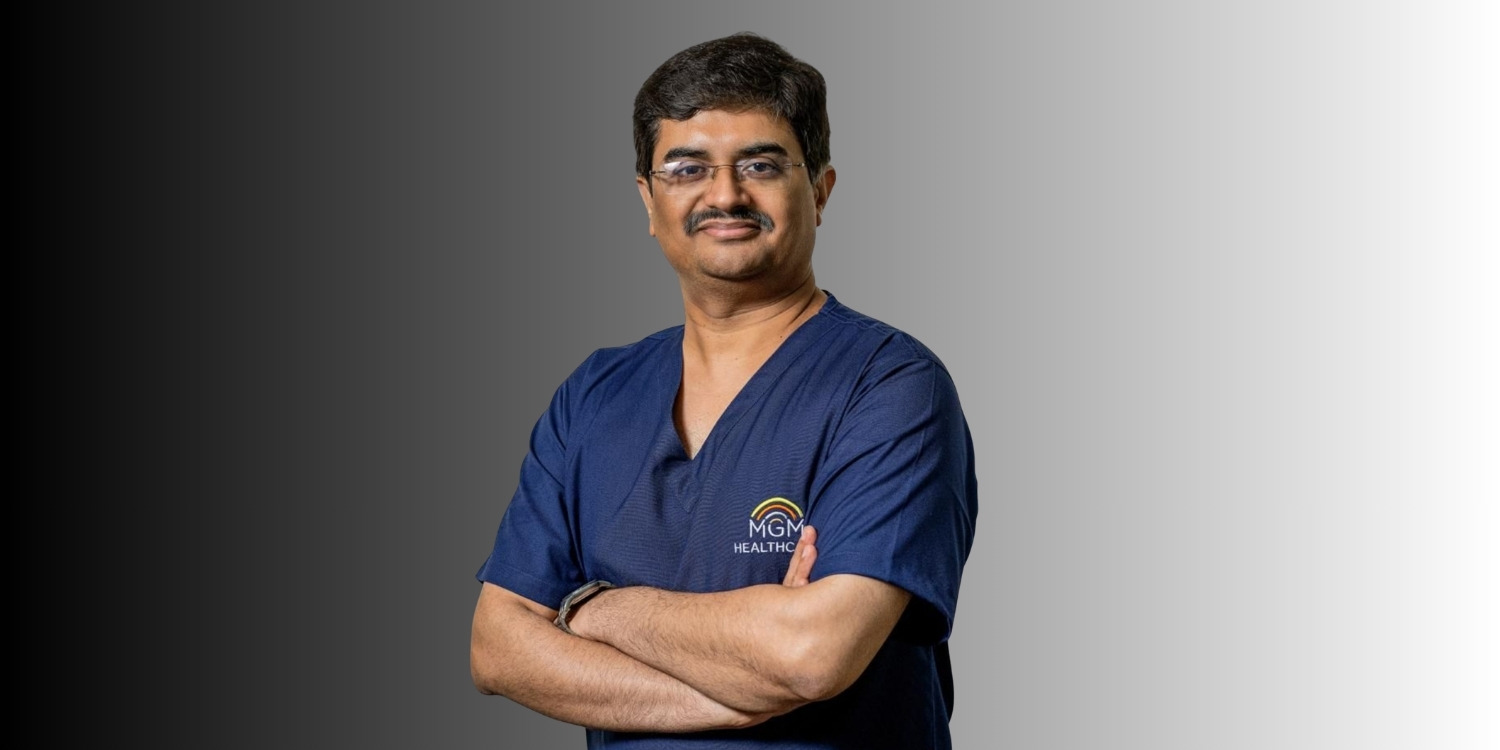
Individuals are often shaped by what they observe long before they define what they aspire to become. The influence of parents, teachers, and early life experiences quietly informs not only one’s choices, but also the values that sustain them through demanding professions. In the healthcare industry, many accomplished clinicians relate very deeply to this. One such doctor we would like to highlight is Dr. Roopesh Kumar V. R, Director of Neurosurgery at MGM Healthcare. Known for his measured approach and clinical precision, he continues to serve patients with a sense of responsibility that extends beyond borders.
It is with this perspective that we feature him in this edition of “India’s Most Influential Healthcare Visionaries – 2026”, recognising a career defined not only by expertise, but by consistency, restraint, and an enduring focus on patient care.
An Early Reckoning
Coming from a family with no medical background, Dr. Roopesh’s early ambitions were initially aligned with civil services. The idea of becoming an IAS officer once guided his academic trajectory. However, his mother played a revolutionary role in encouraging him to become a doctor. This resolve was further strengthened when someone in his locality fell critically ill and struggled to access timely medical care, he found himself directly involved in efforts to locate a doctor. The experience exposed a stark gap, the tangible consequences of medical inaccessibility, and left a lasting impression. It was not an abstract aspiration, but a response to a lived reality, one that would later define the grounded nature of his professional outlook.
Choosing Complexity
During his medical training, Dr. Roopesh initially leaned towards cardiothoracic surgery. Like many young doctors, his preferences evolved through exposure, and it was during his rotations in general surgery that neurosurgery began to stand apart. The speciality’s ability to alter patient outcomes through precise, often minimal interventions struck a chord.
At the time, neurosurgery was widely regarded as a high-risk, high-morbidity field, one that fewer chose to enter. Rather than deterring him, this very perception became a point of engagement. The challenge, combined with the intellectual and technical demands of the field, drew him in. The influence of his mentor, Late Dr Inbasekhar, Professor of Neurosurgery at Madurai Medical College, further solidified this decision, providing both direction and reassurance at a critical juncture.
The Choice to Build
Dr. Roopesh pursued his neurosurgical training at NIMHANS, Bengaluru, an institution known for its rigour and clinical depth. Here, he developed a strong foundation, not only in surgical technique, but in the discipline and work ethic required to sustain a career in such a demanding field.
Upon completing his training, he was faced with a defining professional choice. Opportunities presented themselves across institutions, including well-established centres with existing infrastructure. However, he chose a less conventional route. Opting to join JIPMER, Puducherry, where a neurosurgery department was yet to be developed, he undertook the task of contributing to its establishment.
This decision, shaped through consultation with mentors and careful reflection, reflected a willingness to prioritise long-term impact over immediate comfort. Building a department from its nascent stages demanded not only clinical expertise but also organisational vision and resilience.
Measured Precision
For Dr. Roopesh, neurosurgery remains a field that continuously reinforces humility. Despite advancements in technology and technique, outcomes can remain unpredictable. Two patients with similar conditions may respond very differently, and even minor errors can have significant consequences.
He often likens the practice to walking a tightrope, where balance is critical, and deviation on either side carries risk. This inherent uncertainty, rather than diminishing confidence, serves as a constant reminder of the responsibility that the field entails.
Learning Without Pause
A distinctive aspect of Dr. Roopesh’s approach is his commitment to continuous self-evaluation. He regularly reviews recordings of his own surgeries, using them as tools for reflection and improvement. Each procedure becomes a learning module, an opportunity to revisit decisions, refine techniques, and identify areas for enhancement.
Among the many cases he has encountered, one stands out with particular clarity. A two-year-old child from Africa presented with a large brain tumour, requiring urgent intervention. On the early morning of the surgery day, the child suffered a cardio respiratory arrest due to high pressure in the brain necessitating immediate resuscitative efforts and emergency management. Despite the high risk situation, the surgical team proceeded the following day. The operation was successful, and the child eventually recovered and walked home.
However, he strongly believes that teamwork is the backbone of every successful surgery. Behind every surgeon is a skilled team of anaesthetists, physiologists, radiologists, assistant surgeons, and theatre staff, scrub nurses and technicians, working together to ensure the best outcomes.
A Guiding Perspective
For those considering a career in neurosurgery, Dr. Roopesh emphasises clarity of intent. The speciality requires sustained effort, long hours, and an ability to navigate both success and setback with composure. More importantly, it demands an understanding that no two cases are identical.
He advocates for a patient-centric approach, where treatment is tailored to individual needs rather than generalised protocols. In an era of rapid technological advancement, he stresses the importance of integrating science and innovation with ethical judgement, ensuring that clinical decisions remain both informed and responsible.