
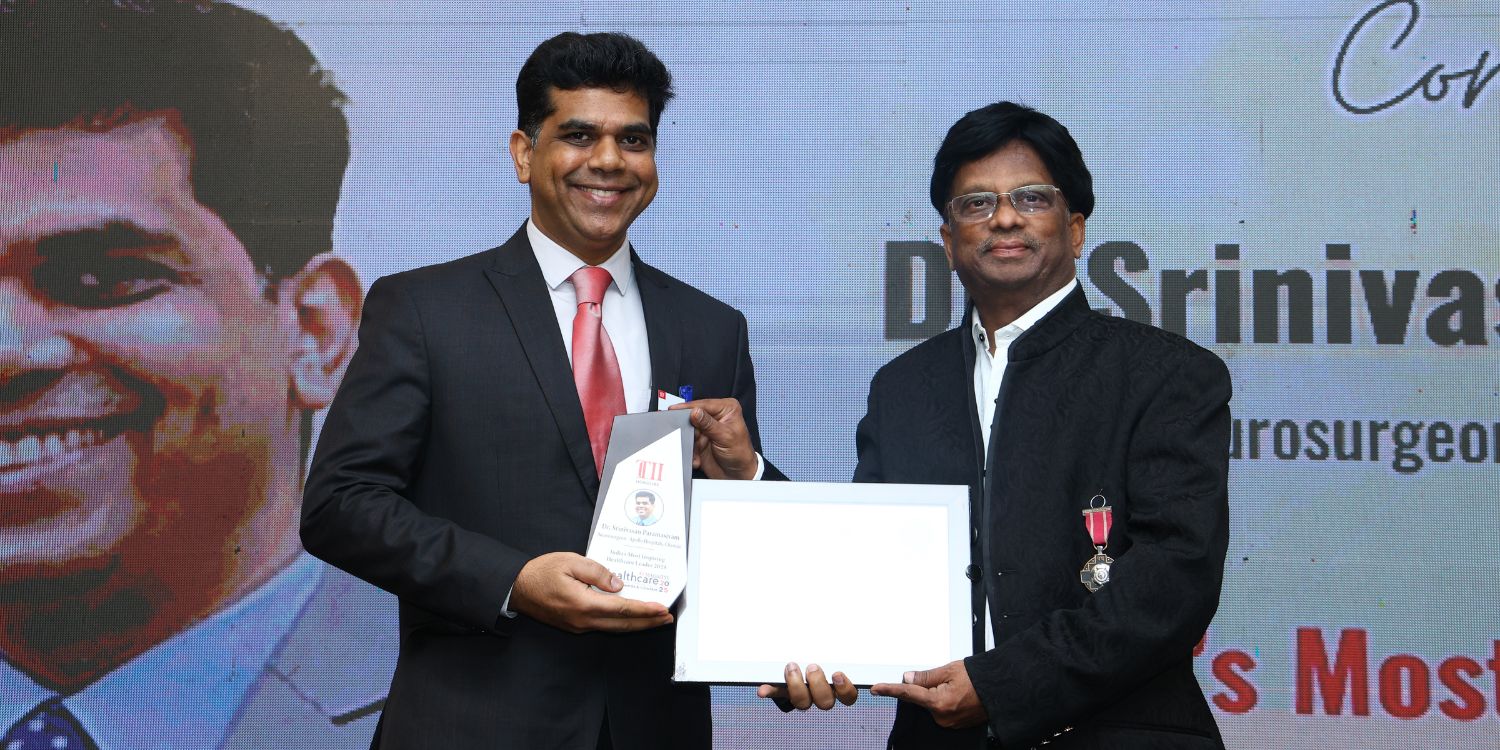
Healthcare leadership is not defined solely by scale or visibility, but by consistency in decision-making, ethical clarity, and the ability to translate expertise into meaningful patient outcomes. In high-stakes specialties such as neurosurgery, where outcomes depend on judgment as much as technique, leadership is earned through discipline, preparation, and accountability over time.
It is within this framework that Dr. Srinivasan Paramasivam stands out as a clinician whose career reflects both technical depth and principled leadership. In recognition of his sustained excellence and leadership in his field, the title of “India’s Most Inspiring Healthcare Leader 2025” feels deserving.
A Path Defined Early
Dr. Paramasivam’s inclination toward neurosurgery developed during medical school, where he demonstrated strong academic performance and a natural aptitude for anatomy and surgical disciplines. A defining personal experience, his brother sustaining a severe head injury, further shaped this path. Witnessing how neurological illness can abruptly alter identity, independence, and family dynamics gave him a deeper understanding of the stakes involved in neurological care.
Equally formative were the mentors he encountered early in his career. Their calmness in life-threatening situations, respect for anatomy, technical rigor, and commitment to lifelong learning shaped his clinical philosophy. These influences
collectively reinforced his decision to pursue neurosurgery and continue developing as both a surgeon and clinician.
Academic Trajectory
Following a 5.5-year MBBS program, Dr. Paramasivam’s interest in neurology and surgery was strengthened through clinical rotations, emergency exposure, case discussions, and direct observation of neurosurgical practice. He went on to complete five years of focused neurosurgical training at the Madras Institute of Neurology, gaining structured experience across cranial, spinal, trauma, vascular, and tumor-related pathologies.
During this phase, he completed the Membership examination of the Royal College of Surgeons of Edinburgh and remained actively involved in teaching, academic presentations, and research, reinforcing a strong foundation in evidence-based practice.
Advanced subspecialty training followed internationally. Fellowship training at the University Hospital of Zurich provided extensive exposure to cerebrovascular and endovascular neurosurgery. This was followed by further training at Columbia University affiliated Heyman Neuman Institute of Neurology and Neurosurgery in the United States.
He later served as Assistant Professor of Neurosurgery at the Icahn School of Medicine, Mount Sinai Hospital. Each stage of this journey refined his technical expertise, professional judgment, and focus on complex neurovascular conditions. He has authored multiple research papers and over 40 of them have been published in various prominent medical journals along with this, he has authored and co-authored 12 book chapters on various topics.
Bringing Global Standards Home
After eight years in the United States, Dr. Paramasivam made a deliberate decision to return to India, guided by a clear objective to bring global standards of neurosurgical care to India and implement it exceptionally. His association with Apollo Hospitals was driven by alignment rather than convenience. He currently works as the Senior Consultant Neurosurgeon and the Head of Neuro Endovascular Surgery at Apollo Hospitals, Chennai and the institution’s emphasis on ethical practice, structured systems, advanced technology, multidisciplinary collaboration, and patient-centric care closely matched his own professional values.
Apollo’s role in advancing tertiary and quaternary care in India, particularly in complex specialties such as neurosurgery, provided an environment where clinical excellence, academic growth, and innovation could coexist with accessibility and compassion.
Clinical Foresight
Looking ahead, Dr. Paramasivam believes the next decade will reshape neurological healthcare through advances in precision medicine driven by genomics and molecular profiling, enabling more individualized treatment in neuro-oncology and neurodegenerative disorders.
He sees artificial intelligence playing a growing role in early diagnosis, risk stratification, imaging interpretation, and outcome prediction, improving clinical efficiency and accuracy. While surgical techniques are already highly refined, he notes further scope for progress through minimally invasive and image-guided approaches, including advanced endoscopy, augmented reality, and the potential integration of robotics to reduce morbidity and improve functional outcomes.
He also anticipates expanded use of neuromodulation therapies, brain-computer interfaces, and functional neurosurgery for conditions such as epilepsy, movement disorders, and chronic pain, alongside advances in neurorehabilitation and regenerative research.
In the Indian context, where patients often present late and with significant comorbidities, he emphasizes efficient resource utilization, standardized protocols, and scalable models that integrate advanced technology while maintaining accessibility and quality of care is a must.