
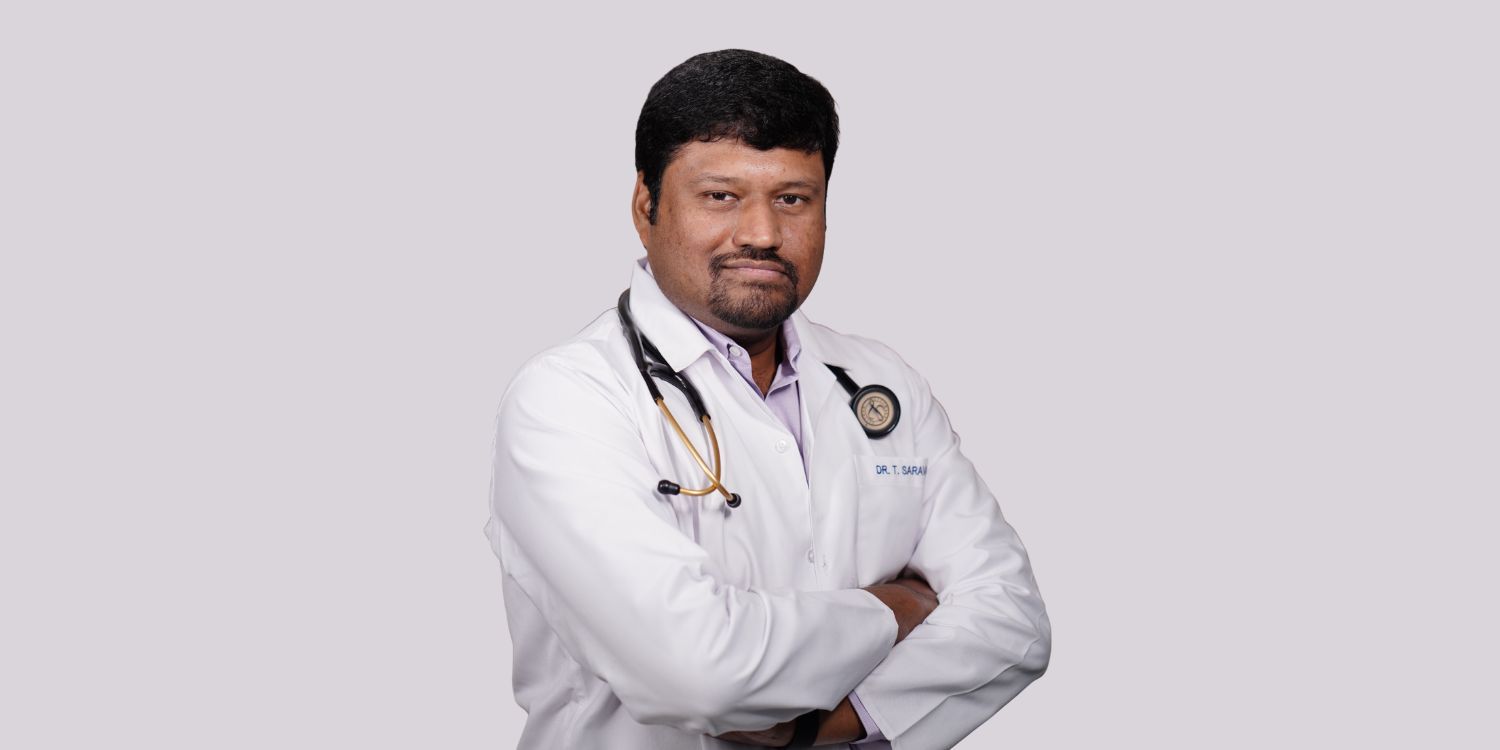
Dialysis only works if the patient keeps coming back, two or three times a week, for life. In and around Erode, Dr. T. Saravanan saw what happened when patients couldn’t. Even when treatment was free under government insurance, families struggled with the travel. Patients quietly skipped sessions, and their lives ended. Many nephrologists would treat that as a social problem outside the clinic. Dr. Saravanan, Medical Director, CEO and Chief Nephrologist of Abirami Kidney Care, treated it as a clinical one. He rebuilt his family’s hospital into a 60-bed super-speciality kidney centre and adopted a zero-cost dialysis policy for his patients. He then opened four satellite centres so people could be treated near home. Since the hospital received kidney transplant clearance in 2020, he has performed 117 transplants, with a 98 per cent success rate for live-related transplants. He has also built a National Board-recognised training programme and taken kidney screening into villages.
A Doctor’s Son Who Chose the Gap
Dr. Saravanan grew up watching his father, Dr. K. Thangavelu, run the hospital he founded in Erode in 1985, about 100 km from Coimbatore. He followed him into medicine and took the same degree, an MD in General Medicine. For his super-speciality he weighed cardiology against nephrology and spent a year in cardiology. Then he chose nephrology, because Erode had far fewer nephrologists than its patients needed. He completed his DM in 2013.
By his account, he was only the third nephrologist in the district. Kidney biopsies and transplants were not routine locally, and many colleagues took them up after he began. He estimates he has now performed 3,000 to 4,000 kidney biopsies, all under real-time ultrasound guidance.
A Start of Something Beautiful
After about three years consulting locally, Dr. Saravanan joined his father’s hospital as chief nephrologist in 2016. He then made a bold decision and demolished the 30-year-old building. The team excavated a basement and built a 60-bed super-speciality hospital between 2016 and 2019. Abirami Kidney Care opened in its new form in 2019, with a 30-bed dialysis unit.
Today it has about 10 ICU beds, 25 dialysis machines at the Erode centre (up from two at the 2016 launch), two operation theatres, two ultrasound machines and an in-house CT scanner. It is tied up with every government insurance scheme, and Dr. Saravanan has worked 12 to 14 hours a day since the opening. He leads a team that includes two urologists and two other nephrologists. He still sees every patient daily and reviews each decision.
When “Free” Still Isn’t Enough
Dr. Saravanan noticed the problem of missed sessions, and its fix was geographic. Abirami set up satellite dialysis centres in Gobi, Karur, Coimbatore and Salem, so patients can dialyse close to home and visit the main centre only when needed.
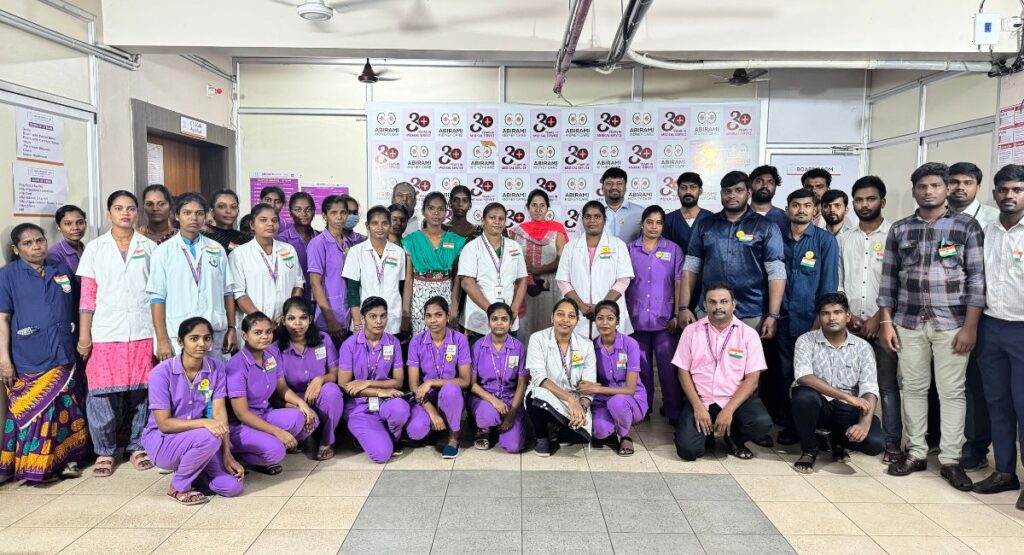
His policy is simple. Patients with insurance cards pay nothing. Patients without one are not turned away, and the hospital helps them obtain a card, including under the Chief Minister’s Comprehensive Health Insurance Scheme. “Closing the communication gap is very important,” he says. He holds outpatient clinics at the satellites weekly or monthly, because patients rarely absorb a diagnosis in a five-minute visit. He also joins a video call with every satellite team. Across all its centres, Abirami now runs 50 dialysis machines and about 2,000 dialysis sessions a month, and over his career, he says, his units have delivered well over a lakh of sessions.
Why the Follow-Up Matters More Than the Surgery
Dr. T. Saravanan has performed 117 kidney transplants, 86 live-related and 31 deceased-donor, with a 98 per cent success rate among live-related transplants. He decides who needs one and who can donate, and he registers patients without a living donor on the state waiting list. An in-hospital ethics committee then counsels the family, and his junior consultants and trainees reinforce it.
He will proceed only when the patient and family commit to long-term care. In his view, the follow-up after a transplant matters more than the transplant itself.
Training the Next Generation
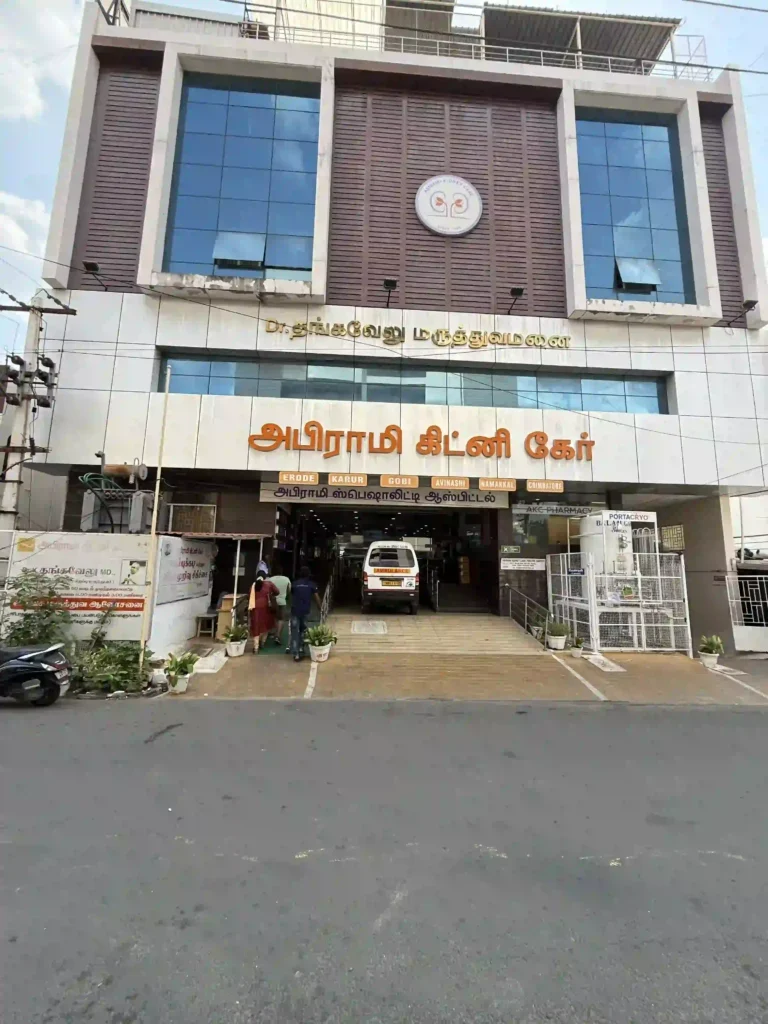
Abirami is recognised by the National Board of Examinations as a teaching hospital. A doctor with an MD in General Medicine can join for three years and qualify in DrNB Nephrology, then practise independently. Dr. Saravanan began his own teaching recognition in 2022, and calls the programme one of the milestones of his 13 years.
His advice to young nephrologists is blunt – train in complete nephrology, from biopsy and critical care to dialysis and transplant. In India, he says, one doctor must do all of it. He also says nephrology is “just a practice of medicine with a super speciality degree”, so a strong foundation in general medicine matters most.
Catching Kidney Disease Before Dialysis
Kidney disease is silent. Serum creatinine below 1 mg/dL is normal, and symptoms appear only after it has climbed far past that. So Dr. Saravanan’s screening teams visit villages with local approval and use a finger-prick creatinine device, which avoids the need for a vein sample. They check creatinine alongside the usual haemoglobin and sugar tests.
His advice for the public is practical:
- A 30-year-old should get one kidney check. If creatinine is normal and the urine protein is negative, it can be repeated after five years.
- People with diabetes or a family history of kidney disease should test yearly.
- After 40, everyone should test every two to three years.
Technology, and What Comes Next
Abirami Kidney Care already uses AI to assist with dictating discharge summaries. Dr. Saravanan also uses AI tools to support administrative tasks and obtain additional insights when reviewing medical scans. He emphasizes that AI is only as effective as the information provided and highlights the importance of verifying information through reliable websites and trusted medical sources.
His next venture is planned overseas, where he hopes to expand access to home haemodialysis services. The initiative aims to bring dialysis care directly to patients’ homes, offering greater convenience and flexibility. The project is currently in the planning stage, subject to the necessary approvals.
Staying Steady
Work-life balance matters for everyone, and it matters most for those whose work never really switches off. Dr. Saravanan keeps that pace sustainable with a few deliberate habits. His mornings start with a 20 to 30 minute walk and treadmill session, and he winds down in the evening with meditation music. He has also built a clinical team of two urologists and two other nephrologists, which lets him share responsibility without losing oversight. He still sees every patient daily and reviews their decisions, and anything that needs discussion is settled by phone.
Outside the hospital, he switches off completely. He travels at least twice a year, to places like Iceland and Norway, and on holiday he turns to adventure sports such as scuba diving and skydiving. Back home, he plays cricket and snooker. He is also an active Freemason. He joined the fraternity in 2016 and is currently the Worshipful Master of Lodge Kalingaraya No. 220, and he continues to attend Masonic meetings in India and abroad, including in the United States, Iceland and Singapore. For a nephrologist whose patients depend on his steadiness, these breaks are part of how he keeps giving his best to the people who rely on him.