
Medicine as a field is best suited to those who view it as an act of community service rather than a purely profit-driven profession. Even within corporate healthcare systems, effective clinical practice requires a degree of empathy and a measured, patient-centric approach, qualities often shaped by early exposure to a socially grounded outlook on care.
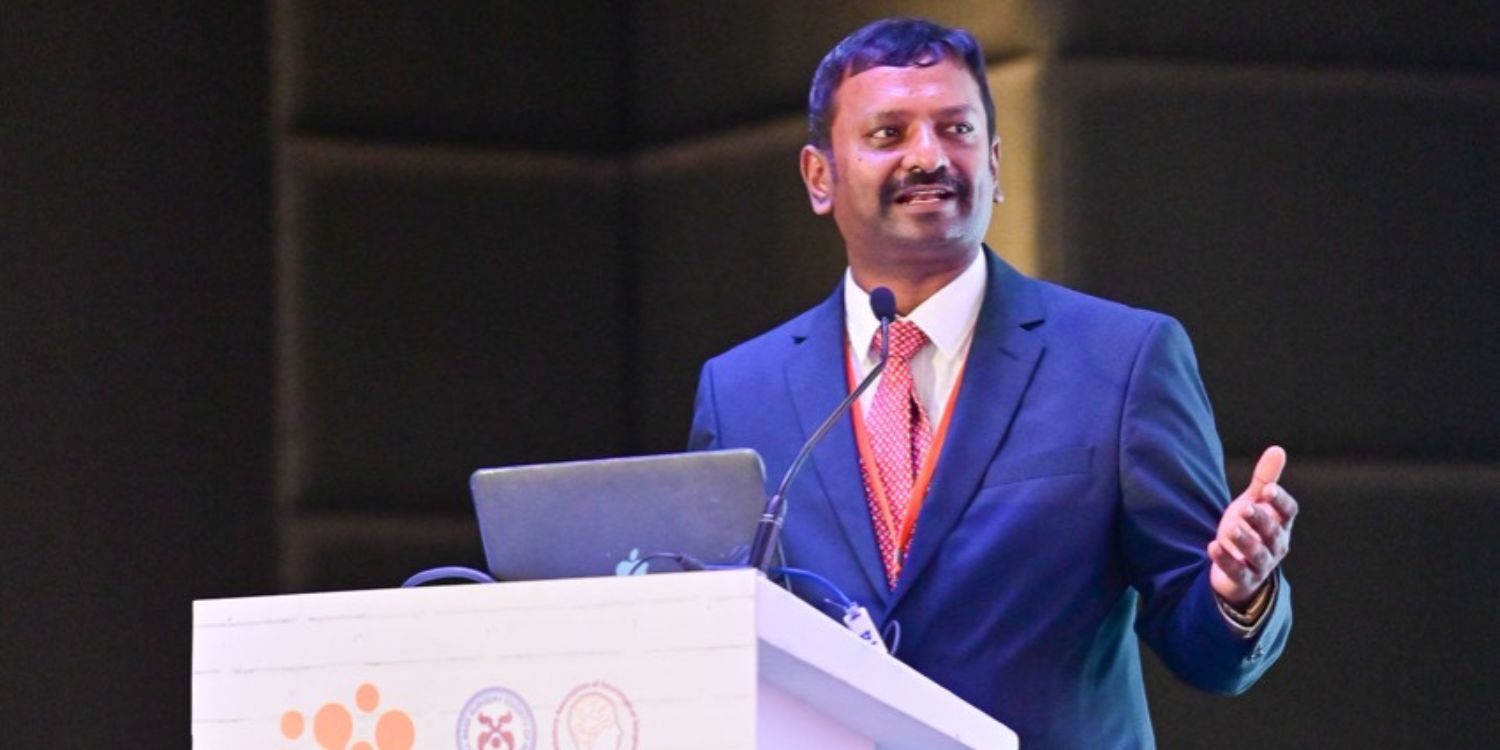
Dr. Vikram Muthusubramanian’s professional journey offers a clear reflection of this perspective. From his early association with Voluntary Health Services to his current role as Senior Consultant Neurosurgeon and Head of Minimally Invasive Brain and Spine Surgery at Sri Ramakrishna Hospital, a consistent emphasis on patient welfare has informed his clinical and professional decisions.
Shaping a Clinical Mind
For Dr. Vikram Muthusubramanian, the decision to enter medicine was not the result of a singular moment of inspiration, but a gradual process shaped by sustained exposure to clinical practice. Raised in Thuraiyur, near Tiruchirapalli in Tamil Nadu, he grew up observing his father, the region’s first practicing pediatrician, manage a wide spectrum of cases in a setting where medical access was still developing. This early familiarity with patient care, particularly in a community-dependent practice, offered a realistic view of both the demands and responsibilities of the profession.
The inclination toward specialization emerged later during his internship at a multispeciality hospital in Madurai. Neurosurgery, in particular, stood out due to its requirement for precision, decision-making under uncertainty, and the direct impact of intervention on functional outcomes.
Training at Voluntary Health Services, a recognized centre for neurosurgical education, provided structured exposure to neurospinal disciplines over a five-year program. Mentorship under figures such as Prof. B. Ramamurthi, alongside contemporaries including Dr Ravi Ramamurthi, Dr. Vasudevan, and Dr. Sridhar contributed to a foundational understanding of both clinical method and surgical discipline.
The Operative Arc
Following his formal training, Dr. Vikram Muthusubramanian expanded his clinical exposure under Prof. Paresh Dhoshi in Bombay, where he gained experience in epilepsy surgery, pain management, and deep brain stimulation. This period coincided with the early adoption of neuroendoscopy and minimally invasive spine surgery in India and training under Prof. Satish Chandra Gore in Pune, combined with participation in AO Spine scoliosis workshops, and other international workshop training allowed him to refine his approach to spinal pathologies, specifically in spinal endoscopy approaches.
Dr. Vikram Muthusubramanian’s professional journey includes experience across multiple institutions, including hospitals in Trichy, Erode, and the Narayani Golden Temple Hospital. For over a decade, he has been associated with Sri Ramakrishna Hospital, where he has played an important role in establishing and expanding services in neurotrauma, epilepsy surgery, neurovascular surgery, skull base surgery and neuroendoscopic surgery. His clinical practice spans a wide patient demographic, from neonatal cases to elderly patients in their late nineties. The case spectrum includes brain tumors, pituitary tumours, aneurysms, congenital anomalies, arteriovenous malformations, spinal tumors, and degenerative spine conditions.
Philosophy of Practice
A defining principle in Dr. Vikram Muthusubramanian’s practice is the preservation of existing neurological function. Preoperative planning is guided by detailed clinical evaluation and advanced imaging, including MRI with fiber tracking, to assess the relationship between pathology and functional anatomy using advanced technologies for intra-operative neuromonitoring and other high-end operative technologies.
Dr. Vikram Muthusubramanian maintains engagement with these developments through regular participation in national and international conferences, typically attending five to six annually.
This continuous exposure allows for critical evaluation of emerging technologies before their integration into practice. Over the course of his career, he has witnessed multiple shifts in surgical methodology, imaging, and perioperative care, reinforcing the need for adaptability in maintaining clinical standards. Dr. Vikram ensures that patient communication is structured and explicit, focusing on realistic outcomes, potential risks, and the possibility of residual deficits aiding patients and family to make a wise decision.
Pre-emptive Care
While many neurosurgical conditions are non-preventable, including tumors and congenital disorders, Dr. Vikram Muthusubramanian emphasizes the role of preventive care in reducing the burden of neurological disease. Management of hypertension and diabetes, avoidance of tobacco use, and moderation of alcohol consumption are identified as key factors in preventing stroke and vascular complications.
Safety measures, including helmet use, adherence to traffic regulations, and proper ergonomic practices, are also highlighted as critical in preventing neurotrauma and degenerative spine conditions. Early consultation for persistent neurological symptoms is strongly advised, as delayed intervention often results in poorer outcomes.
Practice, Reimagined
Dr. Vikram Muthusubramanian strongly believes that the field of neurosurgery in India is undergoing periodic expansion, supported by increased training capacity and institutional investment in modern neurosurgical operative technologies. Government initiatives have facilitated the availability of advanced technologies in public healthcare settings, improving accessibility for patients at lower cost. Additionally, the time lag between global innovation and domestic adoption has reduced significantly, with new technologies reaching Indian centres within two to three years.
Emerging areas, including non-invasive neurosurgery, deep brain stimulation, spinal cord stimulation, and laser-based interventions, are expected to influence future practice patterns. Within this evolving landscape, the role of the neurosurgeon continues to extend beyond operative skill to include technological integration, interdisciplinary coordination, and patient-centered care.