
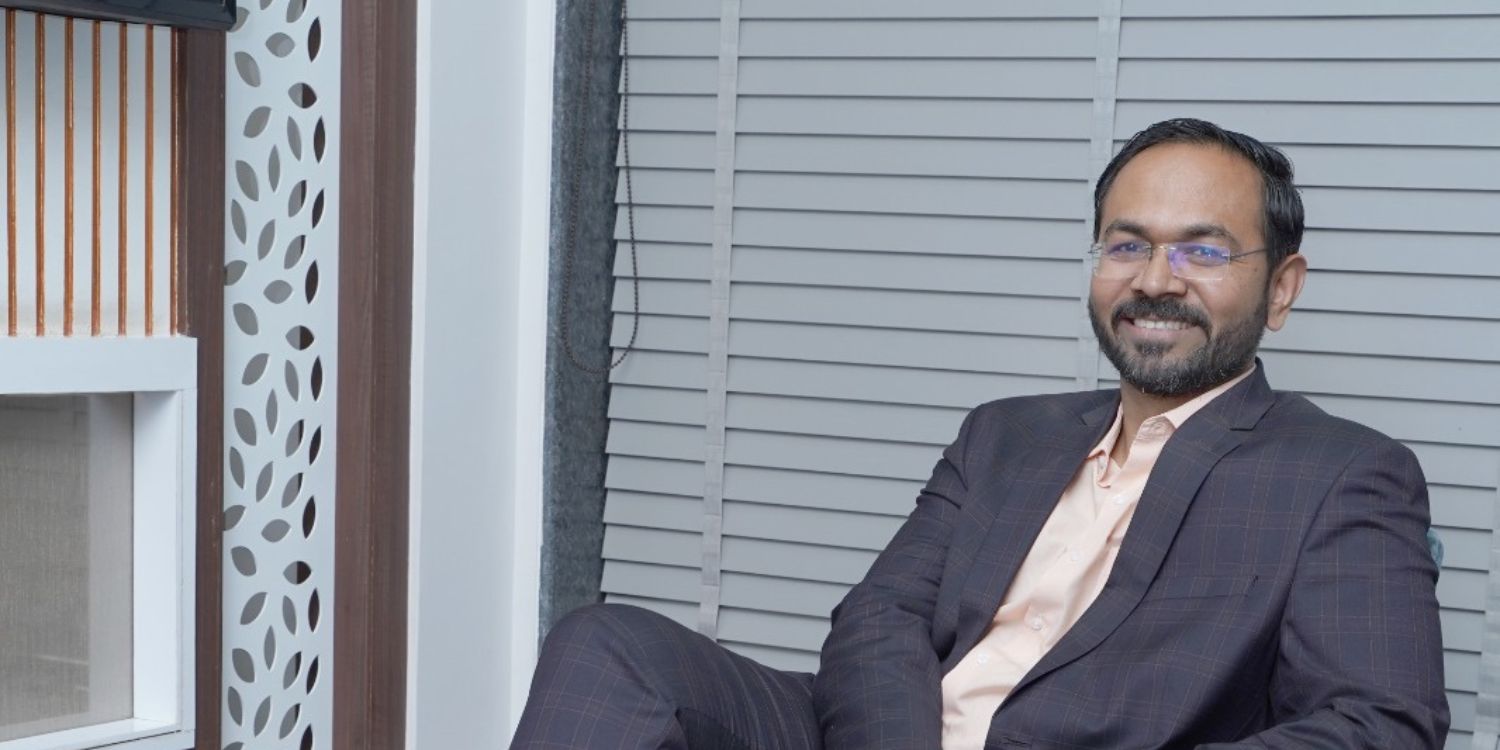
Advancements in neurosurgery have drawn sustained global attention, particularly as the field continues to deepen its understanding of the human brain and behavior. At its core, however, the practice of treating patients places a clear emphasis on responsibility and service.
Influenced by this perspective, Dr. Viralkumar Vasani has aligned his practice with the evolving landscape of neurosurgery while maintaining a consistent commitment to clinical duty. As he navigates being brilliant yet equally humble, we feature him among India’s most distinguished leaders in neurosurgery, highlighting yet another perspective of neuroscience.
Shaping a Neurosurgical Career
The foundations of Dr. Viralkumar Vasani’s career were shaped by a combination of academic inclination and philosophical guidance. During his formative years, he was influenced by the teachings of Rev.Pandurang Shastri Athavale, whose emphasis on selfless service and societal contribution framed his understanding of professional purpose. Medicine, in this context, was not approached solely as a scientific discipline, but as a structured means of service. At a decisive stage in his academic journey, guidance from Rev. Dhanashree Talwalkar led him toward neurosurgery. The decision established the trajectory for a career defined by technical complexity and high-stakes clinical responsibility.
Balancing Technique and Judgment in Aneurysm Management
Neurosurgery, by its nature, requires a balance between technical execution and clinical judgment. Dr. Vasani’s approach showed a consistent emphasis on individualized decision-making. This is particularly evident in cerebrovascular surgery, where treatment strategies for aneurysms are determined by a range of variables. Rather than prioritizing one modality over another, he adopts a case-based framework. Endovascular techniques are considered when anatomical suitability and comparable long-term outcomes are achievable through minimally invasive means. However, microsurgical clipping remains a relevant option in complex presentations, especially in cases involving wide-neck aneurysms or branch vessel involvement, and in younger patients where long-term durability is a consideration.
Evolving Spine Surgery
In spine surgery, the integration of minimally invasive techniques has introduced measurable improvements in patient recovery and perioperative outcomes. Smaller incisions, reduced muscle disruption, and shorter hospital stays have redefined procedural efficiency in suitable cases. Dr. Vasani incorporates these approaches where clinically appropriate, particularly in conditions where comparable outcomes to open surgery can be achieved with reduced physiological burden.
Precision in Epilepsy Surgery
Epilepsy surgery represents a domain where patient selection and preoperative evaluation are critical determinants of outcome. Dr. Vasani’s framework for intervention is based on clearly defined clinical thresholds, particularly in cases of drug-resistant epilepsy. The evaluation process includes prolonged video EEG monitoring, high-resolution imaging, neuropsychological assessments, and multidisciplinary review. The central objective is accurate localization of the seizure focus, alongside an assessment of whether surgical intervention can proceed without significant neurological compromise. The emphasis is not limited to seizure control but extends to measurable improvements in quality of life, with preservation of cognitive and functional capacity as a parallel priority.
Defining Priorities in Brain Tumor Surgery
In brain tumor surgery, the interplay between extent of resection and preservation of neurological function remains a defining challenge. Dr. Vasani’s surgical strategy is structured around the principle of maximal safe resection. While aggressive tumor removal can influence survival outcomes, it is approached within the boundaries of functional preservation.
Dr. Vasani states, “I often describe brain tumor surgery as evolving through three generations. The first focused on understanding anatomy and obtaining a diagnosis through biopsy. The second emphasized maximal tumor removal, often accepting neurological deficits as a limitation. Today, we are in the era of functional preservation, where the goal is maximal safe resection while protecting speech, movement, cognition, and quality of life. Technologies such as neuro-navigation, tractography, intraoperative monitoring, and awake brain surgery have transformed this approach. Success is no longer measured only by how much tumor is removed, but by how much life and function are preserved.”
The Next Decade of Neurosurgery
The evolution of neurosurgery is increasingly shaped by developments in artificial intelligence, robotics, advanced imaging, and augmented reality. These technologies are expected to improve diagnostic accuracy, refine surgical planning, and enhance intraoperative precision. Their integration into routine practice will likely influence both procedural efficiency and outcome predictability. Despite these advancements, Dr. Vasani maintains that technology will remain supportive rather than central to clinical decision-making. The emphasis continues to rest on surgical judgment, patient-centered care, and ethical responsibility.
As he quotes his philosophy, “I do not believe that surgeons are born; they are shaped by the sacrifices, trust, and blessings of countless people. Whatever I am today rests on the support of my family, the guidance of my teachers, the faith of my patients, and the silent contribution of those who donated their bodies so that we could learn the marvel of human creation. I have always viewed surgery not merely as a profession, but as an offering. Just as one offers the finest flowers in prayer, I believe we must offer our finest knowledge, skill, and sincerity in our work. The talent in my hands is a gift, the opportunity to serve is a blessing, and every successful outcome is a reminder that I am only an instrument in a much larger purpose. My role is simply to serve with excellence, humility, gratitude, and devotion.”