
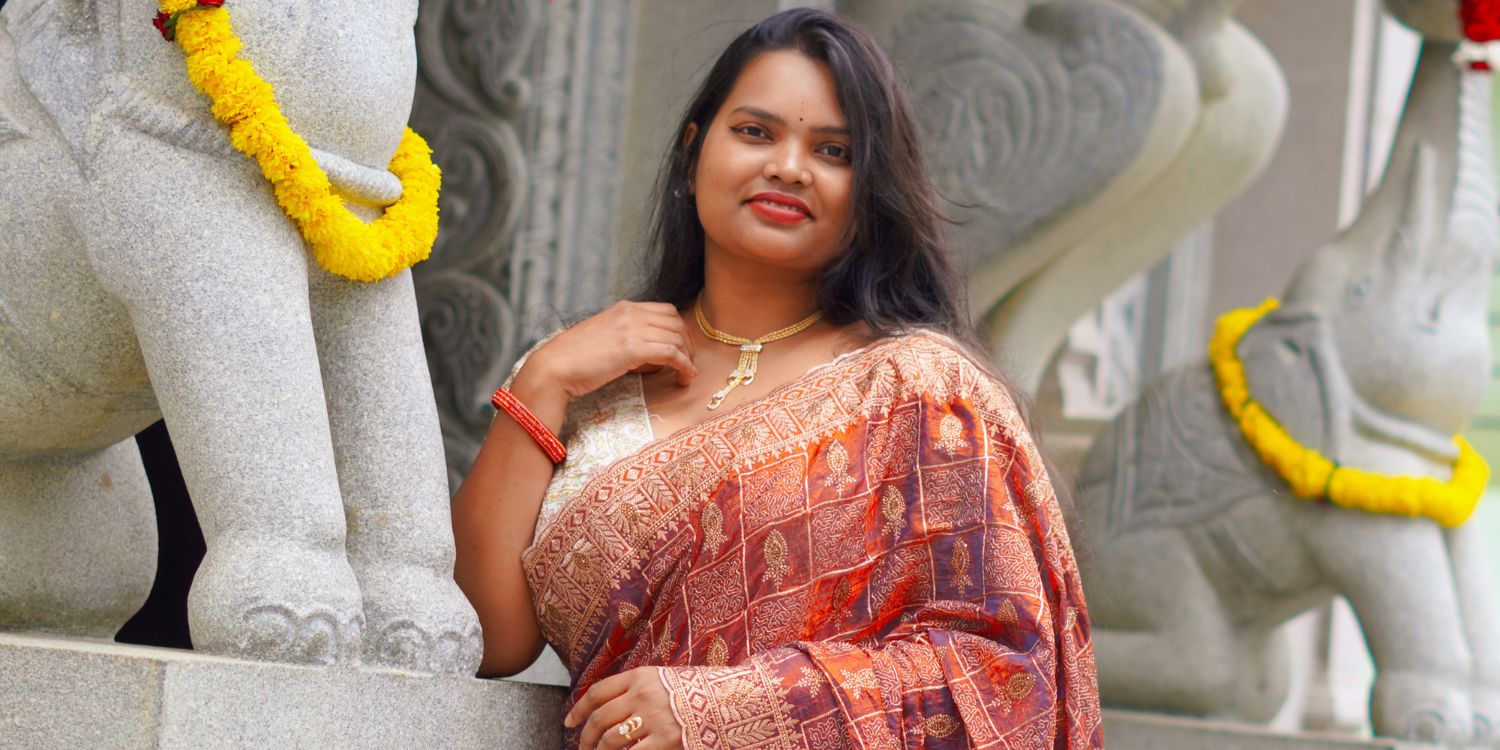
Most people who choose medicine can point to a moment of certainty, a single instance where their specialty chose them as much as they chose it. For Dr. Yashshwini Balaguruvayya Kareti, that moment came during her postgraduate training, watching her first vascular procedure, a Femoropopliteal bypass on a patient in severe ischemic pain. It was, by her own account, the moment she knew what she wanted to do with the rest of her career. Today, as a vascular surgeon at Apollo Hospitals, Bannerghatta, she represents something the field in India badly needs, a young, technically sharp surgeon willing to take on a specialty most people, including many doctors, still don’t fully understand.
That’s precisely what makes her inclusion among the country’s top vascular surgeons this year worth noting. She isn’t being featured for decades of accumulated legacy, but for the sharpness of her clinical instincts, her comfort with a genuinely difficult specialty, and a philosophy toward patient care that many senior surgeons take years to develop.
The Road to Vascular Surgery
Dr. Kareti didn’t set out to become a vascular surgeon. Like many medical students, her early ambition was simply to become a doctor and treat patients, without a fixed idea of specialty. It was during her MBBS that she found herself drawn to surgery, which led her to pursue general surgery in her postgraduate studies. It was only after postgraduation, during a posting in a vascular unit, that the specialty revealed itself to her fully, a field that combines both open and endovascular procedures, demands rapid decision-making, and carries consequences that play out over a patient’s lifetime.
It’s this dynamism, decisions taken in fractions of seconds with long-term impact, that she credits for pulling her into the field. Rather than being discouraged by its difficulty, she found precisely what made vascular surgery worth pursuing.
Choosing Apollo
When it came to choosing where to build her career, Dr. Kareti was clear-eyed about what she needed access to high-end vascular procedures, the right equipment, and an institution capable of supporting complex surgical work. Apollo Hospitals offered all three, along with the opportunity to actively manage and perform complex vascular procedures in a setting that supports clinical autonomy with mentorship, making it, in her words, the right starting point for her career.
At Apollo Bannerghatta, her days begin early, typically with rounds, followed by a schedule that blends inpatient care, OPD consultations, elective surgeries, and emergency cases, often overlapping within the same day. She operates out of a hybrid theatre, allowing her to move a patient into a procedure as soon as the need arises, supported by a dedicated vascular team of two senior surgeons, two specialized nursing staff, and a dedicated anaesthetist.
A Measured View on Technology
For a surgeon of her generation, Dr. Kareti’s perspective on artificial intelligence and new technology is notably grounded. She sees AI as a useful tool for easing workflow and providing preliminary information, but not a substitute for clinical judgment, an outlook that separates the augmentation of a surgeon’s skill from the replacement of it. Her approach to new surgical technology follows a similar principle, she believes a good surgeon should be competent enough to manage complex cases even without the latest equipment, so that when new tools do arrive, they enhance an already-solid foundation rather than compensating for gaps in it.
Building What Comes Next
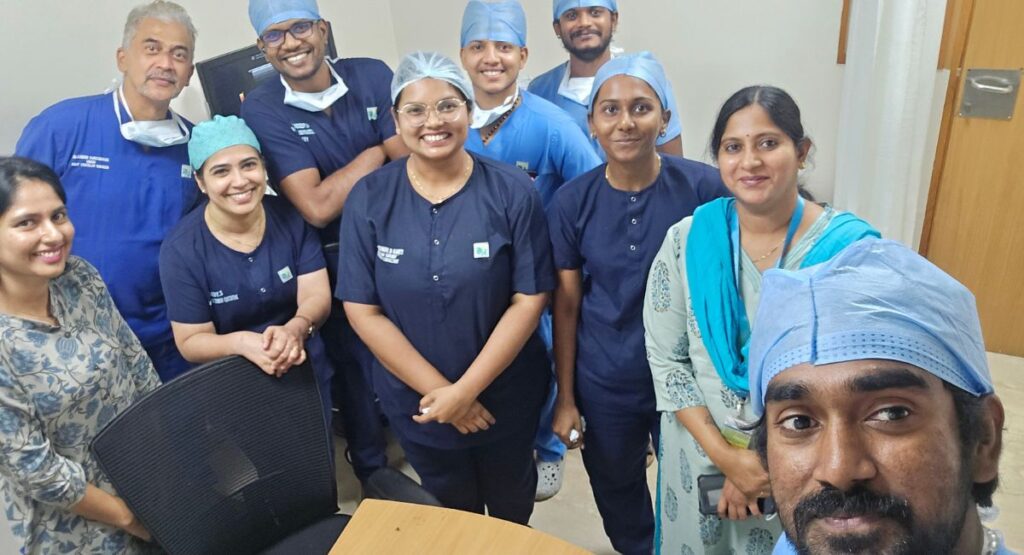
Looking ahead, Dr. Kareti is candid that she’s still in a phase of active learning, seeking to gain experience from her seniors and explore areas of vascular research that remain rare even within India. On the departmental front, she is preparing to welcome a new DNB resident at Apollo Bannerghatta this year. This will add a new dimension to her role, with an increased focus on structured teaching and mentorship alongside her clinical responsibilities.
She’s equally direct about the challenges facing vascular surgery in India today, chief among them, a lack of public awareness. Beyond metro cities, few patients, and sometimes even fellow doctors do not fully understand what a vascular surgeon treats.
She points out that early presentation can mean the difference between a manageable intervention and a limb lost to delay, making awareness, and knowing which specialist to consult, as critical to outcomes as the surgery itself.
The Person Behind the Surgeon
What comes through clearly in conversation with Dr. Kareti is how central counselling is to her practice. She personally speaks with and counsels every patient herself, walking them through risks, benefits, and the consequences of inaction, understanding that a frightened or confused patient rarely consents to treatment with real clarity. It’s a small but telling detail about how she practices, treating reassurance and communication as part of the medical process itself, not an afterthought to it.
Outside the hospital, she credits spirituality, art, music, dance, fitness, and modelling as important parts of her life that help her stay grounded, alongside the steady support of her family. It is a life that, by her own admission, is still very much a work in progress; she describes herself as ambitious yet open-minded, driven by continuous learning and always ready to embrace new challenges, allowing her interests in research and complex cases to shape the journey ahead.
For a specialty as demanding and dynamic as vascular surgery, her blend of clinical excellence, curiosity, resilience, and commitment to patient care is exactly the kind of energy the field needs more of.