
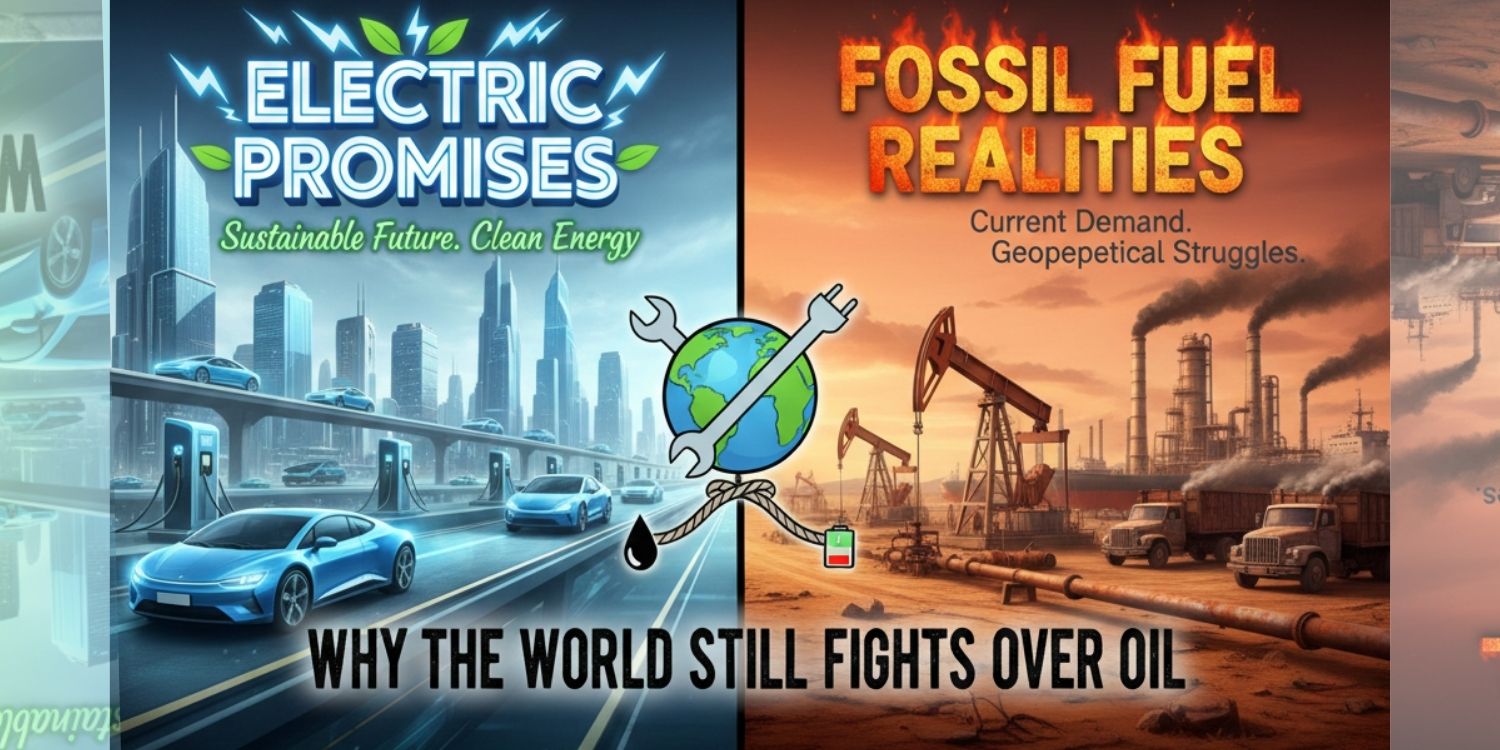
At present, the global leaders trumpet electric mobility and ambitious renewable energy targets, the world’s energy reality tells a very different story. While policymakers push clean-energy narratives, the fiercest geopolitical struggles continue to revolve around oil, the resource that still fuels the majority of global energy systems and strategic decisions.
Despite electrification’s rapid growth, oil remains the backbone of modern civilization. According to the latest energy reports, oil still accounts for just under 30% of total energy demand globally, a share it has only recently dipped below after decades of dominance and even then, overall consumption continues to rise. Transport alone consumes over 60% of oil production, and road vehicles represent nearly half of that usage. This entrenched dependence makes oil a focal point of international competition, economic leverage, and strategic power play.
On the surface, electric vehicles (EVs) and clean grids are positioned as the future of energy. In 2024, EVs made up over 20% of new car sales worldwide, and though they represent only about 4% of the global passenger car fleet, adoption growth remains remarkable. EV electricity demand, however, still contributes just under 1% of total electricity consumption worldwide, illustrating how early the transition stage truly is.
Projections suggest that EVs could comprise over 50% of new car sales by 2035, potentially displacing millions of barrels of oil per day but such shifts are gradual and uncertain. Meanwhile, fossil fuels as a whole (including oil, coal, and natural gas) are still forecast to supply a large portion of global energy needs well past 2050, according to industry analyses.
Oil’s strategic value extends far beyond energy supply, it shapes trade balances, underpins national budgets, and influences military posturing. When instability hits, clean energy commitments often fade from headlines, and access to oil becomes an urgent priority once again.
Renewables and electrification face their own constraints, too. The metals and minerals essential for battery production are concentrated in limited regions, making the clean-energy supply chain vulnerable to trade tensions and geopolitical leverage another battleground in the global energy fight.
Even in electricity generation, oil’s role has shrunk to a marginal share (around 2–3%), but this reflects the fact that electrification often shifts energy demand rather than eliminating dependence on fossil fuels. Transport, historically the largest single user of oil, remains stubbornly resistant to rapid decarbonisation.
What emerges is a world trying to balance ambition with necessity. Clean energy technologies are scaling impressively, but infrastructure constraints, entrenched oil demand, and unresolved strategic interests continue to elevate oil as the prize that countries vie for indirectly, fiercely, and with high stakes.
As the transition unfolds, the gap between public climate goals and private energy priorities highlights a central tension in 21st-century geopolitics.
The future may be electric, but power is still bought in barrels.