
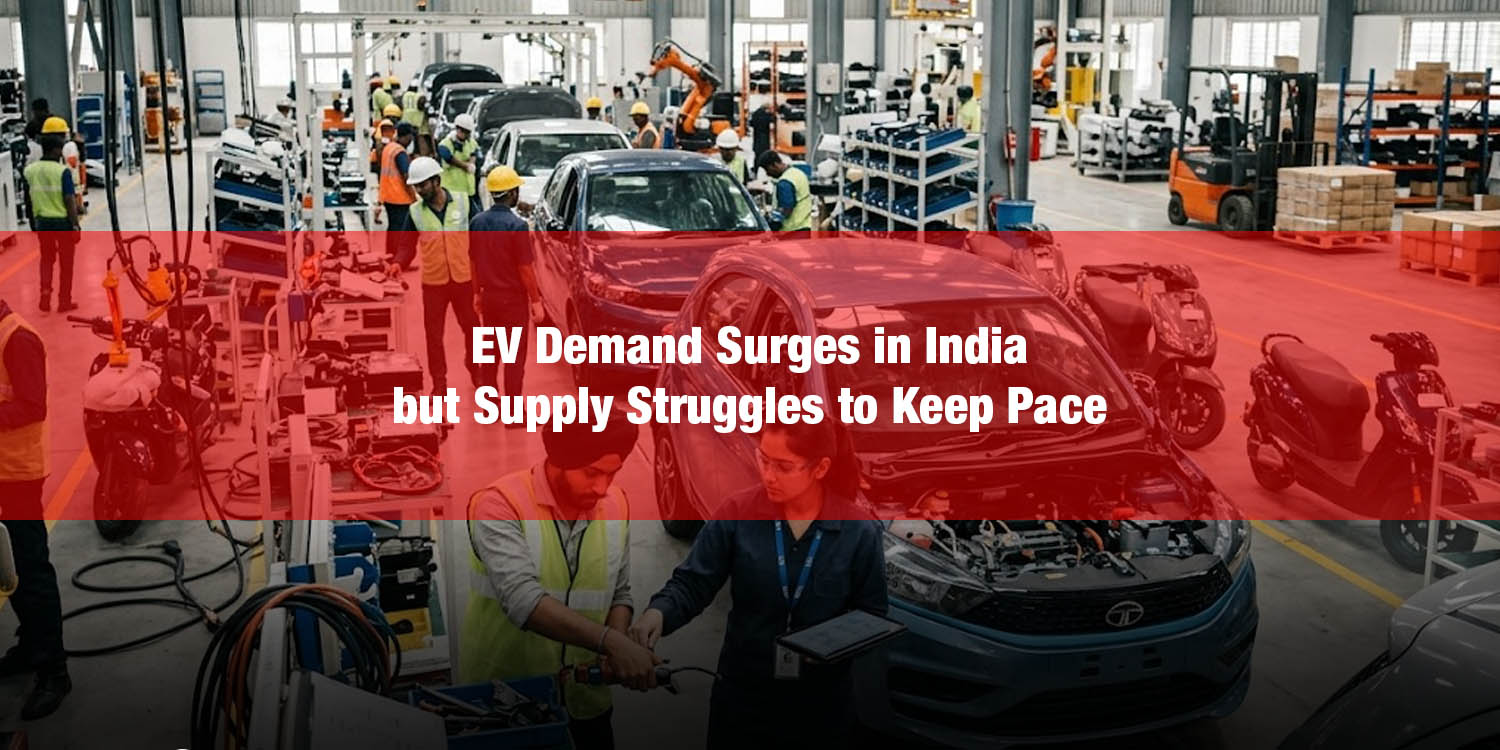
May 2026 – India’s electric vehicle (EV) market is witnessing a sharp surge in demand, driven largely by rising fuel prices and shifting consumer preferences, but manufacturers are struggling to keep up due to supply-side constraints.
According to recent industry insights, demand for EVs, particularly passenger cars and two-wheelers, has spiked dramatically in recent weeks. Automakers report that bookings have exceeded expectations, with some companies seeing demand levels rise to more than double their current production capacity.
Demand outpaces production
Leading manufacturers, including Tata Motors, have indicated that demand has surged to nearly 2 to 2.5 times their monthly production levels, highlighting the intensity of the current market shift.
This sudden spike has been largely attributed to increasing petrol and diesel prices amid global geopolitical tensions, prompting consumers to consider EVs as a more cost-effective long-term alternative.
Supply chain constraints emerge
Despite strong demand, the industry is facing multiple bottlenecks. Supply chain disruptions, limited availability of components, and workforce constraints are restricting the ability of manufacturers to scale up production quickly.
These challenges have created a widening gap between demand and supply, leading to longer waiting periods for customers and pressure on automakers to expand capacity.
Structural challenges persist
Experts note that while demand momentum is strong, structural issues such as limited charging infrastructure and uneven distribution of resources continue to affect the sector’s growth trajectory. India’s EV ecosystem, though expanding, still requires significant investment to support large-scale adoption.