
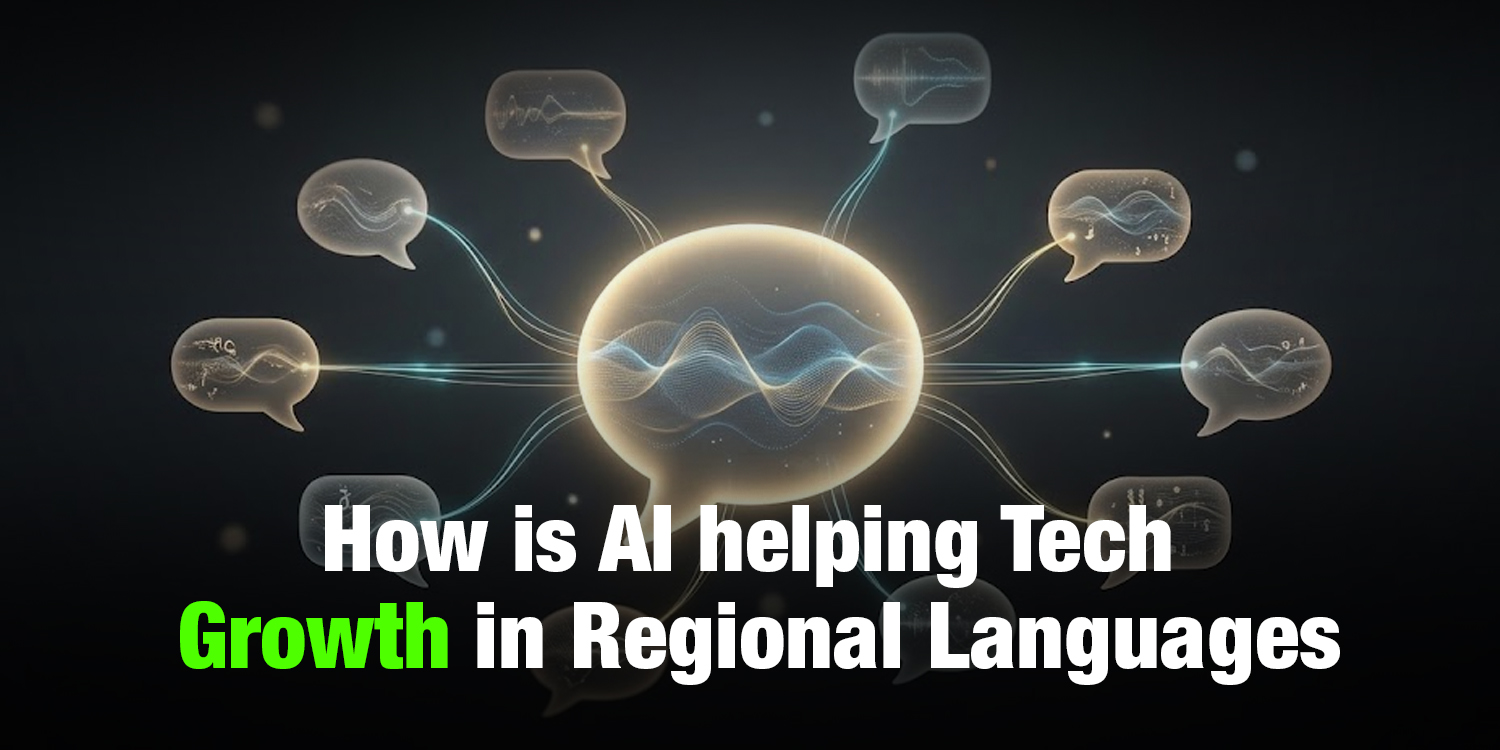
Artificial intelligence is fundamentally redefining how technology interacts with regional languages, particularly in linguistically diverse economies like India. With over 1,600 spoken languages and only a small fraction of the population fluent in English, AI is not merely enhancing convenience, it is enabling structural digital inclusion. Today, AI’s role in regional language ecosystems is best understood through the precise ways in which it is transforming access, communication, and innovation workflows.
One of the most impactful applications is AI-powered machine translation. Advanced neural translation models can now convert English technical content into multiple Indian languages in real time while retaining contextual accuracy. This capability allows scientific research papers, coding tutorials, legal documents, and government policies to become instantly accessible to non-English speakers. By eliminating linguistic gatekeeping, AI significantly expands the talent pool capable of engaging with high-level knowledge systems.
Another critical area is speech-to-text and voice AI technologies. Many regional users prefer voice interaction over typing due to literacy barriers or keyboard limitations in local scripts. AI voice recognition systems trained on vernacular accents can convert spoken language into digital text, enabling users to search the internet, operate apps, and access services using natural speech. This voice-first AI approach is particularly transformative in rural economies where digital literacy remains uneven.
AI is also enabling localized natural language processing (NLP) for regional languages. Through sentiment analysis, automated summarization, and contextual understanding, AI systems can process vernacular text data for use in customer support, governance, agriculture advisories, and education platforms. This allows organizations to build region-specific digital ecosystems rather than relying on English-centric technology models.
Another major contribution lies in AI-driven knowledge creation and content generation. Generative AI tools can now produce technical documentation, educational modules, and digital media directly in regional languages. This accelerates knowledge dissemination because local entrepreneurs, students, and developers can both consume and create technical content without language constraints.
AI also supports cross-language knowledge indexing and search optimization. Multilingual AI search engines can map queries across languages, meaning a user searching in Kannada or Hindi can retrieve relevant information originally published in English. This dramatically expands the scope of discoverable knowledge for regional users.
Finally, AI is strengthening innovation accessibility by enabling low-code and conversational development tools in local languages. Individuals without formal technical training can now design software workflows, build applications, and even prototype inventions by interacting with AI systems in their native tongue. Currently where we stand, AI is transforming passive users into active participants in the digital economy, thereby driving inclusive and large-scale technological growth.