
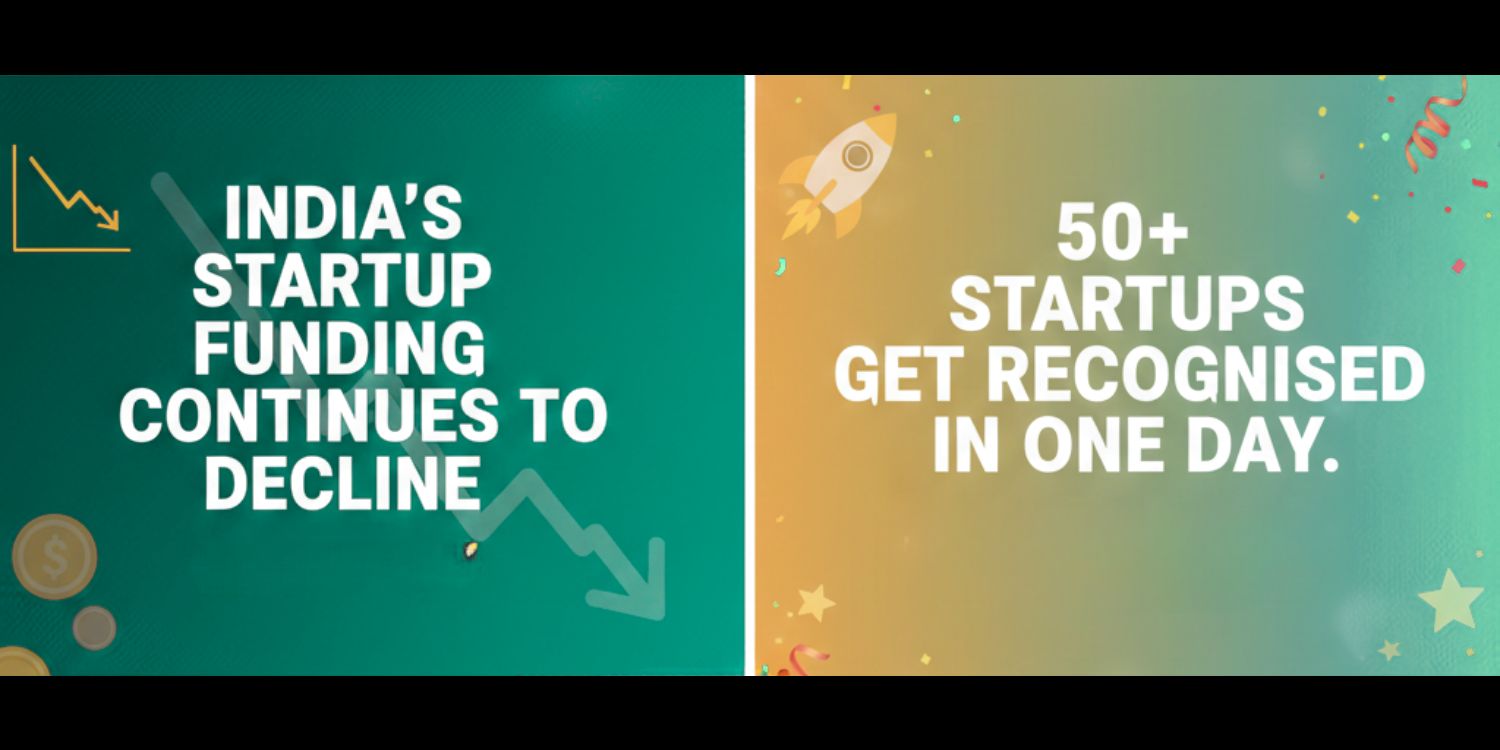
New Delhi: India’s startup ecosystem is expanding at an unprecedented pace, with over 50 startups being recognised every day, according to Union Commerce and Industry Minister Piyush Goyal. The milestone underscores the scale and ambition of the government’s Startup India programme, under which more than two lakh startups have been formally recognised so far. Yet, A major concern remains: if entrepreneurship in India is booming, why is funding these potential businesses taking the hit?
At the heart of the issue lies the distinction between recognition and investability. Startups are recognised by the DPIIT based on eligibility, innovation and regulatory compliance. Does this process evaluate revenue traction, scalable business models or clear paths to profitability the metrics investors prioritise? Industry voices argue it does not, creating a wide funnel of recognised startups but a narrow pipeline for venture capital.
Is the global funding climate also to blame? Since 2022, venture capital has grown cautious worldwide, shifting focus from growth-at-all-costs to profitability and governance. For Indian startups, particularly at seed and Series-A stages has this meant reduced investments, longer due diligence cycles and tougher valuation negotiations?
Then there is the structural question: does India have enough early-stage risk capital to support a volatile startup base? While recognition numbers surge, the pool of angel investors and micro-VC funds has not grown at the same speed. Outside Bengaluru, Mumbai and Delhi-NCR, are promising startups being overlooked simply due to geography?
Another uncomfortable reality persists. How many of India’s recognised startups are actually built for venture-scale growth? Investors seek businesses capable of delivering absurdly greater returns, yet a significant portion of new ventures operate as lifestyle or small enterprises, limiting their appeal to institutional capital.
As India celebrates a decade of Startup India, the challenge is clear. But now it comes down to understanding, can the ecosystem now shift focus from counting startups to converting them into investable, scalable enterprises? And will policy, capital and markets align to ensure that recognition ultimately leads to sustainable growth?