
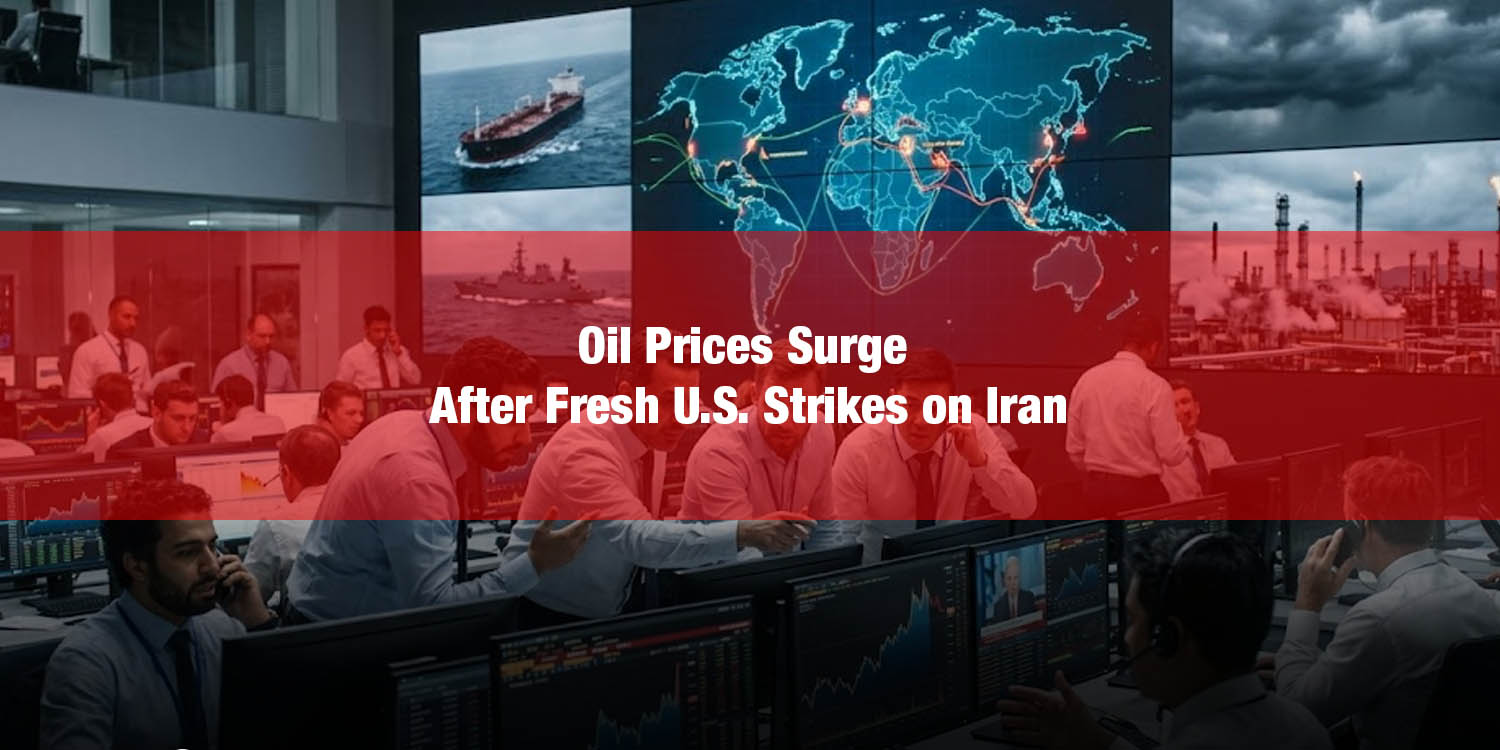
Global oil prices climbed sharply following renewed U.S. military strikes on Iranian targets, intensifying geopolitical tensions and raising fresh concerns over energy supply disruptions.
According to multiple market reports, crude prices rose between 2% and over 3% in early trading, with Brent crude nearing the high-$90 range and U.S. West Texas Intermediate also posting significant gains. The surge comes amid fears that the latest escalation could prolong the ongoing conflict and further destabilize critical oil supply routes.
The U.S. strikes, described as defensive operations targeting Iranian military infrastructure, triggered immediate retaliation threats from Tehran. In response, Iran reportedly launched counter-attacks on U.S. assets in the region, deepening uncertainty and undermining fragile diplomatic efforts.
Supply concerns drive market reaction
At the center of the price spike is the Strait of Hormuz, a vital global oil transit chokepoint through which a significant share of the world’s crude supply flows. Any disruption or threat to this corridor has historically led to sharp market reactions, and the current situation is no exception.
Analysts warn that continued hostilities could lead to tighter supply conditions, with traders increasingly pricing in the risk of prolonged disruption. Even short-term instability has already pushed markets into volatility, reversing earlier optimism around potential peace negotiations.
Global markets react cautiously
Beyond oil, financial markets have also shown signs of stress. Asian equities declined while investors shifted toward safer assets, reflecting broader concerns about inflation and economic stability driven by rising energy costs.
Experts note that sustained increases in oil prices could have cascading effects across industries, particularly in transportation, manufacturing, and energy-intensive sectors.
Outlook remains uncertain
With diplomatic progress stalled and military exchanges continuing, the outlook for oil markets remains highly uncertain. Analysts suggest that if tensions persist or escalate further, prices could continue to climb, adding pressure to an already fragile global economic environment.
For now, markets remain closely tied to geopolitical developments, with each new escalation in the U.S.-Iran conflict translating almost immediately into price volatility in global energy markets.