Sustaining a lifelong commitment to social welfare is a formidable undertaking in itself. Doing so within the demanding and constantly evolving field of healthcare requires not only professional excellence, but also resilience, adaptability, and a clear sense of purpose. Over several decades, the landscape of medicine has transformed dramatically and navigating these shifts while remaining anchored to the principles of service and accessibility is a rare achievement.
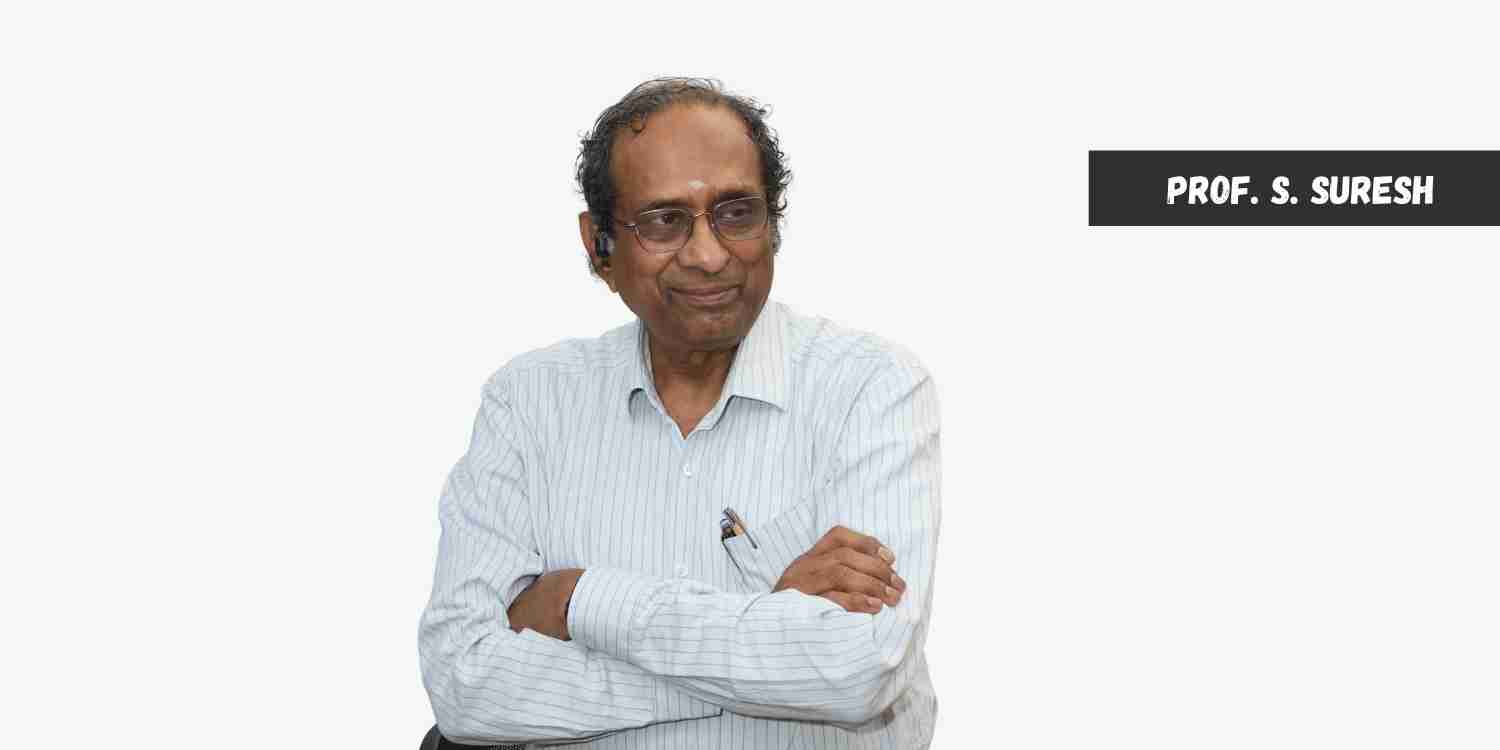
Prof. S. Suresh has exemplified this balance throughout his career. Combining clinical expertise with institutional leadership, he has consistently sought ways to expand the reach of healthcare while preserving its human-centred ethos. His work reflects a sustained commitment to improving healthcare delivery. It becomes a matter of pride to feature Prof. S. Suresh under the title of “India’s Most Influential Healthcare Visionaries – 2026”
The Early Influence of Compassionate Care
Prof. S. Suresh’s introduction to medicine was shaped not by textbooks, but by observation. Growing up in Chennai, he watched his grandfather and uncle, both senior physicians, run one of the city’s earliest nursing homes. Their approach to care left a lasting impression: patients were never asked to pay. Instead, families contributed voluntarily, often expressing gratitude through long-term relationships rather than transactional fees.
This environment fostered an understanding of medicine as a social contract rather than a commercial exchange. After completing his MBBS, he joined the family practice before moving to The Voluntary Health Services (VHS) in 1976. At VHS, he trained in general surgery, working for six years on a nominal conveyance allowance of ₹350 per month as an honorary doctor.
Redefining Community Healthcare
When VHS was established, it represented a pioneering model of integrated community care. It operated eighteen primary health centres, each serving approximately 5,000 people, ensuring that patients could access basic care without losing daily wages due to long travel.
Over time, however, healthcare systems underwent rapid transformation. The rise of super-specialisation shifted medical practice away from holistic family medicine toward fragmented, organ-specific care. In his view, this erosion of primary care represents one of India’s most critical healthcare gaps today. Patients increasingly bypass general physicians and seek direct specialist consultation, often resulting in higher costs and less comprehensive care.
In response, VHS redefined its mission. Rather than focusing solely on “affordable healthcare,” the institution embraced the principle of “appropriate healthcare.” This approach emphasises clinical judgement, rational investigations, and essential treatment, aimed at reducing unnecessary expenditure while maintaining quality care.
Rebuilding VHS for a New Era
When he assumed the role of Honorary Secretary, the equivalent of Chief Executive Officer, in 2012, he encountered several previously hidden institutional challenges. Patient footfall had declined due to outdated infrastructure, even as surrounding hospitals modernised rapidly. With consultation fees as low as ₹50 and bed charges at ₹100 per day, the institution lacked the financial resources to upgrade facilities.
The turning point came with the introduction of Corporate Social Responsibility (CSR) mandates in India. By leveraging CSR partnerships, VHS secured funding to modernise infrastructure and restore service capacity.
Human resource management posed another major challenge. Rising salaries across the healthcare sector made it difficult to retain nurses and doctors. VHS historically relied on a unique staffing structure: a combination of few full-time doctors, honorary physicians who volunteered their services, and visiting consultants engaged on a case-by-case basis. His leadership response centred on organisational culture. He introduced a three-pronged internal framework: Clean VHS, Green VHS, and Happy VHS, placing particular emphasis on staff well-being. His guiding belief was that patient satisfaction would naturally follow if employees felt respected, motivated, and valued.
Building Platforms for Inclusive Care
Parallel to his institutional work, he also built a private diagnostic practice, establishing Tamil Nadu’s first ultrasound centre. Recognising the technology’s transformative potential in maternal healthcare, he adopted an inclusive service model. Government hospitals were allowed to refer patients for free scans on designated days, resulting in nearly two lakh patients receiving imaging services over time. Today, the programme continues at a nominal fee.
His commitment to social medicine extended further with the establishment of the Fetal Care Research Foundation in 1995 for providing preventive, supportive and curative care for birth defects and also established a birth defects registry of India.
Prompted by a family seeking help for a child with a rare enzyme disorder, he established a support group for rare disorders. Now integrated into VHS, the programme supports approximately 450 children with rare disorders, offering multidisciplinary care, annual specialist clinics, and access to advanced therapies.
Lessons from a Lifetime in Medicine
Drawing from decades of experience, he observes that medical education has shifted significantly. Smaller class sizes and strong mentorship once characterised training environments, while today’s institutions often prioritise expanding seat capacity. He emphasises that professional excellence now depends heavily on individual initiative.
His core advice to young doctors remains consistent: knowledge acquisition must be continuous, self-driven, and shared. He advocates a cycle of learning, teaching, and relearning, viewing mentorship as an ethical responsibility rather than a professional option.