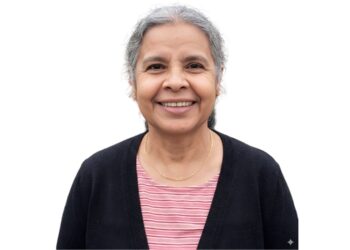

In healthcare, leadership is not confined to strategy alone. From patient care standards to team morale, the direction set by a leader directly reflects in the performance of doctors, nurses, and operational systems alike. Amongst a wave of good leaders, Shalini Kothakonda stands out as one of the best for her structured, patient-first approach and operational clarity.
Her journey reflects a clear understanding of both the complexities of healthcare systems and the resilience required to navigate them. It is this combination of operational strength and measured leadership that defines her work today, as we feature her in our “India’s 10 Most Influential Women Healthcare Visionaries – 2026” edition.
She Stepped Outside the Script
Born in Telangana into a family where education was valued but shaped by traditional expectations, her early life did not initially point toward a leadership trajectory. It was only after completing her higher secondary education that she began to pursue academics with intent, choosing Microbiology followed by a Master’s in Hospital Administration. Her professional journey began as a management trainee, evolving into senior administrative roles where she developed a working understanding of hospital operations, from clinical coordination to financial systems.
The establishment of Shree Hospitals marked a significant transition from administrator to institution builder. Starting with limited financial resources and navigating early operational challenges, the hospital reached stability after several years of sustained effort. Since then, it has developed into a multi-specialty facility offering services including trauma care, neonatal ICU, orthopedics, and cardiology, with a consistent focus on affordability and patient trust.
Built on Protocol, Driven by Care
At the core of Kothakonda’s leadership is a clearly defined decision-making framework: patient safety, dignity, and clinical outcomes take precedence over competing priorities. In situations of operational or administrative conflict, decisions are guided by ethical principles, evidence-based clinical standards, and structured accountability systems. Clinical governance is maintained through adherence to protocols, regular audits, and clearly assigned responsibilities across departments.
Her approach to hospital administration also highlights operational factors that are often underestimated in healthcare settings. She identifies frontline staff engagement, interdepartmental communication, workflow coordination, and bed management as critical determinants of institutional performance. To address these, Shree Hospitals follows NABH-aligned protocols, implements real-time bed tracking, and closely monitors key indicators such as infection rates, readmissions, and diagnostic turnaround times. Regular training sessions for nursing staff and open discussions around near-misses contribute to a culture where quality improvement is continuous rather than reactive.
The Architecture of Intelligent Care
Kothakonda strongly believes that technology is a revolutionising force out there. She identifies the integration of AI with unified health data systems as the most consequential shift in hospital administration over the next decade. This transition, she notes, “will move hospitals from reactive systems to predictive, data-driven models, reducing administrative burden while enabling more informed clinical and operational decisions.”. Technologies such as telemedicine and robotics will continue to expand, but their effectiveness will depend largely on this underlying data infrastructure.
As healthcare institutions grow, maintaining patient-centric care becomes increasingly challenging. Under her leadership at Shree Hospitals, this is addressed through continuous monitoring of patient outcomes and satisfaction, regular staff engagement with patients, and periodic leadership reviews to ensure adherence to established protocols. Quality assurance programs are conducted consistently to ensure that expansion does not dilute care standards.
Breaking Barriers, Building Purpose
Her guidance to aspiring medical professionals reflects the same grounded perspective that defines her leadership. She proudly states that “As a woman with a traditional or orthodox background who has risen to become a successful entrepreneur in healthcare, my story highlights resilience, dedication and the power of breaking barriers. My achievements can serve as a source of inspiration for others, demonstrating that it’s possible to challenge societal norms and pursue one’s passion, regardless of background. My trajectory showcases the importance of women in leadership roles, especially in healthcare that significantly impacts lives.” She also emphasises commitment, conceptual understanding, interdisciplinary collaboration, and the importance of empathy alongside technical competence.