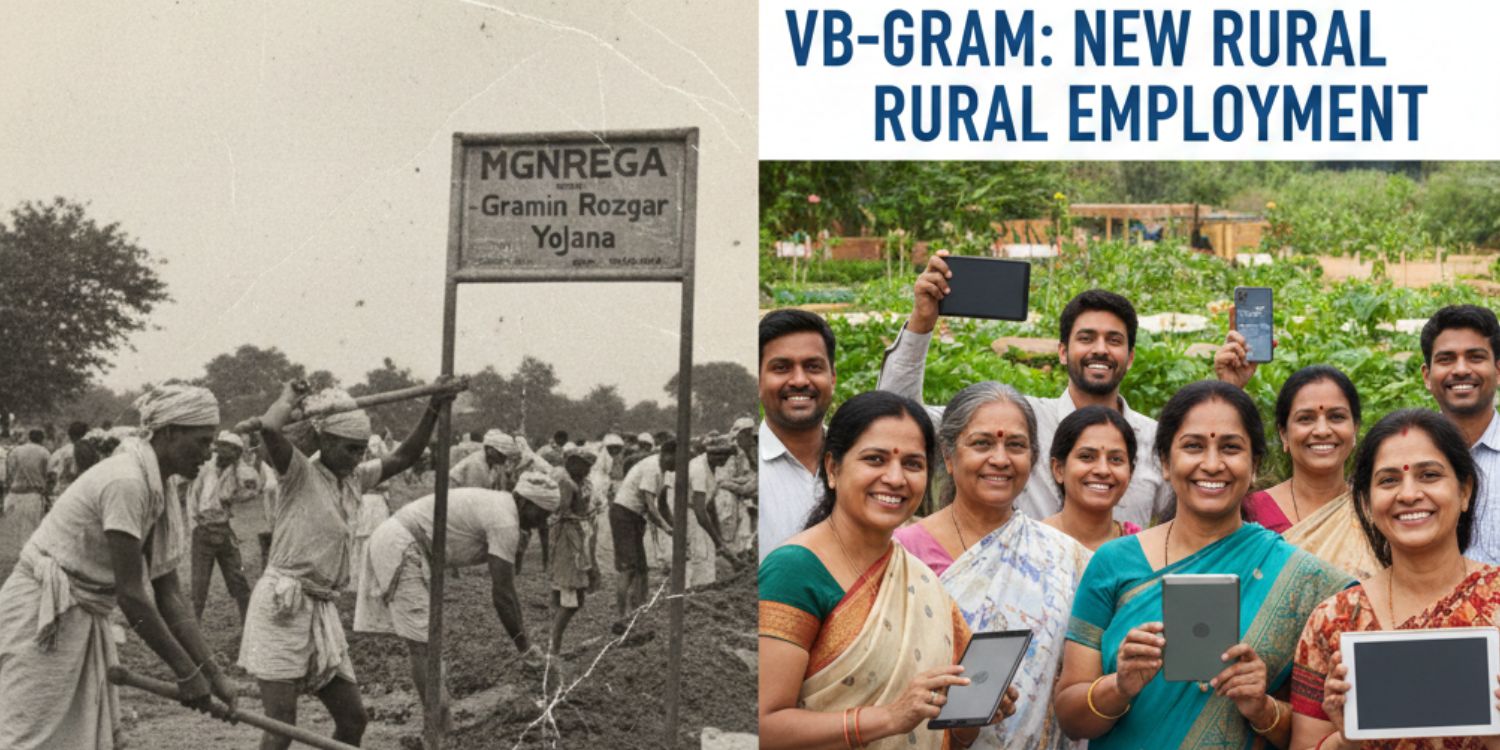
On 16th December 2025, The introduction of the Viksit Bharat–Guarantee for Rozgar and Ajeevika Mission (Gramin) (VB-G RAM G) Bill, 2025 by the Union government in the Lok Sabha, during the Winter Session, which effectively substitutes the Mahatma Gandhi National Rural Employment Guarantee Act (MGNREGA), sparked a national debate. The new framework, which apparently intends to upgrade the scheme with technology and infrastructure-based endeavors and increase the rural employment commitment from 100 to 125 days. According to the supporters, this shift would improve rural income and asset creations.
However, the bill faces sharp criticism from state governments and labour activists over two major structural shifts: funding and eligibility. Under MGNREGA, the Central Government bore the wage cost (in the ratio of 90:10), but the new bill introduces a 60:40 fund-sharing formula, where states will bear 40% of the costs. Many states, like Kerala and Tamil Nadu argued that this will negatively impact their already-tight budgets and the core intent of MGNREGA, warning that rural employment could suffer whenever the state funds fall short. At the same time, the bill moves away from MGNREGA’s rights-based, demand-driven guarantee. Where any rural adult could seek work, and replaces it with a centrally-controlled, budget-capped model. Employment would now be tied to allocations and norms determined by the Centre, rather than open-ended worker demand. Despite major uproar, the VB-RAM G Bill was passed in the Lok Sabha, but the opposition has demanded that the proposed bill go through parliamentary scrutiny before moving to the Rajya Sabha.