
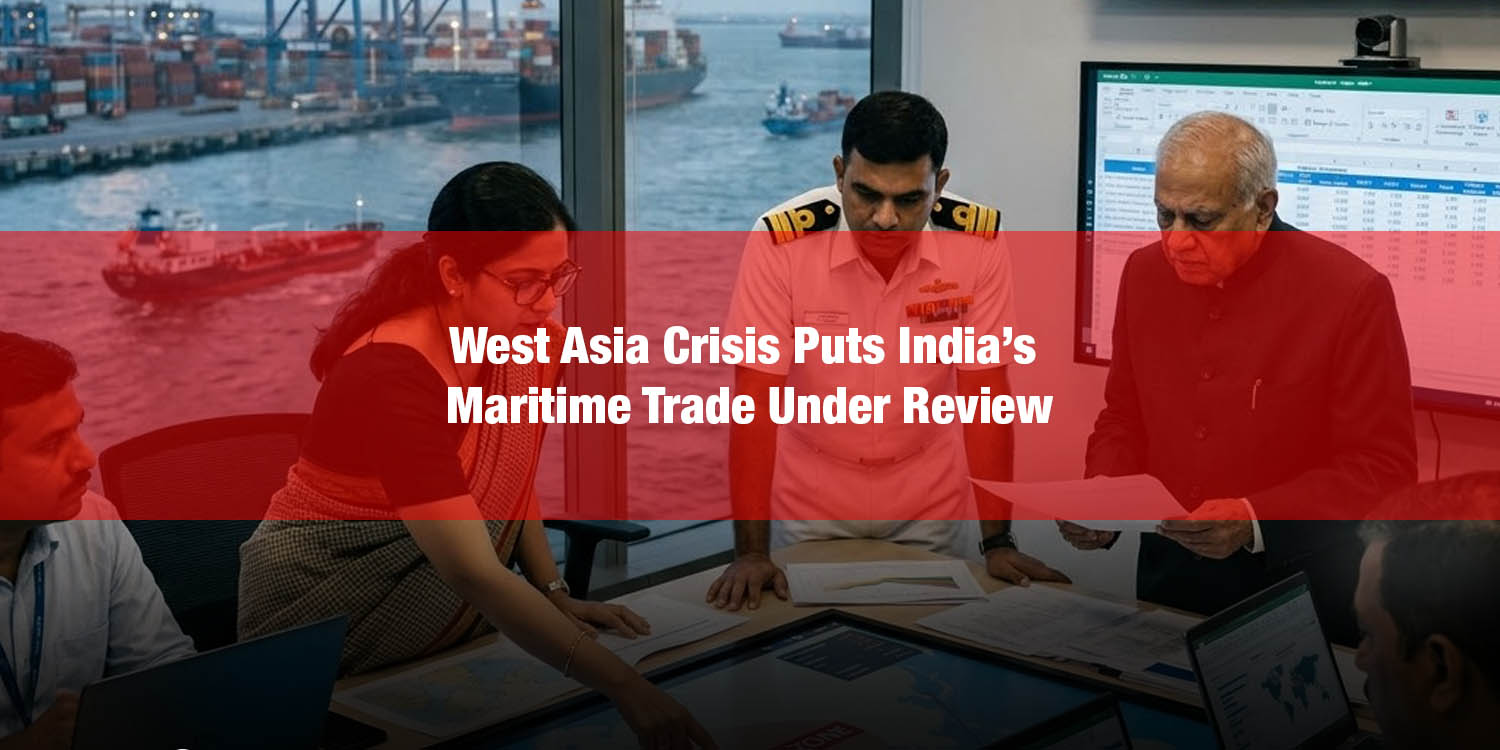
May 2026: A key parliamentary panel is set to examine the growing impact of the ongoing West Asia crisis on India’s maritime trade, as concerns deepen over supply chain disruptions, rising freight costs, and seafarer safety.
The Department-related Parliamentary Standing Committee on Transport, Tourism and Culture has called senior officials from the Ministry of Ports, Shipping and Waterways to present a detailed assessment of the situation. The discussion will focus on the broader implications of the conflict on shipping infrastructure, trade routes, and operational stability.
Trade routes under pressure
India’s maritime sector, critical for energy imports and international trade has been significantly affected since the escalation of conflict in West Asia earlier this year. Disruptions in key corridors such as the Strait of Hormuz have impacted vessel movement, with a large share of India’s oil and gas supplies traditionally routed through the region.
The situation has also led to a sharp increase in freight and insurance costs, with some shipping rates reportedly surging multiple times due to heightened risk levels and rerouting requirements.
Focus on safety and logistics resilience
Apart from trade, the panel will also review the safety of Indian seafarers and vessels operating in volatile zones. The government has already stepped up monitoring of ships and maritime personnel, while coordinating across ministries to manage stranded cargo and ensure continuity of supply chains.
The review comes amid broader economic concerns, as rising oil prices and logistical disruptions begin to ripple across industries, affecting costs, exports, and overall trade stability.
Policy response expected
The parliamentary review is expected to shape future policy responses, including contingency planning for alternative trade routes, strengthening port infrastructure, and enhancing maritime security measures. The move signals a proactive approach by the government to mitigate risks in one of India’s most critical economic sectors.
As geopolitical tensions persist, India’s maritime strategy is likely to remain under close scrutiny, with policymakers balancing immediate disruptions against long-term resilience planning.