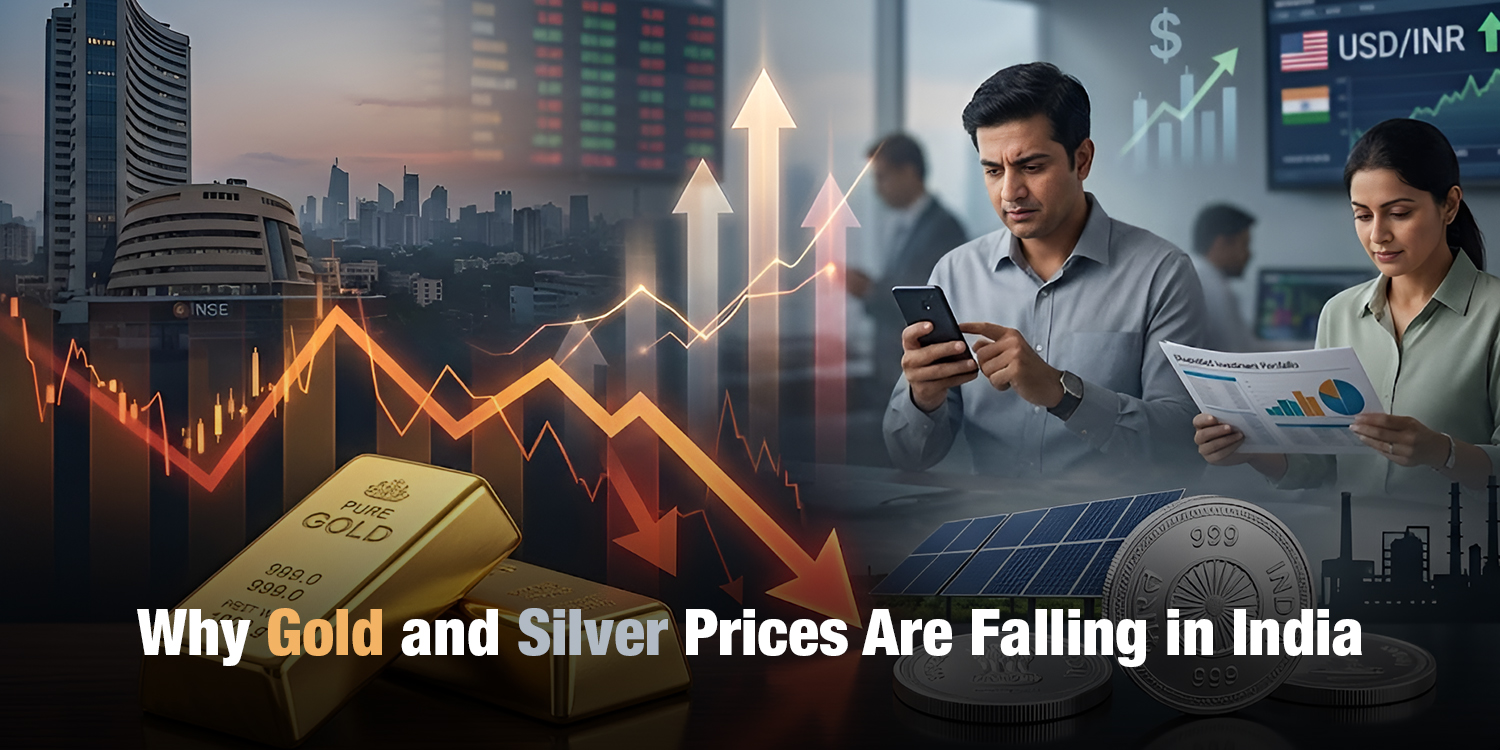
After reaching historic highs in early 2026, gold and silver prices have entered a sharp correction phase, raising concerns among Indian investors. However, market experts indicate that the recent decline in gold rates and silver prices is largely driven by global macroeconomic changes and domestic demand adjustments rather than a long-term structural downturn in the precious metals market.
One of the primary factors behind the fall is the strengthening of the U.S. dollar and shifting expectations around global interest rates. Since precious metals are priced internationally in dollars and do not generate interest income, they typically lose appeal when bond yields rise. Recent market trends illustrate this dynamic clearly: gold prices dropped nearly 2–3% in a single session to around $4,981 per ounce, while silver witnessed a sharper fall of approximately 8–9% amid global sell-offs.
Profit booking following an extraordinary rally has also played a significant role. Gold had surged beyond $5,500 per ounce in January 2026 before retreating toward the $5,000 level, reflecting a typical market correction after rapid price appreciation. In India, domestic gold prices have declined by nearly ₹24,500 from recent peak levels, signalling a cooling phase after months of record highs.
Domestic demand trends further explain the price decline. According to the World Gold Council, India’s gold demand is expected to drop in 2026 after already falling by 11% last year, primarily due to weak jewellery consumption as elevated prices discouraged buyers. Silver demand in India, which is highly price sensitive, is also projected to decline, with silverware consumption expected to fall by about 17% this year.
Silver’s sharper correction is additionally linked to its strong industrial role. Unlike gold, more than half of global silver demand comes from industrial applications, making it more vulnerable to economic slowdown concerns and market volatility.
Despite the current correction, the long-term outlook for precious metals remains supported by central bank buying, inflation hedging demand, and ongoing geopolitical uncertainty. For investors, the key lies in aligning gold and silver investments with broader financial goals, as market fluctuations are an inherent part of long-term wealth strategies, always look out for common investing mistakes you can avoid with exercising care and caution.