
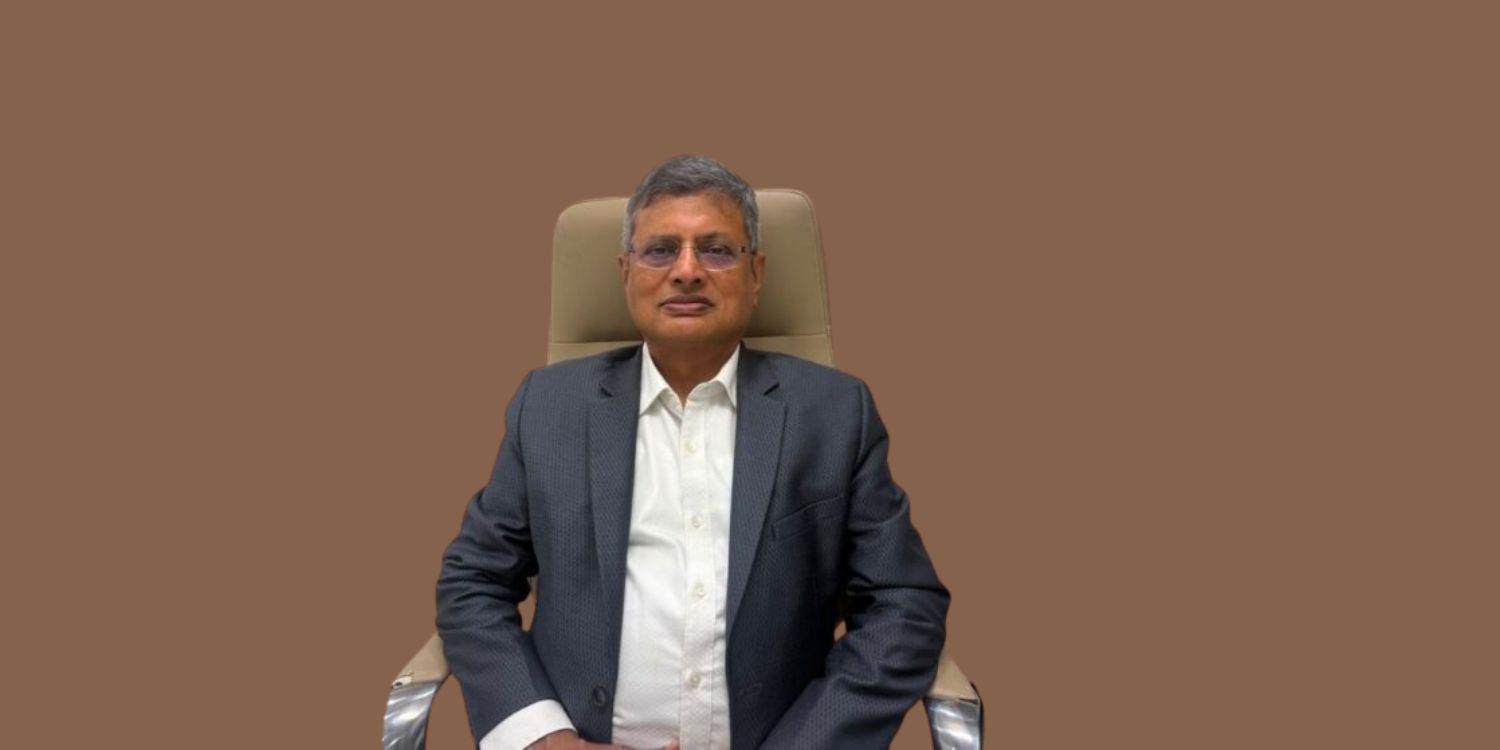
Every second matters, whether in an immediate life-threatening situation or in conditions that deteriorate gradually over time; time in neurological care can never go unaccounted for. Few understand this reality better than frontline doctors managing complex neurological cases.
While interviewing Dr. Ravi Mohan Rao, we witnessed his clear passion for the field, unwavering determination, and a strong commitment towards the welfare and optimal recovery of his patients. We are featuring him in our “India’s Most Distinguished Leaders in Neurosurgery – 2026” edition in recognition of his rigorous and meaningful contributions to the field.
The First Turning Point
The pathway to neurosurgery is rarely incidental; it is often shaped by a combination of academic discipline, clinical exposure, and decisive moments. For Dr. Ravi Mohan Rao, the trajectory began with formal training in general surgery, a foundation that, while structurally important, offered only a limited preview of the complexities that define neurosurgical practice. His transition into neurosurgery was catalyzed by successfully clearing a highly competitive entrance examination at the first attempt, an outcome that redirected his career trajectory toward one of the most technically demanding specialties in medicine.
He trained at NIMHANS and worked at Sree Chitra Tirunal Institute for Medical Sciences and Technology until he became professor of Neurosurgery. Training at a premier institution exposed him to a rigorous clinical environment under the mentorship of experienced neurosurgeons. This phase was not merely observational; it involved direct participation in complex procedures involving brain tumors, aneurysms, arteriovenous malformations (AVMs), and spinal pathologies. These early exposures established both the intellectual and technical framework required to navigate neurosurgery, a field where anatomical precision and decision-making are inseparable. Currently he works at Krishna Institute of Medical Sciences, Electronic City, Bengaluru as the Director & Senior Consultant of Neurosurgery.
The Demands of Transition
The shift from general surgery to neurosurgery is strongly categorical. As Dr. Rao notes, the techniques, principles, and intraoperative priorities differ fundamentally. For example, In general surgery, hemostasis is typically achieved through vessel ligation or standard cautery methods. Neurosurgery, however, operates within constraints imposed by the sensitivity of neural tissue, where such techniques are not feasible. Instead, surgeons rely on bipolar cautery and specialized hemostatic agents, emphasizing precision over force. Changes in techniques can be extremely draining and mentally tiring, yet, for a determined surgeon, it becomes a matter of time and patience to learn and keep learning.
A Defining Surgical Milestone
During his early independent practice at a tertiary care institution, Dr. Rao encountered a wide spectrum of neurosurgical cases. Among these, the successful management of a cerebral aneurysm through surgical clipping stands out as a defining moment. Aneurysms, particularly when ruptured, present with high mortality and demand rapid, precise intervention. Successfully navigating such a case early in one’s career often influences subspecialization, and for Dr. Rao, it marked a sustained focus on cerebrovascular and skull base surgery.
Now, he leads a comprehensive epilepsy surgery programme and performs endoscopic pituitary surgery and microsurgery for skull base tumors and majorly for intracranial aneurysms and arteriovenous malformations. Unlike many other specialties, the margin for error in neurosurgery is minimal, and outcomes are closely tied to both timing and technical execution.
Technology, Not Absolutism
Technological advancements have significantly influenced neurosurgical practice, but their adoption is neither uniform nor uncritical. Tools such as neuronavigation systems are now integral to most major centers, providing real-time anatomical guidance during surgery. Robotics has introduced enhanced precision in procedures such as deep brain stimulation (DBS) and stereotactic electrode placement, though it remains resource-intensive.
Intraoperative imaging presents another dimension of advancement. While intraoperative MRI offers high-resolution imaging, its logistical and financial demands limit widespread use. In contrast, intraoperative ultrasound provides a more accessible alternative, albeit with lower resolution. As Dr. Rao emphasizes, these technologies are complementary rather than hierarchical; their utility depends on clinical context, institutional capability, and cost considerations.
Beyond the Operating Room
Outside the clinical setting, Dr. Rao maintains a structured routine along with his wife, that includes long-distance running, a practice he adopted more seriously in recent years. This, along with interests such as reading and philately, reflects an attempt to maintain balance in a profession characterized by unpredictability and intensity.