
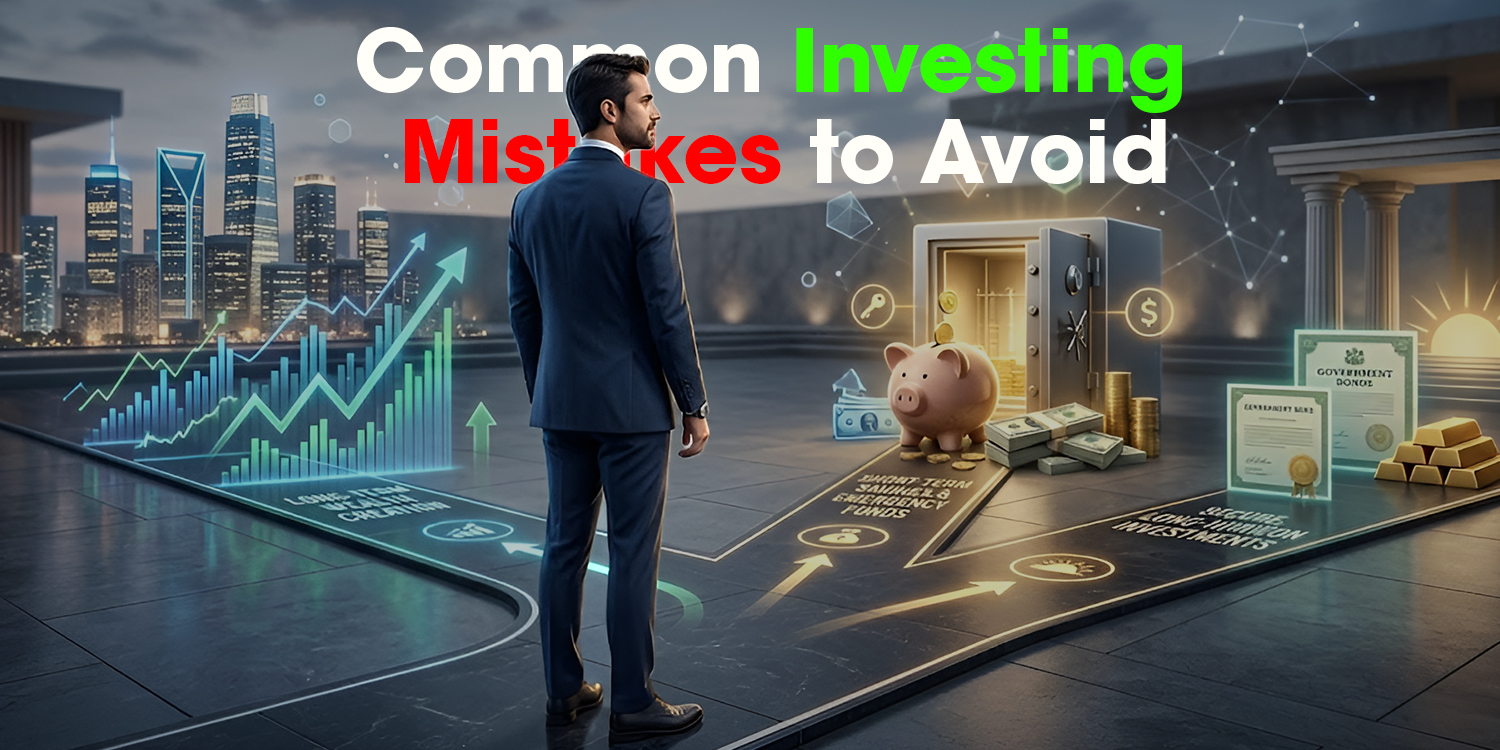
Investments exist to serve different financial goals, each demanding a distinct approach. Long-term objectives such as wealth creation typically involve higher-risk instruments like equities, mutual funds, and diversified portfolios designed to grow capital over time. Short-term goals, such as building emergency funds or generating supplemental income, often draw individuals toward more liquid assets, including stocks, fixed deposits, or systematic savings plans. Meanwhile, stable, long-horizon investments like government bonds, sovereign securities, and precious metals are traditionally preferred for preserving value, offering relatively predictable returns compared to market-linked assets.
Yet, despite these varied pathways, one of the most common investing mistakes made is not choosing the wrong instrument, but entering the market without adequate understanding. Blindly following unsolicited advice, particularly from unverified financial influencers, informal advisors, or speculative market trends, has become a significant source of financial loss. Investing without clarity of purpose or credible information can transform a calculated financial decision into a high-risk gamble.
How to Invest Safely and Wisely
- Define the objective before choosing the instrument. Investments should align with specific goals, whether capital growth, income generation, or risk protection.
- Understand the risk profile. Each asset class carries different levels of volatility, and risk tolerance should guide allocation decisions.
- Diversify across asset categories. Spreading investments reduces exposure to market fluctuations in any single sector.
- Verify sources of financial advice. Decisions should be based on credible, regulated information rather than informal or unqualified recommendations.
- Evaluate the time horizon carefully. Short-term needs require liquidity, while long-term investments benefit from compounding and market cycles.
- Maintain disciplined monitoring. Regular review helps ensure that investments remain aligned with changing financial priorities and market conditions.
Ultimately, investing is not merely about participation in financial markets but about informed decision-making. Avoiding impulsive actions and unverified guidance remains as important as selecting the right investment itself.
(This content is intended solely for educational purposes and does not endorse or encourage any specific investment activity. All investments are subject to individual financial circumstances and market risks, and decisions should be made with careful consideration.)