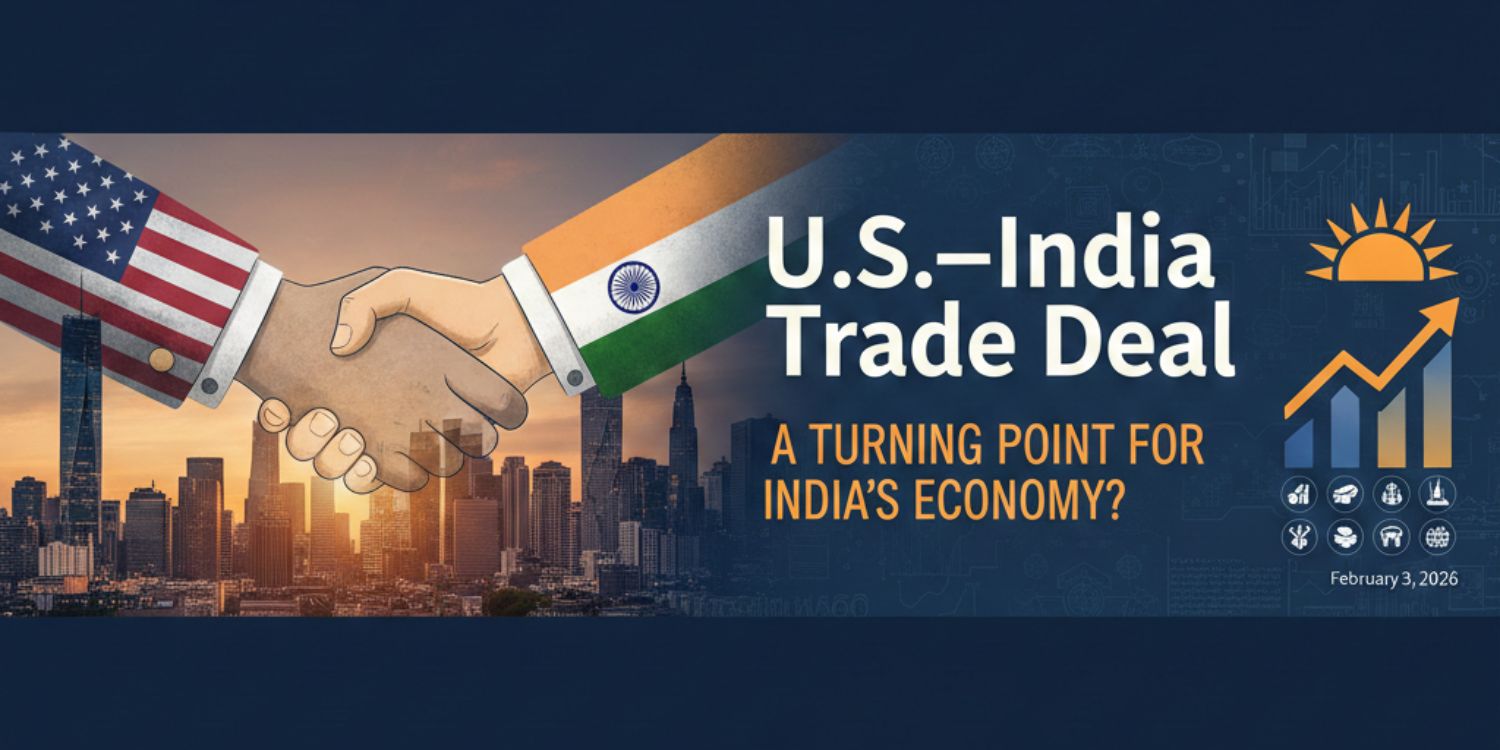
The United States and India have reached a significant trade agreement in early February 2026. Under the pact, the U.S. will cut tariffs on Indian goods to about 18 percent, down from an effective rate that had reached 50 percent due to earlier punitive duties and reciprocal tariffs. India has agreed to lift tariffs and other trade barriers on U.S. imports and reduce purchases of Russian oil.
Indian exporters, including sectors like textiles, seafood, engineering goods and auto components, have welcomed the tariff reduction as it helps restore competitiveness in the U.S. market after export challenges seen in 2025. The Indian rupee strengthened by more than 1% against the US dollar in early trade, while yields on 10-year government bonds eased, reflecting improved investor confidence and expectations of stronger trade inflows.
Why This Deal Arrived Now
This agreement comes closely after India’s free trade deal with the European Union, which was finalised in late January 2026. The EU pact aims to sharply lower tariffs on most goods traded between India and the EU, something that adds another major market access opportunity for Indian firms and diversifies export destinations beyond the U.S. and regional Asian markets.
Two factors help explain the timing and sequencing :
- Pressure and Politics: In 2025, the U.S. imposed escalating tariffs on Indian exports, at one point reaching 50 percent, largely tied to geopolitical differences, including India’s energy ties with Russia. London and Brussels engaged India while U.S-India negotiations were still in flux.
- Global Strategy: India has been pursuing broader trade engagement with major economies, building FTAs and trade partnerships (e.g., EU, UK, Oman). These diversified linkages reduce dependency on any single market and strengthen India’s bargaining position.
- The EU deal helped create momentum and leverage in global trade talks, which likely encouraged a quicker resolution with the U.S. ahead of further punitive tariffs or prolonged disputes.
What It Means for the Middle Class & Indian Consumers
For ordinary Indian consumers and the middle class, the impacts are mixed but have some clear channels:
Potential Benefits
- Lower import prices for products sourced from the U.S. (electronics, machinery, specialized goods) as tariffs come down, which can reduce final retail costs over time.
- Investment confidence: Financial markets reacted positively, India’s major stock indices rose, and the currency strengthened shortly after the announcement, indicating improved investor sentiment about economic stability.
- Export growth may support job creation in sectors like textiles, leather, and engineering, potentially expanding opportunities for middle-income workers in manufacturing and trade.
Potential Challenges
- Competitive pressure on some local manufacturers. As tariff protections are lowered, cheaper foreign goods (not only from the U.S.) may become more available in Indian markets. If domestic industries aren’t globally competitive, this can pressure prices and employment in those sectors, particularly labour-intensive ones.
- Adjustment period for small and mid-sized enterprises as they adapt to increased competition from imports.
In essence, the deal is not likely to flood the Indian market with foreign goods instantly, but it gradually reduces tariff walls, which gives consumers broader choice, but also creates competitive pressure on local producers.
Is This Others’ Goods “Dumping”?
The term dumping refers to foreign companies selling goods below cost to capture market share. There’s no indication in the deal text that foreign goods will be dumped into India; rather, tariffs are being negotiated downward to create reciprocal market access.
Indian negotiators have emphasized their commitment to the Make in India initiative, pushing for Indian products to gain access abroad while retaining policy tools to protect crucial domestic sectors.
Conclusion:
The U.S–India trade deal is part of a broader pattern of India diversifying its international trade relations, following the EU agreement and other FTAs. It’s intended to boost exports, improve global integration, and encourage foreign investment. For the middle class, this could mean wider consumer choice and potential new employment opportunities, but also increased competition for local industries. The extent to which the deal uplifts currency value and strengthens the economy will depend on implementation details, sectoral competitiveness, and how India balances openness with domestic economic objectives.
These trade developments reflect not just commercial ties but shifting geopolitical dynamics, with India positioning itself as a key global supplier and strategic partner amid evolving global economic policies.