
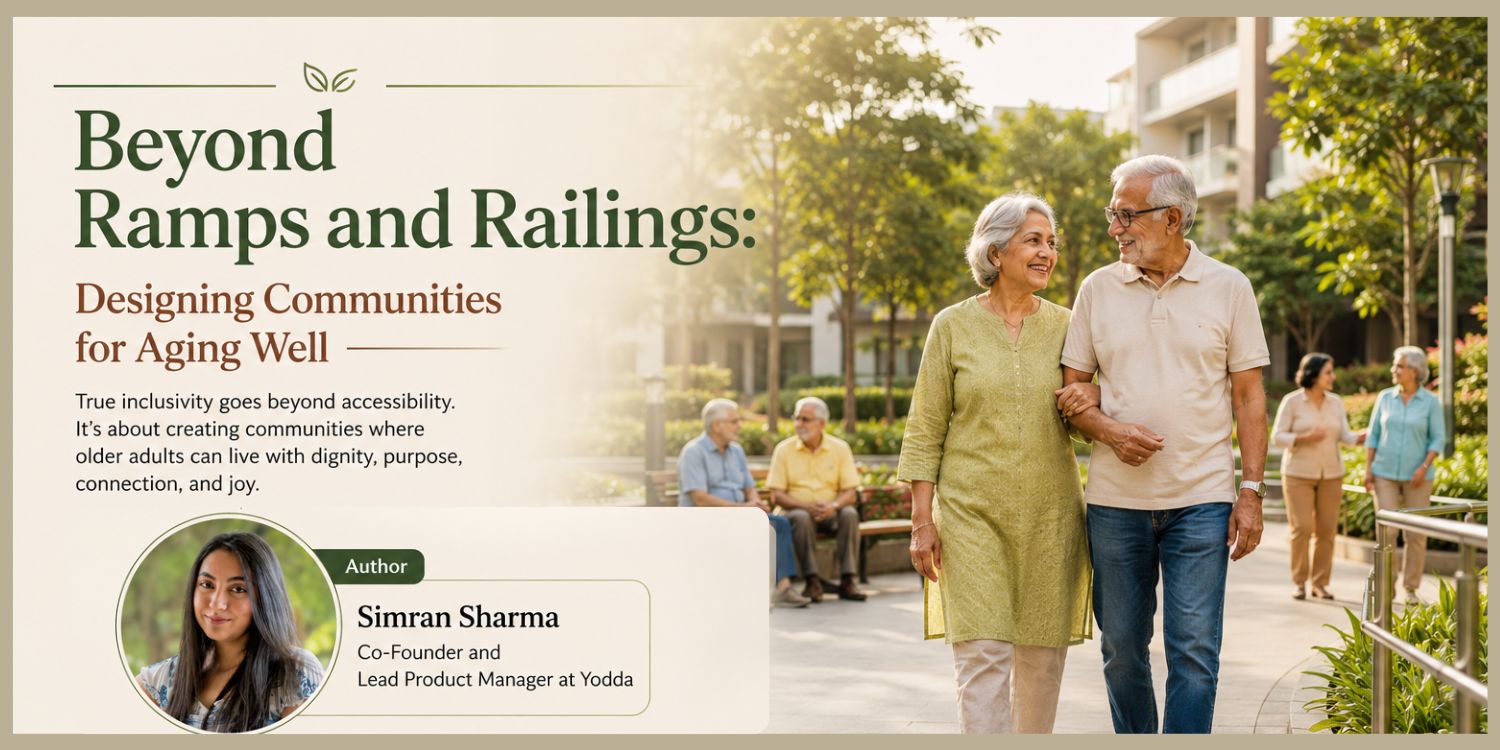
When we talk about community planning for older adults, the conversation often begins with ramps, lifts, grab bars and wider corridors. All of these matter. But elderly wellbeing is shaped by something much broader: whether a person feels confident enough to continue living their life independently.
We also need to think more broadly about what a “community” actually means. It is often used to describe old age homes, senior living developments or assisted living facilities, but for many older adults, their real community is the ecosystem they already know and trust around their own home. That may include family, friends, neighbours, security staff, domestic help, local vendors and service providers. In that sense, a community is not always a defined place with a geographical boundary. It is the network of people, services and support that surrounds an older adult in the environment where they are most comfortable.
That confidence comes from a combination of physical support, accessible infrastructure, disability support, technology and, most importantly, people.
A well-planned community should make everyday life easier by thinking about safety, emergency prevention and accessibility from the outset. Simple choices such as even, slip-resistant walking surfaces, good lighting, dedicated seating and rest areas, clear and readable signage, accessible bathrooms, ramps, handrails and safe pedestrian crossings can make a significant difference.
If an older person cannot walk to the pharmacy, visit the club, meet a neighbour or step out for a short errand without depending on a car, caregiver or family member, the environment is creating dependence where it may not be necessary.
And when the world around them becomes difficult to navigate, people often begin restricting themselves long before anyone else notices. That gradual loss of movement can translate into a loss of independence, increased isolation and the beginnings of loneliness and social withdrawal.
Safety, therefore, cannot be treated as something that is added after everything else has been designed. It has to be an integral part of the way a community functions. And even that is often not enough.
In available premium elder care services and safety platforms like ours, we have seen that some of the most useful systems are the ones that use today’s sophisticated technology in ways that still feel simple, familiar and comfortable for older adults.
A panic button or automatic fall detection capabilities are simple examples. Will someone actually receive the SOS alert? Do they know what to do? Do they know where they are, who they are, their emergency-relevant details and who to contact? If they pass out, how will their family know? And if they are not comfortable using a smartphone, can they still ask for help easily?
Technology can also help older adults feel safer in their own homes and communities. Many live with a very real fear of theft or intrusion, sometimes double-locking or deadbolting their doors and becoming hesitant to open them or step out. Door and window sensors, affordable wearables and human presence sensors can offer reassurance without cameras or complicated systems.
That balance matters. Aging is not only a medical issue, and older adults do not want their homes or communities to feel like hospitals or surveillance zones. They want to feel safe while continuing to live ordinary, independent lives. The technology already exists, but good community planning also means making sure it is simple and affordable enough for people to actually use.
Then come the people.
No sensor, wearable or SOS button is useful if nobody knows what to do when it is triggered. Communities need a response structure around the technology. That may mean dedicated local command centres, trained security teams or responders, clear SOPs and regular dry runs so that people already understand routes, building entry procedures and who needs to be contacted when something goes wrong. Everyone in an elder’s support network should know who to call, how an ambulance enters the premises, who can provide access if a resident cannot open the door, etc.
This is where community planning really comes together. Technology can identify a problem and connect people quickly, but it is the people, processes and support around it that turn an alert into actual help.
In India, formal professional elder care is still a relatively young industry. Community-based support, however, has always been deeply ingrained in the way we live. Joint families, neighbours, security guards, drivers, domestic staff and trusted local vendors often form an informal support network around an older person, sometimes without even realising it.
The opportunity is not to replace these relationships, but to strengthen and connect them. An emergency response system may connect someone to a professional responder, while a neighbour, security guard or building manager may be the person who can reach them first. New-age community-centric platforms can help bring these layers together so that the right people are informed quickly when support is needed.
And community support is not only about emergencies.
Someone can live within 100 metres of dozens of other seniors and still have very little interaction with them. Sometimes all that is missing is a reason to step out, a familiar face or a setting that makes that first interaction feel easy. Shared spaces, walking groups, community activities, regular check-ins and intergenerational engagement can all help create that sense of belonging.
Companionship and volunteering are an important part of this ecosystem too. We should recognise them as valuable forms of support, not something to simply take for granted. Giving someone your time, showing up consistently and providing companionship has real value. That contribution should be appreciated and supported, and where it becomes a regular or structured service, compensated fairly, for sustainability.
Technology can help organise and strengthen these networks, while people bring the familiarity and human connection that make them meaningful. One builds on the other.
Ultimately, thoughtful community planning is about creating an environment where older adults can continue to feel safe, independent, connected and involved in the world around them. Aging well should not mean withdrawing from life. It should mean having the confidence and support to continue living it fully.
Author Bio
Simran Sharma is Co-Founder and Lead Product Manager at Yodda, where she works across product, technology, growth, and operations to build technology-enabled solutions for elderly and citizen safety, care, and wellbeing. She holds a Bachelor of Science from the University of Waterloo, where she also pursued relevant coursework in aging and geriatrics. She is a Pragmatic Institute-trained product manager, recipient of the BW 30 Under 30 Award, and a patent holder in technology-led emergency response and safety systems.